
The Grand Finale: A Near-Total Lunar Eclipse
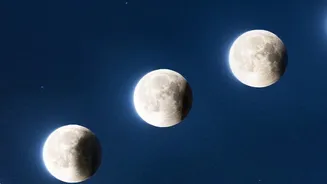
Mark your calendars for the night of August 27-28 for the month's biggest celestial event: a deep partial lunar eclipse. A lunar eclipse happens when the Earth passes directly between the Sun and the Moon, casting a shadow on the lunar surface. This event will
be significant, with nearly 96% of the Moon falling into Earth's dark inner shadow (the umbra), which will give it a reddish, coppery glow often called a 'Blood Moon'. For viewers in India, the eclipse will be in its maximum phase in the pre-dawn hours of August 28. The Full Moon of August is also traditionally known as the Sturgeon Moon, a name originating from Native American tribes who found the giant fish easy to catch during this time of year. So, as August comes to a close, you'll be treated to a rare Sturgeon Blood Moon.
The Dazzling Evening Star: Venus
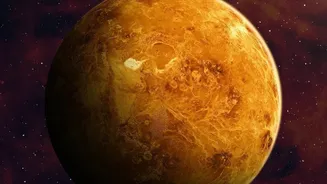
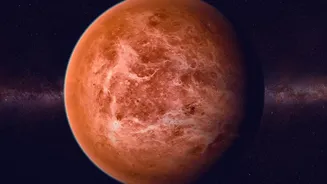
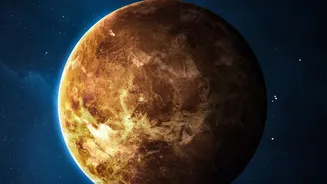
Throughout August, the planet Venus will be a brilliant, unmissable beacon in the western sky shortly after sunset. Known as the 'Evening Star', Venus reaches its greatest eastern elongation on August 15. This means it will be at its farthest apparent distance from the Sun, making it particularly easy to spot in the twilight glow. It will shine with a stunning magnitude, outshining every star in the sky. On the evening of August 15, look for a beautiful pairing as the thin waxing crescent Moon appears near the dazzling planet, creating a picturesque scene for skywatchers and photographers alike.
A Summer Classic: The Perseid Meteor Shower
The Perseid meteor shower, one of the best and most reliable meteor showers of the year, reaches its peak on the night of August 12-13. Caused by Earth passing through the dusty trail of Comet Swift-Tuttle, the Perseids are known for producing bright, fast meteors, many of which leave persistent trails. Under ideal dark-sky conditions, away from city lights, observers could see between 50 and 100 meteors per hour. The best part for 2026 is that the peak coincides with the New Moon, meaning the sky will be perfectly dark, providing excellent viewing conditions. For the best show, find a comfortable spot after midnight, let your eyes adjust to the darkness for about 30 minutes, and look towards the northeast.
A Sneak Peek of Saturn
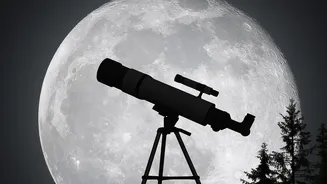
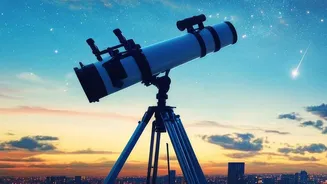
While the ringed planet Saturn won't reach its peak viewing for the year until its opposition in early October, late August provides an excellent opportunity for a preview. Through August, Saturn will be visible for much of the night, rising in the east and tracking across the southern sky. Opposition is when Earth passes between the Sun and an outer planet, making that planet appear at its brightest and largest from our perspective. While you'll need a telescope to see its famous rings, Saturn will still be a bright, steady point of light visible to the naked eye in the constellation Cetus. It serves as a great warm-up for its main event later in the year.
The New Moon and a Distant Eclipse
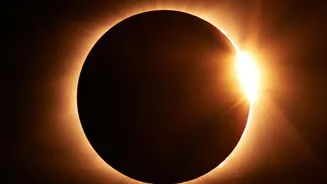
A major celestial event, a total solar eclipse, occurs on August 12. However, this spectacle will not be visible from India. The path of totality, where the Moon completely blocks the Sun, will cross over parts of Greenland, Iceland, and northern Spain. While we won't see the eclipse itself, the event marks the New Moon for August. The New Moon on August 12 is what makes the sky so dark and perfect for viewing the peak of the Perseid meteor shower on the same night. So, while we miss out on the solar drama, we get the perfect conditions for a meteor-filled night.