

Why Embrace the Tree Pose?
Tree Pose is more than just a balancing act; it's a full-body and mind experience. Physically, it strengthens the muscles in your feet, ankles, and legs, building a stable foundation. This helps improve your overall posture and can even provide relief
for sciatica. Mentally, the pose is a powerful tool for enhancing concentration. To stay balanced on one foot, your mind must remain calm and focused, making it an excellent practice in mindfulness. Energetically, Vrikshasana helps you feel grounded and centred. It cultivates a sense of stability that you can carry with you off the mat and into your daily life.
Finding Your Roots: The Classic Pose
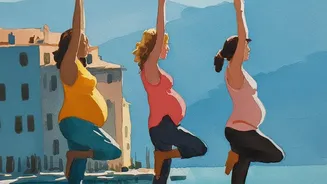
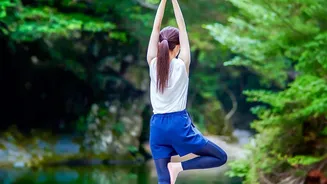
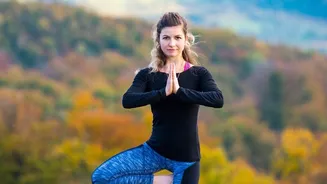
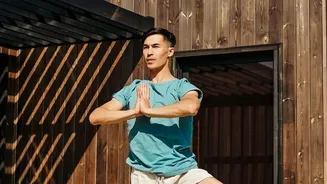
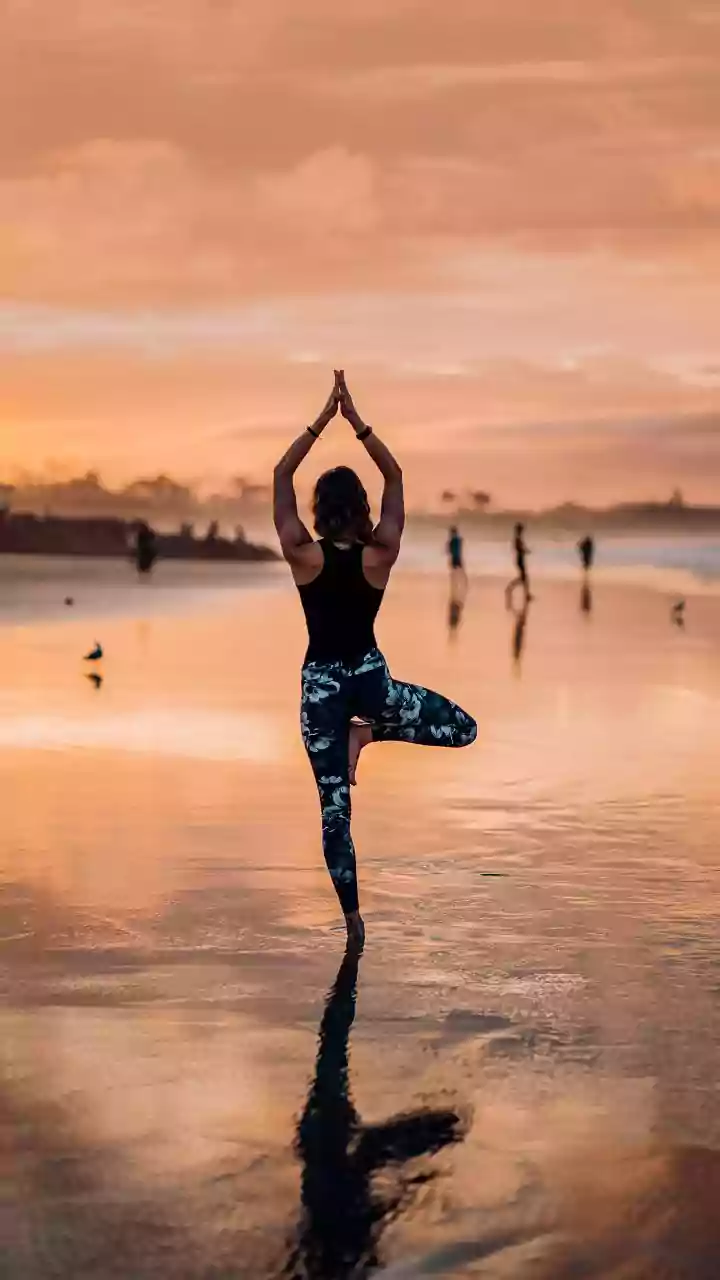
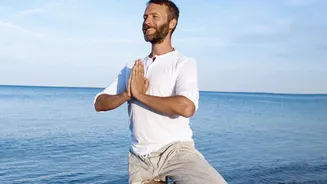
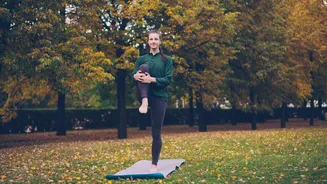
Before exploring variations, it is essential to understand the fundamentals of the classic Tree Pose. Start by standing tall in Mountain Pose (Tadasana), with your feet together and weight distributed evenly. Shift your weight onto your left foot, grounding it firmly into the floor. Bend your right knee and place the sole of your right foot on your inner left ankle, calf, or thigh. A crucial safety rule is to never place the foot directly on the knee joint, as this puts unnecessary pressure on it. Press your foot and standing leg into each other to create stability. Keep your hips level and facing forward. Bring your hands to your heart in a prayer position. Fix your gaze on a non-moving point in front of you to help maintain balance.
Your Best Friend: Using a Wall for Support
For anyone new to the pose or struggling with balance, a wall is an invaluable prop. It builds confidence and allows you to focus on proper alignment without the fear of falling. There are a few ways to use it. You can stand with your side to the wall, about an arm's length away, and place your fingertips or palm lightly against it for support as you lift your leg. Another method is to stand with your back against the wall, allowing your shoulders and hips to touch it for stability. This helps you get the feel of an upright posture. The goal is not to lean heavily but to use the wall as a gentle guide and a safety net.
Wall-Supported Variations to Explore
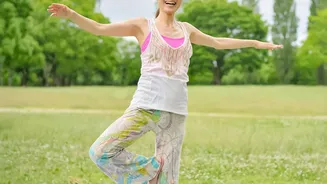
Once you feel comfortable using the wall for basic support, you can start to play with variations. While keeping one hand lightly on the wall, experiment with different arm positions. Instead of keeping your hands at your heart, try raising your free arm straight up towards the ceiling, simulating the branches of a tree. You can also extend it out to the side. Another variation is to practice facing the wall. Stand about a foot away and place both hands on the wall at shoulder height. This allows you to work on opening your bent knee to the side while keeping your hips square. These variations challenge your stability in a controlled environment, preparing you to practice without support.
Branching Out: Progressing Beyond the Wall
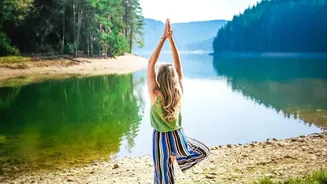
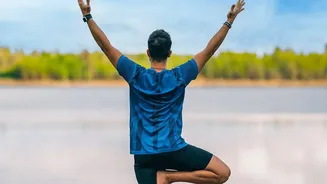
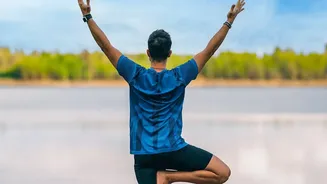
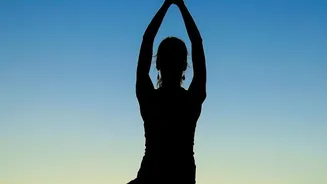
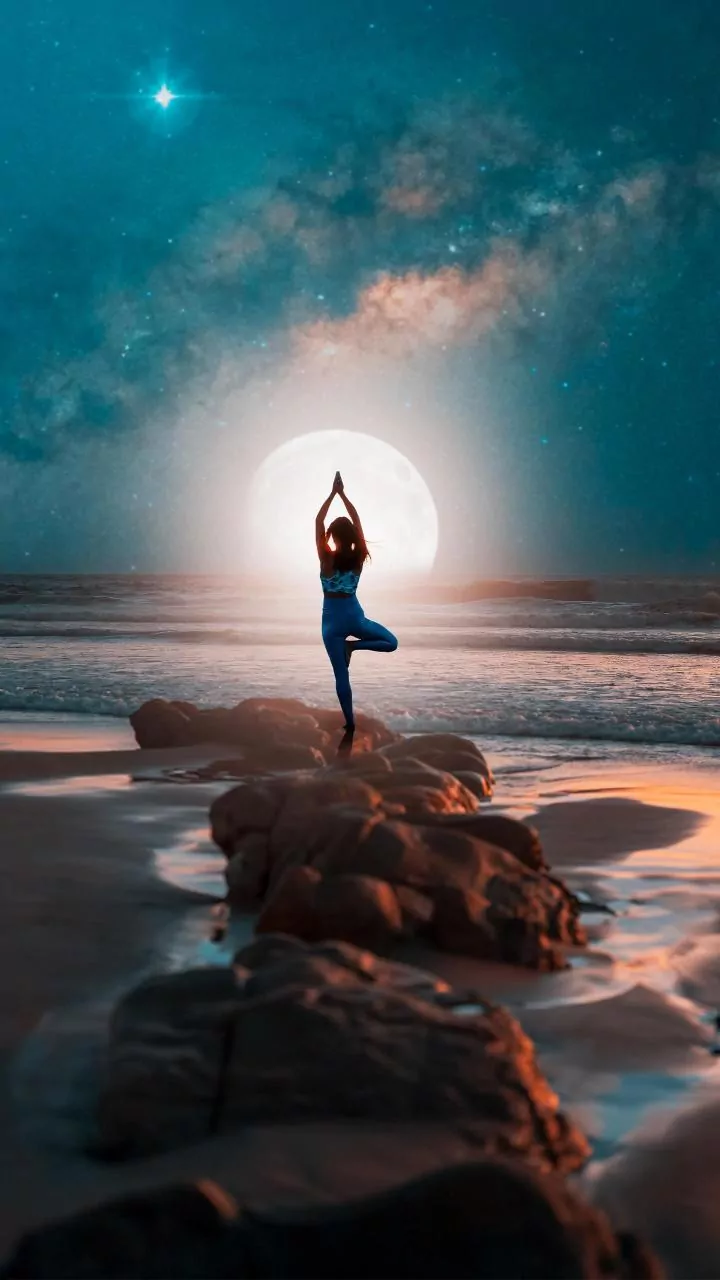
When you feel steady and confident, it’s time to move away from the wall. The first step is simply to practice the classic pose in the centre of the room. As your balance improves, you can introduce new challenges. Try raising your arms overhead, either parallel or with palms touching. For a deeper hip opener, you might explore Ardha Padma Vrikshasana (Half Lotus Tree Pose), where the foot of the bent leg rests on the opposite thigh. More advanced practitioners can even challenge their internal balance by closing their eyes for a few seconds. Another fun variation is 'Windy Tree,' where you allow your arms to sway gently like branches in the wind.
Common Mistakes and How to Correct Them
A few common alignment issues can make Tree Pose less stable. One is locking the knee of the standing leg; instead, keep a micro-bend in the knee to engage the muscles and protect the joint. Another is letting the hip of the lifted leg hike up; focus on keeping both hips level. Many people also make the mistake of holding their breath. Remember to breathe smoothly and consistently, as this helps maintain calm and focus. Finally, avoid the temptation to rush into the full expression of the pose. Start with your foot at your ankle or calf and only move it to the inner thigh when you feel truly stable.