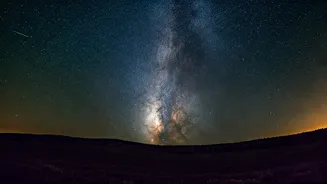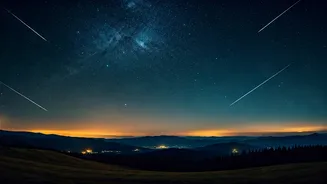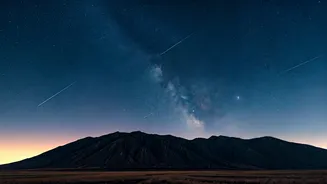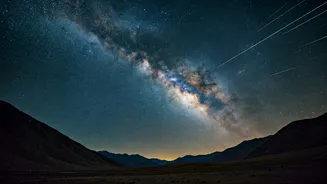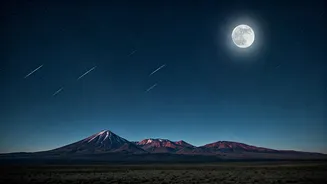



The Moon: A Beautiful View-Spoiler
A bright moon is the single biggest factor that can dampen a meteor shower. Just as city lights create 'light pollution' that hides the stars, a full or gibbous moon washes out the night sky with its reflected sunlight. This natural light pollution makes
it impossible to see the fainter, more numerous meteors. While you might still catch a few exceptionally bright fireballs, the overall spectacle will be significantly reduced. An ideal meteor-watching night is one where the moon is in its 'new moon' phase, meaning it is not visible in the sky, leaving it perfectly dark for the show.
Plan for Upcoming Meteor Showers in 2026
India is well-placed for several major meteor showers in the second half of 2026. The key is to know which ones will have favourable moon conditions. The famous Perseid meteor shower, which peaks around August 12-13, has excellent prospects this year. The peak aligns with a new moon, promising perfectly dark skies. The main challenge for the Perseids in India is the monsoon, so viewers in drier regions like Ladakh, Spiti, or western Rajasthan will have the best chance. Later in the year, the Geminids are set to be the star attraction. Peaking on December 13-14, this is often considered India's best shower. In 2026, the moon will be a thin crescent that sets early, guaranteeing dark skies for what can be a spectacular display with up to 120 meteors per hour under ideal conditions.
How to Time Your Viewing
The first step is to identify the peak night of a meteor shower. The next is to check the moon phase for that date. A new moon is perfect, a crescent moon is good, but a full or gibbous moon is problematic. You can easily find moon phase calendars online for your specific location in India. Beyond the phase, check the moonrise and moonset times. Even if there's a bright moon, you might get a window of darkness if the moon sets before the meteor shower's radiant point is high in the sky (usually in the early morning hours). If the moon is out, all is not lost. You can improve your experience by positioning yourself in the shadow of a tree or building, which helps shield your eyes from the direct glare. Also, face away from the moon to look at a darker patch of sky.
Essential Tips for the Best Experience
Once you have your moon strategy sorted, a few other tips will ensure a great night. First, escape city lights. Finding a dark spot in the countryside is crucial for seeing more meteors. Second, be patient. Your eyes need about 20 to 30 minutes to fully adapt to the darkness, and only then will you start to see the fainter streaks. You don’t need a telescope or binoculars; your naked eyes are the best tool for the job because they provide the widest field of view. Finally, get comfortable. A reclining chair, blanket, and a warm drink will make the hours spent under the stars much more enjoyable. The meteors often come in spurts, so plan to watch for at least an hour.