

The Philosophy of the Fast (Vrat)
For many devotees, Janmashtami begins with a fast, or 'vrat'. This isn't about complete deprivation but about eating pure, 'satvik' foods that calm the mind. Grains like wheat and rice, lentils, and common salt are avoided. Instead, the fasting menu relies
on specific ingredients like water chestnut flour (singhare ka atta), buckwheat flour (kuttu), amaranth (rajgira), and barnyard millet (samak). Sabudana (tapioca pearls), potatoes, sweet potatoes, nuts, fruits, and dairy products are also permitted, forming the basis for a surprisingly varied and nourishing diet that prepares the body and spirit for the midnight celebrations.
Makhan Mishri: A Divine Favourite
No Janmashtami offering is complete without Makhan Mishri. This simple preparation of fresh, unsalted white butter mixed with rock sugar (mishri) is considered Lord Krishna's absolute favourite. It harks back to his childhood in Vrindavan, where he was lovingly known as 'Makhan Chor' or the butter thief for his playful habit of stealing butter. Offering this dish is a direct and affectionate nod to the deity's playful, human side, symbolizing pure, unadulterated love.
Prasad Staples: Panjiri and Panchamrit
Two other items are essential to the Janmashtami prasad (blessed food offering): Dhaniya Panjiri and Panchamrit. Dhaniya Panjiri is a unique sweet made by roasting coriander powder in ghee with powdered sugar, makhana (fox nuts), and chopped nuts. Its use of coriander makes it distinct and suitable for those avoiding grains during their fast. Panchamrit, meaning 'five nectars', is a sacred concoction of five ingredients: milk, curd (yogurt), honey, sugar, and ghee. This mixture is used for the ritual bathing of the Krishna idol (abhisheka) and is then distributed to devotees as a blessed liquid offering.
A Symphony of Sweets and Savouries
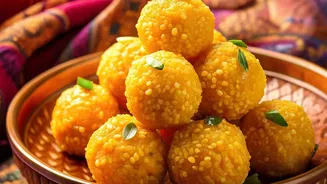
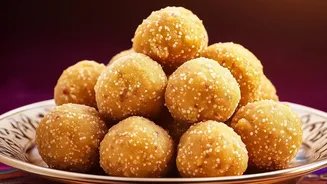
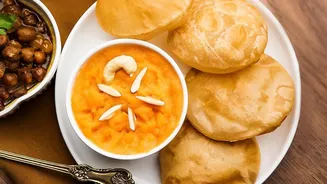
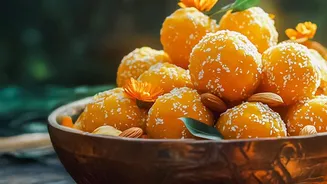
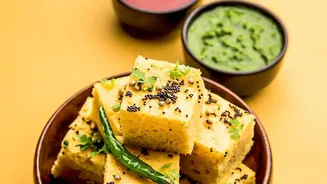
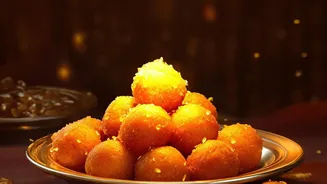
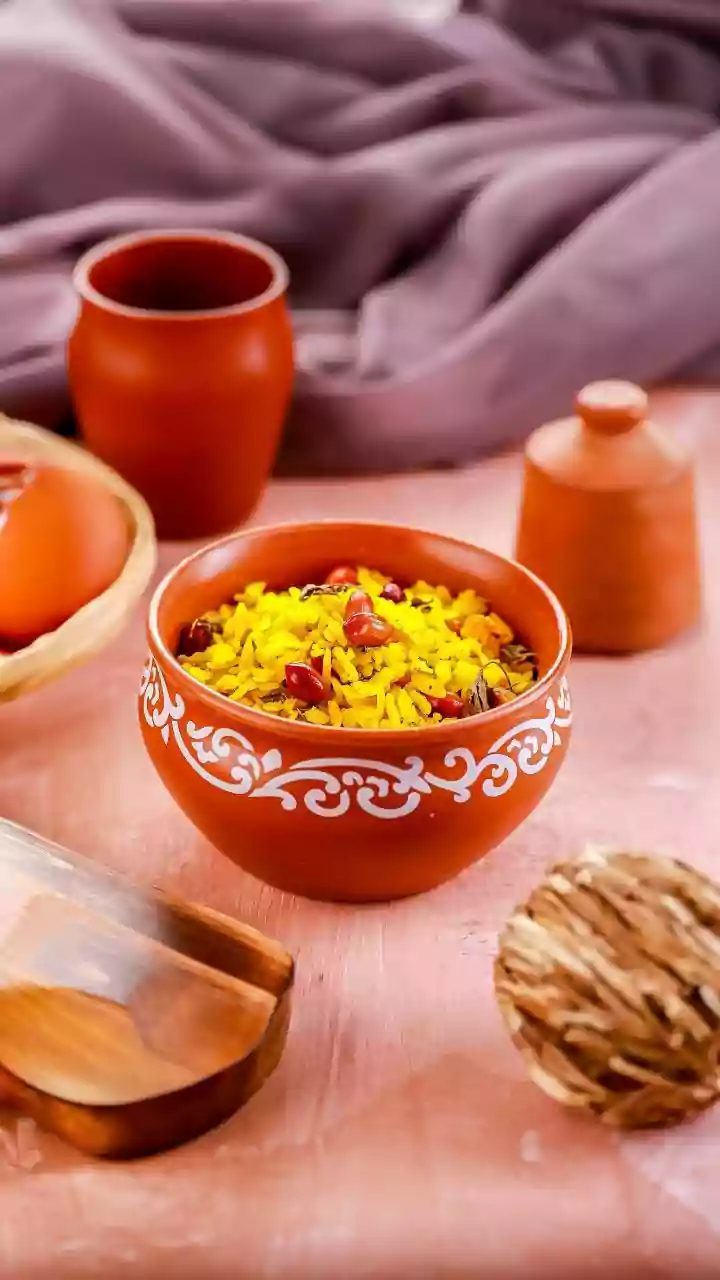
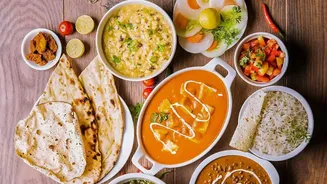
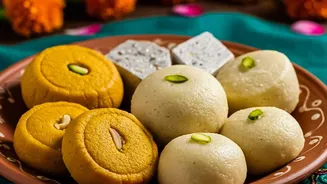
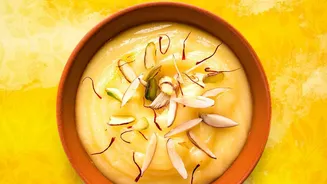
As the fast is broken at midnight, a delightful array of sweets and savouries are enjoyed. Since Lord Krishna was known for his love of milk products, many desserts are milk-based. Mathura, his birthplace, is famous for its Peda, a caramelised milk sweet prepared in vast quantities for the festival. Other popular sweets include Makhana Paag (fox nuts in sugar syrup), coconut barfi, and various kinds of halwa and kheer. On the savoury side, dishes like Sabudana Khichdi, Sabudana Vada, and puris made from kuttu or rajgira flour served with a simple potato curry are common.
The Grandeur of Chappan Bhog
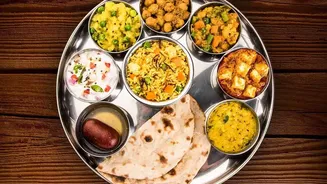
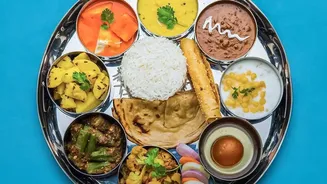
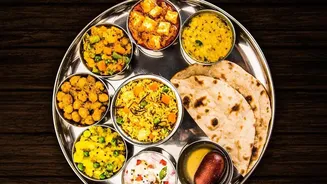
The most spectacular culinary tradition of Janmashtami is the 'Chappan Bhog', a grand offering of 56 distinct food items. The number 56 is symbolic; according to legend, it represents the meals Lord Krishna missed over seven days while he held up the Govardhan Hill to protect the villagers of Braj from torrential rains. The grateful villagers prepared a feast of 56 dishes (seven days multiplied by eight meals a day) to show their gratitude. This lavish spread includes a variety of sweets, savouries, grains, fruits, and drinks, representing the ultimate expression of devotion and abundance.