

Why Sitting Sabotages Your Spine
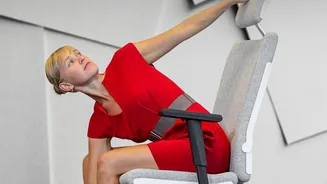
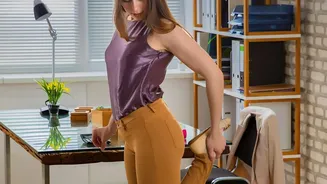
When you sit for extended periods, your body adapts to the position in ways that compromise your posture. The typical 'desk slouch' involves a forward head, rounded shoulders, and a curved lower back. This posture isn't just a bad habit; it's a physiological
response. Key muscle groups are affected: your hip flexors shorten and tighten, while your gluteal (buttocks) muscles lengthen and weaken, a condition sometimes called 'gluteal amnesia'. Essentially, your glutes forget how to fire properly. Simultaneously, your core muscles become less active, and the muscles in your upper back that are meant to hold your shoulders back become stretched and weak. This muscular imbalance forces other parts of your body, like your lower back and neck, to compensate, leading to chronic pain, stiffness, and reduced mobility.
The Strength Solution: Rebuilding Your Foundation
The key to offsetting these harms is to strategically strengthen the muscles that sitting weakens and lengthen the ones it tightens. Building postural stability isn't about forcing yourself to sit rigidly straight; it's about creating a strong, balanced muscular foundation that holds you upright naturally. A consistent strength routine can 'wake up' dormant muscles, correct imbalances, and provide your spine with the support it needs to resist the pull of the desk slouch. The goal is to focus on the posterior chain (the muscles on the back of your body), the core, and the upper back.
Exercise 1: Glute Bridges
This exercise directly targets gluteal amnesia by forcing your glutes to activate. To perform a glute bridge, lie on your back with your knees bent and feet flat on the floor, about hip-width apart. Rest your arms by your sides. Pushing through your heels, lift your hips off the floor until your body forms a straight line from your shoulders to your knees. Squeeze your glutes at the top and hold for a moment before slowly lowering back down. This move strengthens the glutes and hamstrings, helping to stabilize your pelvis and support your lower back.
Exercise 2: Planks
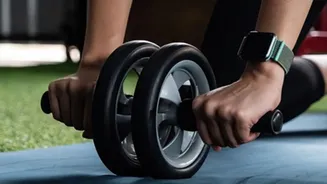
The plank is a fundamental exercise for building core strength, which is the bedrock of good posture. A strong core stabilizes the entire torso, preventing the lower back from sagging and taking on excess strain. To do a plank, position yourself as if you're about to do a push-up, with your forearms on the ground and your body forming a straight line from head to heels. Engage your abdominal muscles and glutes, and be careful not to let your hips sag or rise too high. Holding this position builds endurance in the deep stabilizing muscles of your midsection.
Exercise 3: Rows
To combat rounded shoulders, you need to strengthen your upper back. Rows are perfect for this. Whether using resistance bands, dumbbells, or a machine, the motion is the same: with a straight back, pull the weight or band toward your chest, squeezing your shoulder blades together. This action strengthens the rhomboids and trapezius muscles, which are responsible for pulling your shoulders back and down, creating a more open and upright chest posture.
Exercise 4: Bird-Dog
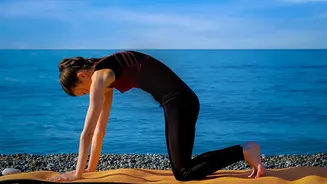
The bird-dog is an excellent exercise for improving spinal stability and coordination. Start on all fours, with your hands under your shoulders and your knees under your hips. Keeping your back flat and your core engaged, extend your right arm straight forward and your left leg straight back simultaneously. Hold for a second, then return to the starting position with control and repeat on the other side. This movement teaches your body to maintain a stable core while your limbs are in motion, directly counteracting the instability that develops from prolonged sitting.
Exercise 5: Chin Tucks and Wall Angels
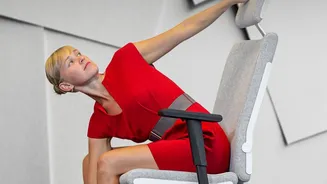
Forward head posture is a hallmark of the desk worker. Simple chin tucks can help correct this by strengthening the deep neck flexors. Sit or stand tall and gently draw your head backward, creating a 'double chin' without tilting your head down. You can pair this with wall angels, which improve shoulder mobility and activate the mid-back. Stand with your back against a wall, with your arms bent at 90 degrees in a 'goalpost' position. Slowly slide your arms up the wall, keeping your back and arms in contact with it, then slide back down.