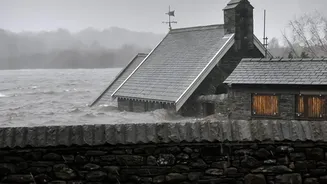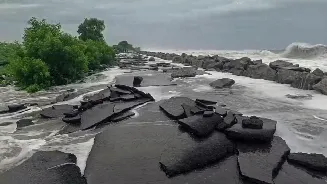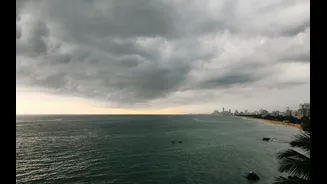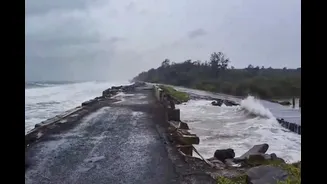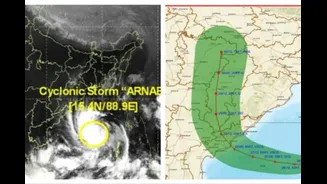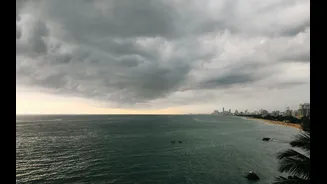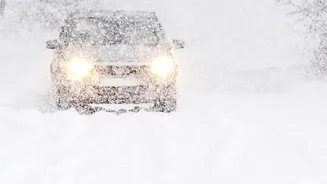




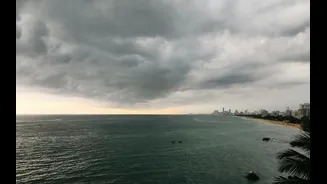

With Cyclone Arnab tracking across the Bay of Bengal and expected to make landfall on October 28, authorities are issuing urgent warnings. For those in or travelling to high-altitude regions, the primary concern is clear: extreme danger on the roads.
Understanding the Threat of Cyclone Arnab
Cyclone Arnab, which developed over the Bay of Bengal, has prompted alerts across several regions. The India Meteorological Department (IMD) has issued a multi-stage warning, with the cyclone expected to bring heavy rainfall, thunderstorms, and strong winds. While coastal areas brace for landfall, the impact extends far inland, particularly into mountainous terrain. Authorities in neighbouring Nepal have already urged trekkers to suspend activities in high-altitude regions, anticipating heavy snowfall and blizzards from October 29 to 31. This cyclone is not just a coastal event; its effects will be felt hundreds of kilometres away, transforming treacherous mountain passes into life-threatening zones.
The Physics of Wind on Mountain Roads
Driving in high winds is dangerous anywhere, but high-altitude roads present a unique set of challenges. The primary danger is the sheer force of the wind acting on your vehicle. Wind creates a powerful lateral force that can push a car sideways, potentially into oncoming traffic or off the road entirely. This effect is magnified for high-sided vehicles like SUVs, vans, and buses, which present a larger surface area for the wind to act upon. Mountain passes and bridges are particularly hazardous as they can act as funnels, concentrating and accelerating wind speeds. A sudden gust when emerging from a tunnel or a road cut through a hill can catch a driver off guard, leading to overcorrection and loss of control.
The Force Multiplier: How Speed and Vehicle Shape Matter
The force exerted by wind increases exponentially with speed. This means that doubling your vehicle's speed can quadruple the aerodynamic load from a crosswind. Therefore, the single most important safety measure is to reduce your speed significantly. Slower speeds increase tire traction and give you more time to react to sudden gusts or debris on the road. The shape of your vehicle also plays a crucial role. Taller, boxier vehicles are more susceptible to being pushed or even rolled over by strong winds compared to lower, more aerodynamic cars. If you are driving a high-profile vehicle, the safest decision may be to find a secure place to stop and wait for the storm to pass.
Beyond Wind: Landslides and Other Hidden Dangers
The dangers of a cyclone in mountainous regions are not limited to wind alone. Intense rainfall, a key feature of Cyclone Arnab, saturates the soil on steep slopes, dramatically increasing the risk of landslides. The Himalayan region is already highly vulnerable to landslides due to its fragile geology, and heavy rains are a primary trigger. Roads can be blocked or completely washed away without warning. Furthermore, strong winds can bring down trees, power lines, and loose rocks, creating deadly obstacles on the road. Visibility is often severely reduced by heavy rain and blowing spray, making it difficult to spot these hazards in time. In some high-altitude areas, the precipitation may fall as heavy snow, leading to blizzards and avalanche risks.
An Essential Safety Checklist for Travelers
Official advice is to avoid all non-essential travel in affected high-altitude areas until the cyclone has passed and conditions are declared safe. Those already in these regions are advised to stay in a secure location. If travel is absolutely unavoidable, adhere to the following safety protocols:
Heed Official Warnings:
Constantly monitor updates from the IMD and local disaster management authorities. Road closures and advisories are issued for your safety.
Reduce Speed Drastically:
Slowing down is the most effective way to maintain control in high winds.
Maintain a Firm Grip:
Keep both hands on the steering wheel, preferably at the 9 and 3 o'clock positions, to brace for sudden gusts.
Increase Following Distance:
Wet roads and poor visibility mean you need much more space to stop safely. Double your normal following distance.
Be Wary of Larger Vehicles:
Give trucks, buses, and other large vehicles a wide berth, as they are more likely to struggle with stability and can create powerful wind turbulence.
Turn Around, Don't Drown:
Never attempt to drive through flooded roadways. The water may be deeper and the current stronger than it appears.