



1. He is leaking runs when it matters most
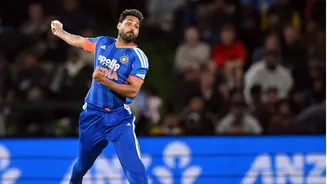
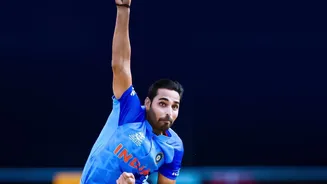
A bowler's reputation in T20 cricket is often defined by their performance in the death overs. This is where Bhuvneshwar Kumar, once a master of containment, has struggled on his international return. Across the first three T20Is against New Zealand,
he was India's most expensive bowler, conceding a total of 139 runs for just a single wicket. In the first match, he went wicketless for 49 runs. The second saw him concede 50 for his lone wicket, and in the third, he gave away another 40 runs without success. These aren't the figures of a frontline bowler expected to lock down an innings. While his IPL comeback for RCB was built on incredible skill, with 28 wickets in the 2026 season, that form hasn't translated to the international stage, where the pressure and quality are a level above. The numbers from the New Zealand series show an overall economy rate well above 11, a worrying sign for a player looked upon to provide control and experience.
2. The new ball isn't swinging his way
Bhuvneshwar Kumar built his illustrious career on his almost magical ability to swing the new ball, taking crucial Powerplay wickets that put India on the front foot. However, that primary weapon appears to have lost some of its edge. In the recent series, analysis showed a stark difference between his effectiveness in his first over versus his subsequent ones in the Powerplay. While his first-over economy was a respectable 5.00 across the three games, it ballooned to over 13.00 in his second over of a spell. This suggests that once batters get a feel for his pace and style, they are able to attack him successfully. His failure to take early wickets puts immense pressure on the rest of the bowling unit and negates one of the core reasons for his inclusion in the squad. Without the early breakthroughs that were his signature, his role in the team becomes less defined and his impact is significantly reduced.
3. Younger, specialized alternatives are emerging
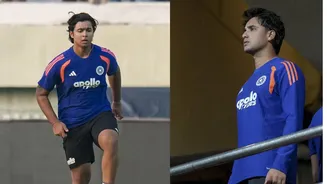
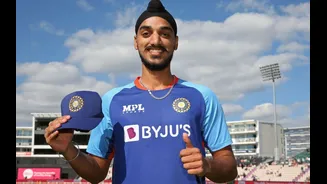
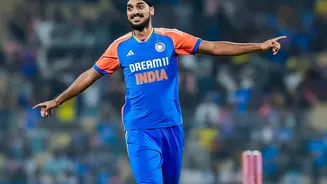
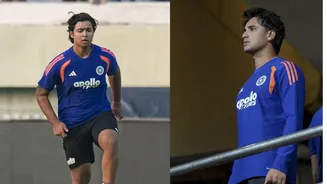
The landscape of Indian cricket is perpetually evolving, and the pace bowling department is no exception. While Bhuvneshwar was away from the national team, a new generation of bowlers has come through. The current squad in New Zealand includes talents like Arshdeep Singh, who has proven reliable, and other promising pacers such as Mayank Yadav and Prince Yadav. These players offer different skill sets, from Arshdeep's left-arm angle to the potential for express pace from others. While Bhuvneshwar was recalled for his experience, especially in Jasprit Bumrah's absence, his recent performances have been outshone by his younger teammates. For instance, Prince Yadav has recorded a better economy rate in the series. Cricket is a forward-looking sport, and selectors must balance experience with future potential. With other bowlers stepping up and offering more dynamic options for different phases of the game, the reliance on a 36-yearold veteran, however decorated, becomes harder to justify if the on-field results don't follow.