





The Joy of a Floral Blueprint
The impulse to buy every beautiful flower in sight is strong, but it's the leading cause of a chaotic Pookkalam-making process. The most significant advantage of planning your design first is that it transforms your shopping from a hopeful guess into
a targeted mission. A clear design acts as a blueprint, telling you exactly which colours you need and in what rough proportions. This simple step prevents overspending on flowers that won't fit your colour scheme and drastically reduces waste. More importantly, it ensures your final Pookkalam looks deliberate and harmonious, rather than like a beautiful but disjointed collection of petals. The goal is to make the process more mindful and less frantic, allowing you to focus on the creative artistry.
Sketching Your Vision
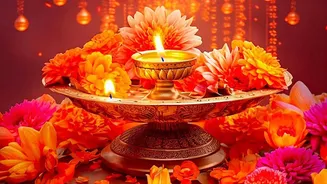
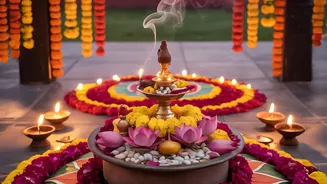
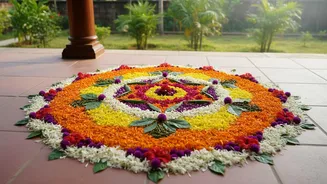
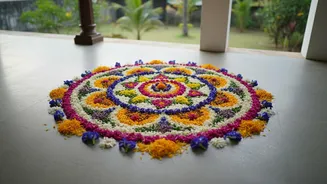
You don't need to be an artist to plan a Pookkalam. The design process can be as simple as drawing concentric circles with chalk on your floor or sketching a pattern on a piece of paper. For beginners, traditional circular designs are a great starting point. You can start with a central dot and expand outwards with rings of different colours. If you feel more adventurous, consider geometric patterns with triangles and squares, or even symbolic motifs like a lotus, peacock, or ‘diya’ (lamp). The key is to have a visual guide that breaks down a large space into smaller, manageable sections. This sketch is what you will translate into a shopping list.
Creating a Flower Shopping List
With your design sketch in hand, making a shopping list becomes simple. Look at each section of your drawing and assign a colour to it. For example, the centre might be white, the next ring yellow, followed by a ring of orange, and an outer border of green leaves. Now, estimate the quantity needed for each. This doesn't have to be precise, but thinking in terms of small, medium, or large handfuls for each section will give you a solid starting point. Group your needs by colour. Your list might look like: 'White flowers (small amount for centre), Yellow flowers (large amount for main ring), Orange flowers (medium amount),' and so on. This organised approach is your best tool at the market.
A Guide to Traditional and Modern Flowers
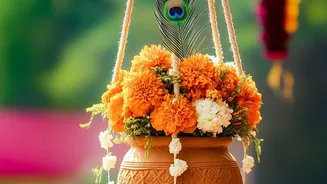
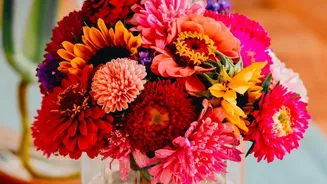
While modern Pookkalams use a wide variety of flowers, certain blooms are traditional and well-suited for the task. Marigolds (Jamanthi or Chendumalli) are a popular choice for their vibrant yellow and orange hues, affordability, and volume. For white, Thumba (Ceylon Slitwort) is traditional, though Jasmine (Mullappoo) or petals from Crape Jasmine (Chethi Poo) are also used for their colour and fragrance. Deep reds often come from Hibiscus (Chemparathy) or Flame of the Woods (Chethi), while the beautiful blue of the Butterfly Pea flower (Shankupushpam) adds a divine touch. Don't forget leaves and other green elements for creating borders and adding contrast.
Smart Shopping Strategies
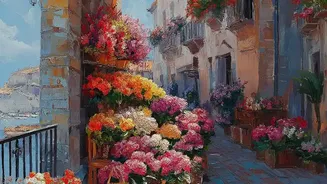
When you arrive at the flower market, stick to your list. It's easy to get distracted, but your plan will keep you focused and on budget. Always check for freshness; wilted flowers won't last and will dull the look of your Pookkalam. Buying loose petals might seem convenient, but purchasing whole flowers and separating the petals yourself is often more economical and ensures freshness. For larger designs for offices or communities, consider pooling resources with neighbours to buy in bulk. Flowers like marigolds and chrysanthemums dominate market stalls for a reason: they offer strong colours and ample petals, making them a practical foundation for any design.