



Bruges, Belgium: A Medieval Fairy Tale
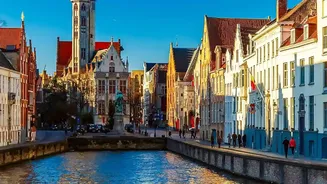
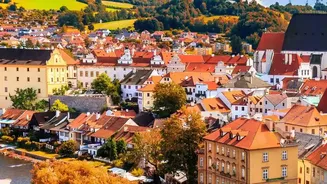
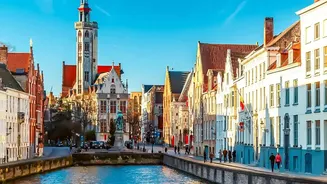
Often called the 'Venice of the North', the entire historic centre of Bruges is a UNESCO World Heritage site, and it is best explored on foot. The city is remarkably compact, with its main attractions nestled within a ring of canals. You can walk from
one end of the old town to the other in about 20-30 minutes. Start your journey at the Markt, the central square dominated by the soaring Belfry tower. Climbing its 366 steps rewards you with a panoramic orientation of the city’s medieval rooftops. From there, meander towards Burg Square to admire the Gothic City Hall, then follow the canals to the Rozenhoedkaai (Rosary Quay), arguably the most photographed spot in the city. The mostly flat terrain makes for easy walking, though comfortable shoes are a must for the cobblestones. Getting lost in its quiet lanes, discovering hidden courtyards, and crossing stone bridges is the true Bruges experience.
Dubrovnik, Croatia: The Pearl of the Adriatic
Encased in formidable stone walls, the Old Town of Dubrovnik is a pedestrian's paradise. The main thoroughfare, the Stradun, is a polished limestone street that runs for about 300 metres, connecting Pile Gate in the west to Ploče Gate in the east. While you can cross it in minutes, the real joy lies in exploring the labyrinth of narrow side streets and steep staircases that branch off from it. A walk through the Old Town is free, but the highlight for many is a ticketed walk along the 2-kilometre-long city walls that entirely encircle the district. This walk offers breathtaking views of the terracotta rooftops and the glittering Adriatic Sea. To avoid the biggest crowds and the midday heat, it's best to explore the streets early in the morning or late in the afternoon. Key sights like the Sponza Palace, Rector's Palace, and Onofrio's Fountain are all easily accessible on foot.
Florence, Italy: Renaissance Wonders on Foot
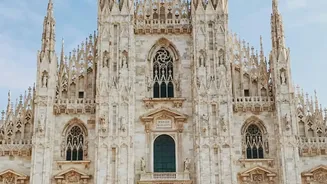
The historic centre of Florence, another UNESCO World Heritage site, is a treasure trove of Renaissance art and architecture. The city has implemented a 'Zona a Traffico Limitato' (ZTL), which severely restricts traffic, making its core exceptionally pedestrian-friendly. You can easily walk from the Duomo, with its magnificent dome, to the Ponte Vecchio bridge, and on to the Palazzo Pitti on the other side of the Arno River. The central spine of the tourist circuit is Via dei Calzaiuoli, a largely pedestrianised street connecting the Piazza del Duomo to the Piazza della Signoria. The entire historic area is only about 2.5 by 1.5 kilometres, meaning you can cross it in roughly 30 minutes without stopping. However, with world-class museums like the Uffizi Gallery and Accademia, you’ll want to take your time. Recent rules have further enhanced the walking experience by limiting sidewalk dining in some areas to improve flow.
Lisbon, Portugal: The Hilly Charm of Alfama
Lisbon's oldest district, Alfama, is a captivating maze of narrow, winding streets, steep staircases, and historic houses that largely survived the great earthquake of 1755. Its layout makes it a place that is truly meant to be discovered on foot. A smart strategy is to take a taxi or the historic Tram 28 up to the Castelo de São Jorge at the top of the hill and then make your way down. The castle itself offers stunning panoramic views of the city and the Tagus River. As you descend, you will encounter charming squares, the Lisbon Cathedral (Sé de Lisboa), and several 'miradouros' (viewpoints) like Santa Luzia and Portas do Sol, which offer postcard-perfect photo opportunities. The neighbourhood is also the birthplace of Fado music, and the Fado Museum is a worthwhile stop near the bottom of the hill.
Stockholm, Sweden: Island Hopping in Gamla Stan
Stockholm’s Old Town, Gamla Stan, is one of the largest and best-preserved medieval city centres in Europe. It's located primarily on the island of Stadsholmen and was founded in 1252. The area is a delightful tangle of cobblestone streets, colourful 17th and 18th-century buildings, and narrow alleys. One of the most famous is Mårten Trotzigs Gränd, the narrowest street in Stockholm at just 90 centimetres wide. Key landmarks are all within easy walking distance, including the Royal Palace, Stockholm Cathedral (Storkyrkan), and the Nobel Prize Museum located in the main square, Stortorget. A walk can easily be extended to the neighbouring island of Riddarholmen, home to Riddarholmen Church, the burial place of Swedish monarchs. The streets of Västerlånggatan and Österlånggatan form the main arteries, one bustling with shops and the other offering a quieter, more boutique feel.