






The Foundation: A Perfect Crust
Every great cheesecake begins with a solid foundation. While a classic digestive biscuit crust is lovely, chocolate cheesecake practically begs for a darker, richer base. The easiest and most effective option is a simple chocolate cookie crust. Take about
250g of chocolate sandwich cookies (like Oreos) and blitz them in a food processor until they form fine crumbs. If you don't have a processor, place them in a sealed bag and crush them with a rolling pin. Mix the crumbs with 85g of melted unsalted butter until the texture resembles damp sand. Press this mixture firmly and evenly into the bottom and slightly up the sides of a 9-inch springform pan. A flat-bottomed glass is perfect for this job. Bake the crust at 175°C (350°F) for 10 minutes to set it, then let it cool completely before you add the filling.
The Heart of the Matter: Silky Filling
The secret to a lump-free, velvety filling is temperature and technique. All your ingredients—especially the cream cheese and eggs—must be at room temperature. This is non-negotiable. Cold cream cheese will give you a lumpy batter no matter how much you mix. For the chocolate, use a good quality dark chocolate (60-70% cacao) for a rich, complex flavour. Melt 200g of chopped chocolate and let it cool slightly. In a large bowl, beat 900g of full-fat, room-temperature cream cheese with an electric mixer on low speed until smooth. Scrape down the sides of the bowl often. Add 250g of sugar, a pinch of salt, and a teaspoon of vanilla extract, mixing on low until just combined. The key is to avoid incorporating too much air, which leads to cracks. Add four room-temperature eggs, one at a time, mixing on low after each addition until the yolk just disappears. Finally, fold in the cooled melted chocolate and 240ml of room-temperature soured cream or heavy cream until the batter is uniform. Do not overmix!
The Secret Weapon: The Water Bath
The dreaded water bath (or bain-marie) is the single most important step for a creamy, crack-free cheesecake. It creates a steamy, humid environment in the oven, allowing the cheesecake to bake gently and evenly. To prevent water from leaking into your springform pan, wrap the outside of the pan with two or three layers of heavy-duty aluminum foil, ensuring there are no gaps. Place the wrapped pan in a larger roasting tin. Pour your prepared filling into the cooled crust. Then, carefully pour boiling water into the roasting tin until it comes about halfway up the sides of the springform pan. Now it’s ready for the oven.
The Bake and Crucial Cool-Down
Patience is a virtue, especially when baking cheesecake. Bake at 160°C (325°F) for about 60 to 75 minutes. The cheesecake is done when the edges are set, but the centre (about a 3-inch circle) still has a slight wobble, like jelly. Don’t be tempted to overbake it; the residual heat will finish the job. Once it's done, turn off the oven completely, prop the oven door open with a wooden spoon, and let the cheesecake cool slowly in the oven for one hour. This gradual temperature change is your best defence against a dreaded crack forming down the middle. After an hour, remove it from the oven, take it out of the water bath, and let it cool completely on a wire rack before refrigerating. For best results, chill it for at least 6 hours, or preferably overnight.
Finishing Touches: Ganache and Beyond
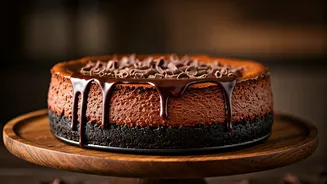
Your perfect cheesecake deserves a beautiful finish. A simple, elegant chocolate ganache is the perfect topping. To make it, gently heat 120ml of heavy cream until it's just simmering. Pour it over 120g of finely chopped dark chocolate in a bowl. Let it sit for five minutes, then whisk until smooth and glossy. Let the ganache cool and thicken slightly before pouring it over your chilled cheesecake, spreading it to the edges. Other options include a dusting of cocoa powder, a pile of fresh raspberries, or a dollop of whipped cream. Let the cheesecake sit for a few minutes before slicing with a hot, clean knife for perfect slices every time.