


The Corporate Ache: Why Your Back Hurts
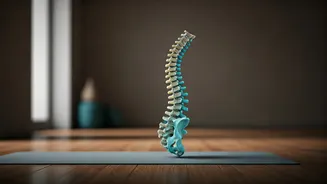
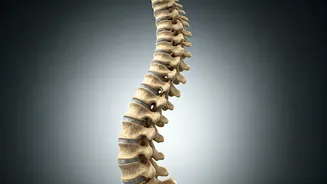
The modern workplace, with its long periods of sitting, is a primary culprit behind lower back pain. [15, 16] When you're at a desk for hours, often with suboptimal posture, immense pressure is placed on your lumbar spine. [17] This can compress the discs
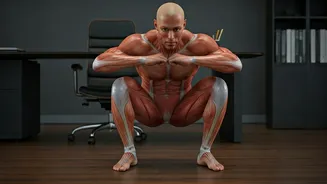
between your vertebrae and lead to muscle imbalances, as your core muscles become weak while your hip flexors tighten. [17, 18] Over time, this combination of prolonged sitting, poor posture, and muscle strain can lead to chronic stiffness and pain. [16, 17] Even mental stress from job pressures can cause you to unconsciously tense your muscles, further contributing to back and neck issues. [15]
An Antidote to Sitting: Introducing Child's Pose (Balasana)
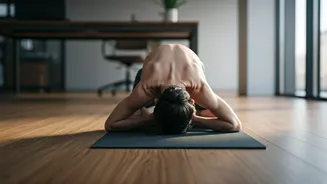
Child's Pose, or Balasana in Sanskrit, is a gentle, restorative yoga posture that acts as a powerful antidote to the strains of a sedentary job. [11] The name comes from the Sanskrit "bala," meaning child, and it's a resting pose that encourages surrender and relaxation. [1] It works by providing a mild, sustained stretch to the lower back muscles, helping to ease the tension that accumulates from sitting all day. [13] By elongating the spine and gently stretching the hips, thighs, and ankles, this pose can decompress the lower back, providing welcome relief and improving flexibility. [11, 24]
Your Step-by-Step Guide to Finding Relief
Performing Child's Pose correctly is simple and can be done by almost anyone. Here’s a basic guide:
1. **Start on all fours:** Begin on your hands and knees in a tabletop position, with your wrists under your shoulders and knees under your hips. [7, 14]
2. **Position your feet:** Bring your big toes to touch. You can keep your knees together or, for a deeper hip stretch, separate them to hip-width or wider. [1, 22]
3. **Fold forward:** As you exhale, slowly lower your hips back towards your heels. [3] Allow your torso to rest between or on top of your thighs. [22]
4. **Rest your head:** Gently lower your forehead to rest on the mat. [4] This sends a signal to your brain that it's safe to relax. [7]
5. **Position your arms:** You have two main options. You can extend your arms forward with your palms down for an active stretch, or rest your arms alongside your body with palms facing up, which helps release shoulder tension. [3, 4]
6. **Breathe and hold:** Stay in the pose for at least 30 seconds to a few minutes, focusing on deep, slow breaths. [9, 13] Breathe into your back, feeling it expand with each inhale.
Making the Pose Work for You: Modifications for Every Body
Child's Pose is meant to be comfortable, not a strain. If you feel discomfort, modifications can help.
* **If your head doesn't reach the floor:** Place a folded blanket, pillow, or yoga block under your forehead for support. [4, 25]
* **If your hips are tight or don't reach your heels:** Place a rolled blanket or bolster between your calves and thighs to reduce the intensity of the stretch. [6, 12]
* **If your knees hurt:** Place a folded blanket under your knees for extra cushioning. [23] If you have a significant knee injury, it's best to avoid the pose or consult a professional. [2]
* **For a wider stretch:** Spreading your knees wider than your hips creates more space for your torso and can provide a deeper hip opening, which is also helpful during pregnancy. [5, 25]
Incorporating Relief into Your Workday
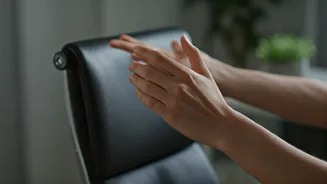
The beauty of this stretch is its simplicity. Find a quiet corner in the office, a conference room, or even use your personal office space for a quick 2-3 minute reset. Taking short breaks to perform this stretch can counteract hours of sitting. [18] For a more discreet option, you can even perform a modified version while seated or standing. A standing Child's Pose involves resting your hands on a desk or chair back, keeping your feet on the floor, and bending forward from the hips, bringing your torso toward your thighs to elongate the spine. [14] The key is consistency; a few minutes each day can make a significant difference in managing back tightness and preventing stiffness. [20]