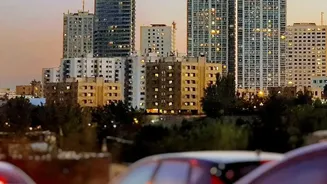









The City That Never Cools
We've all heard of global warming, but a more immediate issue is playing out in our urban backyards: the 'urban heat island' effect. This happens when a city is significantly warmer than its surrounding rural areas. During the day, materials common in urban development—concrete,
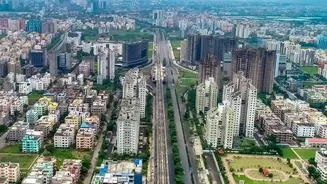
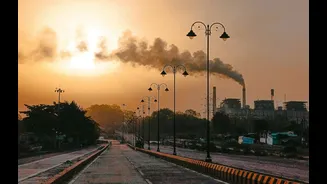
asphalt, and dark-coloured rooftops—absorb and store vast amounts of solar radiation. Unlike natural landscapes like forests or fields, which cool down through evaporation and have more shade, these man-made surfaces act like giant heat sponges. The real problem begins after sunset. Instead of cooling down, these materials slowly release the stored heat back into the atmosphere all night long. This creates a 'night microclimate' where the air temperature remains stubbornly high, long after the sun has disappeared. This phenomenon is especially pronounced in the dense, rapidly built-up corridors of Tier 2 cities, where green spaces are often the first casualty of development.
India's Tier 2 City Challenge
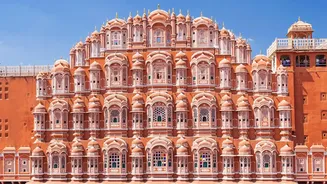
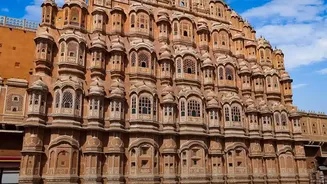
Tier 2 cities across India, such as Lucknow, Jaipur, and Kochi, are the engines of new growth. This rapid, often unplanned, urbanisation creates perfect conditions for intense night heat. Development often occurs along major transport routes, creating dense 'city corridors'. These areas are typically packed with buildings and paved surfaces, with very little green cover to provide natural cooling. Studies show that temperatures in these urban centres can be several degrees higher than in adjacent non-urban areas. In places with informal settlements, the effect is even worse due to construction materials and lack of infrastructure, with many residents reporting sleep disturbances from night-time heat. The lack of urban planning that prioritises cooling elements like parks, water bodies, and tree cover means these cities are inadvertently designing themselves to be hotter.
How Heat Hijacks Your Sleep
Our bodies are hardwired to associate a drop in core temperature with the onset of sleep. As evening approaches, your internal thermostat naturally starts to cool down, signalling to your brain that it's time to rest. High ambient heat disrupts this crucial process. When your bedroom is too warm, your body struggles to shed heat, making it harder to fall asleep and stay asleep. This environmental stress leads to more frequent awakenings and less time spent in the most restorative stages of sleep: deep sleep and REM (Rapid Eye Movement) sleep. REM sleep, in particular, is when your body's ability to regulate its own temperature is reduced, making you more vulnerable to the room's heat. The consequences are not just next-day grogginess; chronic poor sleep is linked to fatigue, reduced productivity, and an increased risk for serious health issues like cardiovascular and respiratory problems.
Searching for a Cooler Future
While reaching for the air conditioner remote is the immediate fix, it's a double-edged sword. AC units pump hot air outside, further contributing to the urban heat island effect, and their high energy consumption strains power grids and increases carbon emissions. A more sustainable approach lies in smarter urban design. Cities around the world are exploring 'nature-based solutions' that integrate green and blue infrastructure. This includes planting more trees for shade, creating parks, building 'green roofs' covered in vegetation, and preserving water bodies, all of which can significantly lower local temperatures. Other strategies involve using building materials with higher reflectivity ('cool roofs') that absorb less heat. These interventions don't just cool our cities; they improve air quality, support biodiversity, and create healthier, more liveable communities for everyone.