

The Heartbeat of Maharashtra on a Plate
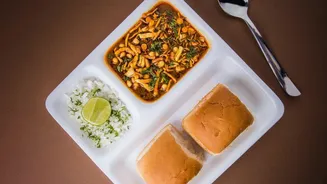
To understand Misal Pav is to understand the spirit of Maharashtra. Its name says it all: 'Misal' means 'mixture' in Marathi, a nod to the vibrant medley of ingredients that define it. At its core, the dish consists of a spicy curry made from sprouted
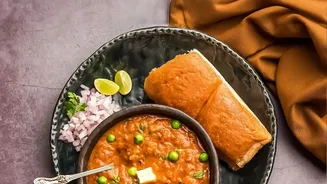
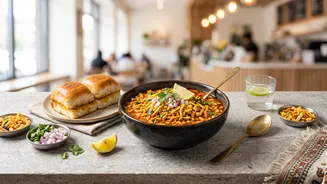
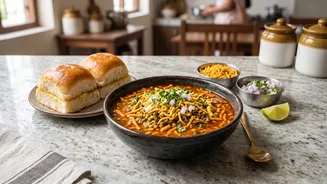
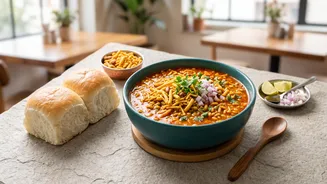
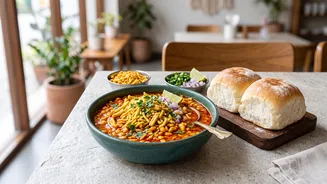
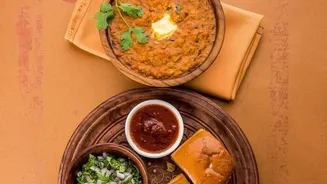
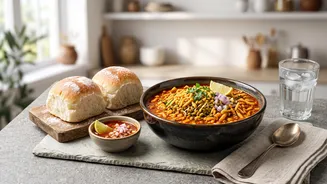
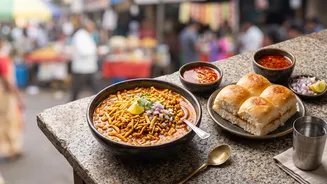
moth beans (matki), served with soft bread rolls called pav. But that simple description hardly does it justice. It is a dish of layers, textures, and customizable heat. The base is the 'usal', a flavourful curry of cooked sprouts. On top of this comes the 'rassa' or 'kat', a fiery, often oily, thin gravy that gives the dish its signature punch. Finally, a generous heap of 'farsan'—crispy, savoury fried snacks—is added, along with chopped raw onions, fresh coriander, and a wedge of lemon. It’s a breakfast staple, a beloved street food, and a hearty meal all in one.
The Fiery Soul: Usal and Rassa
The foundation of any good misal is the 'usal', a nutritious curry made from sprouted moth beans, known as 'matki'. These beans, with their nutty and earthy flavour, are simmered with a blend of onion, ginger, garlic, and traditional Maharashtrian spices. While matki is classic, some variations use sprouted moong beans or a mix of sprouts. But the true soul of the dish is the 'rassa' (also called 'tarri' or 'kat'), the spicy, watery gravy that is poured over the usal. This is where the heat comes from. Often shimmering with a layer of red oil, the rassa's spice blend can vary dramatically from kitchen to kitchen. Some vendors even offer different levels of spiciness, allowing diners to choose their own adventure, from a mild simmer to an incandescent inferno. This separation of the base curry and the spicy gravy allows for perfect customization.
The Essential Crunch: All About Farsan
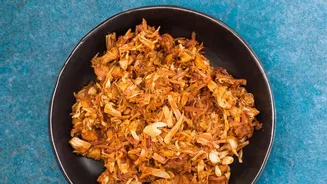
What truly elevates Misal Pav from a simple curry to a textural masterpiece is the 'farsan'. Farsan is a broad term for a variety of salty, fried Indian snacks, often made from gram flour. Think of it as a savoury trail mix that includes items like sev (crispy chickpea flour noodles), ganthiya, and fried lentils. While originating in Gujarat, farsan has become an indispensable part of Maharashtrian cuisine. In Misal Pav, its role is crucial. Sprinkled generously on top just before serving, the farsan provides a delightful crunch that contrasts with the soft sprouts and the liquid curry. As you eat, some of it softens, absorbing the spicy gravy, while the rest remains crisp, ensuring every spoonful is different. Without farsan, misal would lose half its character.
A Tale of Many Cities: Regional Variations
Misal Pav is not a monolithic dish; it changes as you travel across Maharashtra, with each region boasting its own prized version. The Kolhapuri Misal is perhaps the most famous, renowned for its searing heat, derived from a potent onion-garlic masala. In contrast, Puneri Misal is often milder and can have a slightly sweet and tangy profile, sometimes including poha (flattened rice) in its assembly. Head to Nashik, and you might find a misal with a 'kala masala' (black spice mix), served with fried papad and yogurt on the side to balance the spiciness. The Khandeshi version is also known for its fiery black gravy, while Nagpuri misal may feature grated coconut as a topping. These variations reflect the local produce and palate, making the exploration of misal a culinary journey in itself.
How to Eat It: The Ritual of Assembly
Eating Misal Pav is an interactive experience. Typically, the usal and rassa are served in a bowl, with the pav, farsan, chopped onions, and lemon wedges on the side. The ritual begins by creating your ideal topping. You add the crunchy farsan over the hot curry, followed by a sprinkle of sharp raw onions and fresh coriander. Then, squeeze a bit of lemon juice over the top to cut through the richness and add a layer of tang. You can tear off a piece of the soft pav and use it to scoop up the mixture, or you can dunk it into the gravy and let it soak up the flavours. There is no single right way, but the key is to eat it immediately after assembly, ensuring the farsan stays crunchy for that all-important textural contrast.