







So, What Exactly Was Found?
An international team of scientists has confirmed the discovery of 31 new marine species in the tropical South Atlantic Ocean. This wasn't the result of years of painstaking lab work after a voyage; thanks to advanced technology, many of these species were
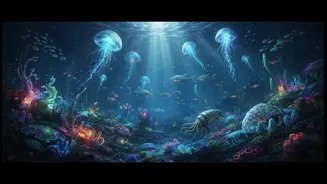
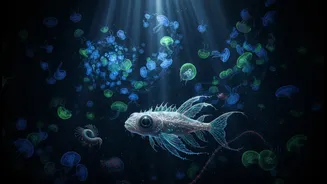
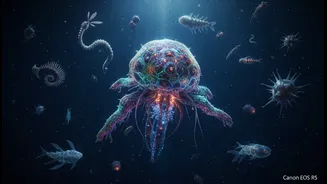
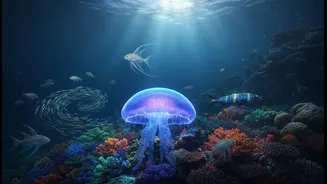
confirmed as new in a matter of days right on the research vessel, the Falkor (too), operated by the Schmidt Ocean Institute. The list of newfound creatures reads like something from a science fiction novel: a speedy gossamer worm, nine new types of jellyfish, seven species of siphonophores (colonial animals related to corals), and even single-celled organisms large enough to be seen with the naked eye.
Journey to the Midwater Zone
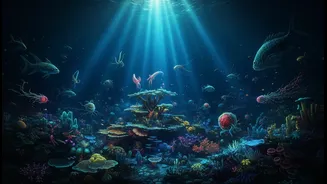
This discovery happened in one of the most mysterious and largest habitats on Earth: the ocean's midwater zone, also known as the twilight zone. This is the vast expanse of water between the sunlit surface and the dark seafloor, roughly 600 to 3,300 feet deep. Because of its sheer size, depth, and the immense pressure, it remains the planet's least-explored ecosystem. The expedition, involving experts from Brazil, the US, Japan, and Australia, used a sophisticated underwater robot named SuBastian to navigate these challenging depths and capture high-definition footage of creatures in their natural habitat.
Technology Unlocking the Deep
A major reason this expedition was so successful was its use of groundbreaking technology. For many deep-sea animals, which are often soft and gelatinous, traditional collection methods like nets can be destructive. This mission used non-invasive, high-tech imaging systems to observe the animals without harming them. One piece of equipment, a special microscope nicknamed “the Squid,” even allowed scientists to image the living 3D cellular structure of organisms at sea for the first time ever. This leap forward means scientists can now link an organism's cellular makeup to its function in the extreme deep-sea environment, opening a new frontier in marine biology.
A Treasure Trove of Bizarre Life
The discoveries paint a vivid picture of life's adaptability. The team found ethereal jellies, a ghostly glass squid, and a pelagic octopus feeding on a jellyfish nearly 800 metres down. Among the most fascinating finds were the siphonophores, which look like single creatures but are actually colonies of individual, specialized organisms working together. They also documented several new species of larvaceans—tadpole-like animals that are, surprisingly, more closely related to humans than to other invertebrates. The sheer diversity and abundance of life found has surprised even the seasoned experts on board.
Why This Discovery Matters to Us
While a new type of jellyfish off the coast of Brazil might seem distant, these discoveries have global significance. They underscore how little we know about the biodiversity of our own planet. As chief scientist Dr. Karen Osborn noted, the midwater is filled with incredible animals we are only just beginning to understand. This hidden world plays a crucial role in the planet's health, including how the ocean absorbs carbon. Many of these midwater creatures migrate towards the surface at night to feed, helping to transport carbon to the deep ocean when they return. Understanding this ecosystem is vital for understanding climate regulation. Furthermore, the unique adaptations of these creatures could hold keys to new medicines and biotechnologies.
The Race Against Time
This discovery comes at a critical time. The very same regions of Brazil's Equatorial Margin are also being targeted for deep-sea oil and gas exploration. For instance, Brazil's state oil company, Petrobras, is actively exploring the Potiguar Basin for new oil reserves. New modeling suggests that this expansion presents a significant risk of oil spills, which could devastate these newly discovered, fragile ecosystems. The discovery of such rich, unique biodiversity highlights the urgent need to balance commercial interests with conservation, and to consider protecting these remarkable deep-sea habitats before they are irreversibly damaged.