







A Deliberate Policy Shift
This new era didn't happen by accident. It is the direct result of a strategic government pivot. The Indian Space Policy, formally unveiled in 2023, was designed to liberalise the sector and unleash private innovation. The policy created a clearer framework,
defining roles for different bodies to prevent conflicts of interest and streamline processes. At the heart of this is the Indian National Space Promotion and Authorisation Centre (IN-SPACe), which acts as a single-window agency to promote, authorise, and supervise all space activities for private entities. This move was a clear signal: private companies are no longer just vendors for the national agency but are encouraged to build, own, and operate end-to-end space systems. The goal is ambitious: to grow India's slice of the global space economy from around $8 billion to over $44 billion by 2033.
The Trailblazers Reach Orbit
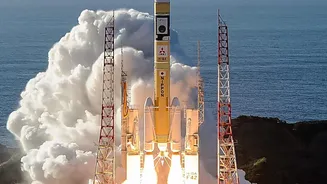
The policy bore spectacular fruit on July 18, 2026, when Skyroot Aerospace, a Hyderabad-based startup founded by former ISRO scientists, successfully launched its Vikram-1 rocket into orbit. This achievement made India only the third country, after the US and China, with a demonstrated private orbital launch capability. The mission, named 'Aagaman' (Arrival), placed several small payloads into a 450-km-high orbit, proving the viability of its 3D-printed engines and all-carbon composite structure. Following close behind is Chennai-based Agnikul Cosmos, which also boasts a 3D-printed engine and conducted a successful suborbital flight of its Agnibaan rocket in May 2024. These companies are at the forefront of a burgeoning ecosystem of over 400 space startups working on everything from satellite manufacturing to propulsion systems.
A New Role for ISRO
The rise of private players does not mean the end of ISRO. Instead, it marks an evolution of its role. Under the new policy, ISRO is transitioning away from the routine manufacturing of operational rockets and satellites. This responsibility will increasingly be handled by private industry, freeing up the national agency to focus its formidable expertise on what it does best: pioneering research, deep-space exploration, national security missions, and developing next-generation technologies. ISRO is now a facilitator and mentor, providing private firms with access to its world-class testing facilities, launchpads, and decades of accumulated knowledge. This state-enabled commercialisation allows India to build a more resilient and layered space capability, where ISRO pushes the frontiers of science while the private sector builds a robust space economy.
The Commercial Imperative
The primary driver for this new ecosystem is the booming global market for small satellite launches. Companies worldwide need fast, reliable, and affordable ways to get their hardware into low Earth orbit for telecommunications, Earth observation, and data services. Indian startups like Skyroot and Agnikul are positioning themselves to capture a significant share of this market. By developing smaller, more agile launch vehicles, they offer a more flexible alternative to hitching a ride on larger, less frequent missions. This creates a competitive launch-on-demand capability that was previously missing. The impact extends beyond launch services, stimulating growth in an entire domestic supply chain for satellite components, ground station services, and data analytics, creating jobs and attracting significant foreign investment.
Challenges on the Horizon
Despite the triumphant launches, the path ahead is not without obstacles. Attracting sustained, long-term funding remains a critical challenge for capital-intensive rocket development. While Skyroot recently achieved 'unicorn' status with a valuation over $1.1 billion, the industry as a whole needs consistent investment to scale up. There's also the challenge of talent. The very success of the private sector, offering lucrative opportunities, has led to a migration of experienced scientists from ISRO, raising concerns about its impact on long-term national missions. Furthermore, Indian companies face stiff competition from established international players like SpaceX and Rocket Lab, which have a significant head start in flight heritage and launch frequency. Proving reliability over multiple missions will be key to winning the trust of global customers.