







The Two Sides of the Coin: Hard vs. Soft Skills
In today’s workplace, employers are looking for a balanced portfolio of skills. It's no longer enough to be a technical genius without communication skills, or a great communicator with no technical knowledge. The most sought-after candidates blend 'hard'
skills (teachable, technical abilities) with 'soft' skills (interpersonal traits that determine how you work and interact with others). The message from recruiters is clear: master the tools of your trade, but also master the art of working with people. This combination is what makes a candidate truly valuable and future-proof.
Hard Skill: AI and Machine Learning Literacy
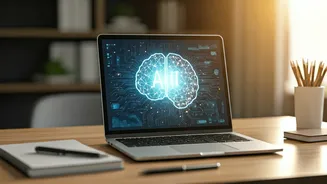
Artificial Intelligence is no longer a niche field for data scientists alone. Companies across all sectors in India, from e-commerce to finance and healthcare, are integrating AI to improve efficiency and create better customer experiences. Employers now value professionals who understand the fundamentals of AI and Machine Learning. This doesn't mean you need to be able to build complex algorithms from scratch. Rather, it’s about understanding what AI can do for your business function—whether it's using AI-powered tools for marketing analytics, understanding AI-driven financial models, or leveraging machine learning for supply chain optimisation. This literacy is a significant differentiator.
Hard Skill: Data Analytics and Interpretation
We live in an era of big data. But data is useless without people who can interpret it. The ability to collect, clean, analyse, and, most importantly, derive actionable insights from data is a top-tier skill. This is crucial not just in tech roles but in marketing, HR, and operations as well. Employers want people who can look at a spreadsheet or a dashboard and tell a story, identify a trend, or spot a problem. Being able to back up your recommendations with data is one of the most powerful ways to add value to any organisation.
Soft Skill: Adaptability and Critical Thinking
The one constant in the modern workplace is change. Business models are disrupted, new technologies emerge, and market conditions shift. Employers need people who don’t just cope with change but embrace it. Adaptability is about being flexible, learning new things quickly, and staying resilient in the face of uncertainty. This goes hand-in-hand with critical thinking—the ability to analyse information objectively and make a reasoned judgement. In a world of misinformation and rapid change, employees who can think for themselves and solve complex, unstructured problems are invaluable.
Soft Skill: Communication and Emotional Intelligence
As automation handles more routine tasks, the uniquely human skills become more important. Clear communication—both written and verbal—is fundamental. In a world of hybrid work and global teams, the ability to convey ideas and collaborate effectively across digital channels is non-negotiable. Closely related is Emotional Intelligence (EQ), the ability to understand and manage your own emotions and recognise them in others. High EQ leads to better teamwork, stronger leadership, and more effective client relationships. It's the glue that holds high-performing teams together.
Bonus Skill: Sustainability and Green Skills
A growing trend, especially among larger corporations in India, is the focus on Environmental, Social, and Governance (ESG) goals. This has created demand for 'green skills'. These can range from specific technical expertise in renewable energy or sustainable agriculture to broader knowledge of sustainability principles that can be applied to roles in finance, operations, or marketing. Understanding how your role can contribute to the company's sustainability targets is becoming a key advantage, showing that you are a forward-thinking professional aligned with modern business priorities.