


A First-of-its-Kind Global Audit
Scientists recently undertook a monumental task: to quantify the contribution of non-flying animals to seed dispersal across the globe. The study synthesized data covering 186 species of terrestrial mammals, from tiny rodents to colossal elephants. It
aimed to understand a process that has been notoriously difficult to measure on a large scale. While the role of birds and bats in spreading seeds is well-documented, the collective impact of ground-dwelling animals has remained a major knowledge gap. This research combined thousands of individual field studies, using machine learning to create a global map of seed dispersal by mammals, revealing just how critical these animals are to the health of our planet's ecosystems.
The Astonishing Impact of Ground Gardeners
The findings are staggering. Researchers discovered that, due to population declines, the ability of animal-dispersed plants to keep pace with climate change has already been slashed by 60 percent. This is because mammals, particularly large ones, are champions of long-distance dispersal. An elephant, for instance, can carry seeds up to 65 kilometres away from the parent plant, depositing them in a new location complete with a dose of natural fertiliser. This service is vital for plants to migrate to more suitable climates as temperatures change. The study shows that even a small loss of animal species can cause a disproportionately large decline in seed dispersal, with some regions experiencing a 95% drop despite losing only a few species.
Why Land Animals Are Different
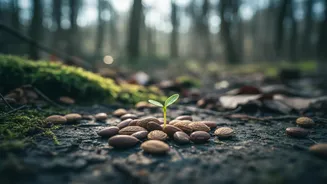
Non-flying mammals offer unique advantages as seed dispersers. Unlike birds, which might fly over unsuitable habitats, terrestrial animals move through the landscape, depositing seeds directly into the soil. Some animals, like squirrels, are collectors who bury nuts and seeds for later, often forgetting their stashes and inadvertently planting new trees. Larger animals like bears, tapirs, and primates can swallow large fruits and seeds that are too big for most birds, making them the sole dispersers for many plant species. Their digestive systems can also enhance germination, breaking down tough seed coats and preparing them to sprout. This complex web of interactions ensures that a diverse range of plants can reproduce and thrive.
A Silent Crisis for Plant Life
The study highlights a grave threat: the loss of these animal gardeners is creating a silent crisis for the world’s plants. Human activities like hunting, deforestation, and habitat fragmentation are causing sharp declines in mammal populations. When these animals disappear, plants lose their ability to move. They become trapped, unable to escape warming temperatures or colonise new areas. This can lead to what scientists call 'functional extinction'—where a plant species still exists but can no longer reproduce effectively, leading to an inevitable decline. Studies show that without animal dispersers, the extinction risk for some tropical trees could increase tenfold.
The View from India
This global issue has profound implications for India, a megadiverse country where countless plants rely on animal partners. Key species like Asian elephants, bears, deer, and hornbills are vital 'gardeners' of Indian forests. Elephants, for example, are crucial for dispersing large-seeded trees that form the canopy of many forests. Research in India has identified at least 18 critically important seed-dispersing species, six of which are already threatened with extinction. Their loss could jeopardise the future of at least 86 plant species that depend on them. Protecting these animals is not just about wildlife conservation; it is about preserving the fundamental processes that keep our forests healthy, resilient, and biodiverse.