







The Limits of a Plain Text CV
For decades, the curriculum vitae has been the key to the professional kingdom. It's a neat, tidy, and standardised way to present your work history and education. But in 2024, it’s also incredibly limiting. A plain text CV can only describe your accomplishments.
It might say “Managed a successful social media campaign that increased engagement by 40%,” but it can’t show the stunning visuals, the clever copy, or the data dashboard that proves it. It reduces your vibrant, complex career into a series of bullet points, easily lost in a stack of hundreds of other similar-looking documents. Recruiters, buried under applications, spend mere seconds scanning each one. A list of skills is abstract; a demonstrated project is concrete proof.
Enter the Interactive Digital Portfolio
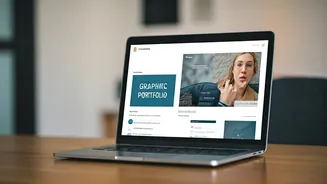
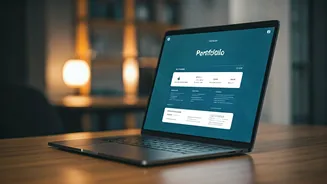
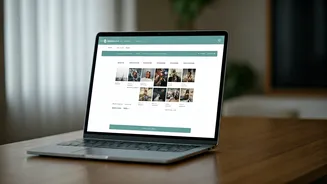
So, what’s the alternative? An interactive digital project portfolio. This isn't just an online version of your CV. It’s a curated, dynamic, and visual collection of your best work. Think of it as your professional highlight reel. It could be a personal website, a Behance profile for designers, a GitHub repository for developers, or a simple landing page with links to case studies for marketers and project managers. The key is “interactive” and “project-based.” It invites a recruiter to click, explore, and engage with your work. Instead of reading a bullet point, they can now see the app you built, read the article you wrote, or analyse the marketing campaign you executed.
Show, Don’t Just Tell
The single greatest advantage of a portfolio is its ability to demonstrate competence. Anyone can list “Proficient in Python” on a CV. Far fewer can show a link to a functioning web scraper they built with it on GitHub, complete with clean code and documentation. This principle applies across industries. For a writer, it’s a link to a published article, not just the title. For a product manager, it’s a case study detailing a product launch, from user research to post-launch metrics, complete with wireframes and user flow diagrams. This shift from claiming a skill to proving it instantly moves your application to the top of the pile. It answers the recruiter’s biggest question: “Can this person actually do the job?”
Tell a Compelling Career Story
A CV is a chronological list; a portfolio is a narrative. It allows you to frame your work and give it context. For each project, you can write a short case study explaining the challenge, your specific role, the process you followed, the tools you used, and the measurable outcome. This storytelling is incredibly powerful. It reveals your thought process, your problem-solving skills, and your ability to deliver results. You can explain *why* you made certain decisions, what you learned from a project that didn't go as planned, and how you collaborated with a team. This context transforms you from a list of job titles into a strategic, thoughtful professional.
How to Get Started Today
Building a portfolio sounds daunting, but it doesn't have to be. Start small. You don’t need a fancy custom-coded website from day one. Platforms like Carrd, Notion, or even Adobe Portfolio offer simple, template-based ways to get online quickly.
1. Select Your Best Work: Choose 3-5 projects that you’re most proud of and that best represent the skills you want to highlight for your target job.
2. Structure Your Case Studies: For each project, write a simple summary. Use the STAR method (Situation, Task, Action, Result) as a guide. What was the problem? What was your goal? What did you do? What was the outcome?
3. Add Visuals: Include screenshots, videos, design mockups, code snippets, or links to the final product. Visuals break up text and make your work tangible.
4. Integrate It: Don't ditch your CV entirely. Instead, upgrade it. Put a prominent link to your portfolio at the top of your CV, in your email signature, and on your LinkedIn profile. Treat your CV as the trailer and your portfolio as the main feature film.