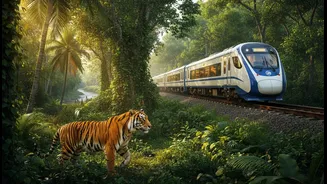





The Promise of a Modern Railway
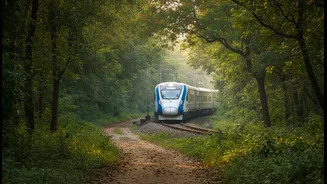
The Vande Bharat Express has captured the nation's imagination. These semi-high-speed trains are transforming rail travel, connecting major cities faster than ever and boosting both business and tourism. With features like quicker acceleration and enhanced
passenger comfort, they represent a significant leap forward in modernising India's vast railway network. The vision is clear: a web of efficient, high-speed routes crisscrossing the country, reducing travel time and driving economic growth. As services expand, they are also making previously remote destinations, including areas near national parks, more accessible. However, this rapid expansion comes with a hidden cost, forcing a difficult conversation about the price of progress.
A Collision Course with Nature
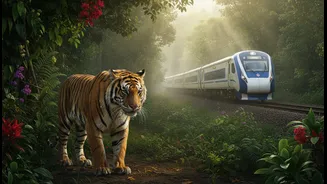
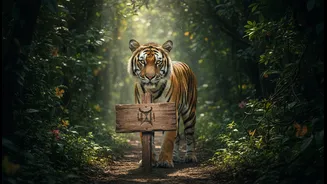
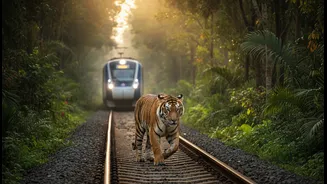
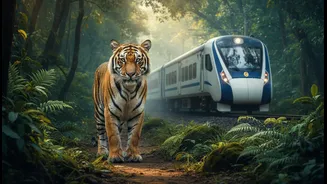
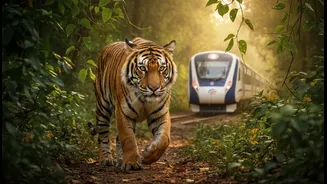
The expansion of India's railway lines has long posed a threat to its wildlife. Railway tracks frequently cut through natural habitats, fragmenting ecosystems and leading to tragic accidents involving animals. According to a Comptroller and Auditor General (CAG) report, over 63,000 animals, including 73 elephants, were killed on tracks between 2017 and 2021. Elephants are particularly vulnerable, with numerous deaths reported in states like Assam and West Bengal. The introduction of faster trains like the Vande Bharat, which can reach speeds of up to 180 km/h, amplifies this risk. The higher speed and increased frequency of trains on these upgraded routes reduce the time animals have to cross safely, turning vital corridors into deadly traps.
Identifying the Sensitive Hotspots
The conflict is not theoretical; it's happening in critical habitats across the country. In collaboration with the Wildlife Institute of India (WII), the government has identified at least 110 sensitive railway stretches in elephant ranges and 17 more in tiger habitats that require urgent attention. These are not just remote forest tracks; they include lines near well-known protected areas. For example, railway upgrades in Jharkhand's Palamu Tiger Reserve have raised alarms about the impact on elephant movement. Similarly, routes passing through the foothills of the Himalayas, such as the Delhi-Dehradun line, traverse regions rich in biodiversity. Railway tracks that intersect corridors in Assam's Dihing Patkai and Kaziranga landscapes, and those near the Gir National Park in Gujarat, home to the Asiatic lion, are all areas of major concern.
Engineering for Coexistence
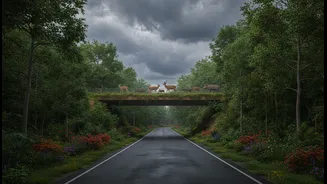
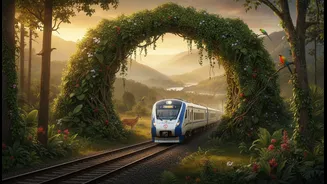
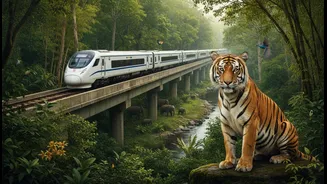
Fortunately, the challenge is being met with innovative solutions aimed at mitigation. The core idea is to move from conflict to coexistence through careful planning and engineering. In a major collaborative effort, the Environment Ministry and Indian Railways are working on a host of measures. These include constructing dedicated underpasses and overpasses that allow animals to cross tracks without danger. In some areas, existing bridges are being modified and ramps are being built to facilitate safe passage. Fencing is also being strategically deployed to guide animals toward these safe crossings and prevent them from wandering onto the tracks in high-risk zones. These infrastructure upgrades are essential to ensure that connectivity for humans does not mean fragmentation for wildlife.
Technology and Policy to the Rescue
Beyond physical structures, technology is playing a crucial role. One of the most promising innovations is the AI-powered Intrusion Detection System (IDS), which uses optical fibres along the tracks to act as sensors. This system can detect the vibrations caused by an elephant's movement and send real-time alerts to train drivers and station masters, giving them advance warning to slow down. The system has been successfully deployed on the Northeast Frontier Railway and is being expanded. These technological solutions are part of a broader policy shift. Joint advisories and workshops involving the Ministry of Railways, the Environment Ministry, and wildlife experts aim to integrate conservation needs right from the planning stage of new projects, rather than treating them as an afterthought.