


A New Treasure Map for the Moon
For decades, scientists have gathered evidence suggesting the presence of water on the Moon, particularly in the form of ice hidden in permanently shadowed craters at the poles. Early missions in the 1990s gave us hints, and India's own Chandrayaan-1
in 2009 provided crucial data confirming water molecules. More recently, projects like NASA's Stratospheric Observatory for Infrared Astronomy (SOFIA) have generated wide-area maps showing how water is distributed. These maps combine data from multiple instruments, including temperature readings and reflectance data, to pinpoint areas with conditions cold enough for ice to persist. By charting these deposits with greater precision than ever before, researchers have essentially created a treasure map for future missions, identifying the most likely spots to find this critical resource.
Why 'Accessible' is the Magic Word
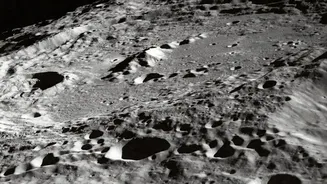
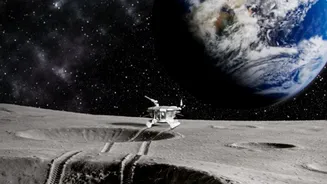
The key breakthrough isn't just knowing that water exists, but knowing where it's potentially accessible. Much of the lunar water is believed to be in permanently shadowed regions (PSRs) — craters and depressions that haven't seen direct sunlight in billions of years. Temperatures in these areas are incredibly cold, which allows ice to remain stable. The new maps distinguish between different types of deposits, showing how water concentration varies with surface features. Some ice may be mixed in with the lunar soil (regolith), while other deposits could be thicker sheets. Understanding this is vital because accessing and extracting the ice is a major engineering challenge. A location that gets even brief periods of sunlight might be easier for a solar-powered rover to operate in, making the resources there more accessible than those in the deepest, coldest shadows. NASA's upcoming VIPER rover mission is designed to land near the south pole to investigate these very questions on the ground.
Water: The Fuel of the Space Economy
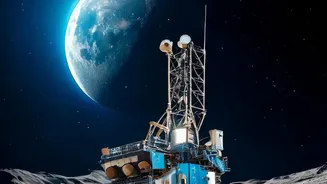
The excitement over lunar ice goes far beyond just providing drinking water for astronauts. Water (H2O) is one of the most valuable resources in the solar system because it can be converted into rocket fuel. Using solar-powered electrolysis, water can be split into its component parts: hydrogen and oxygen. Liquid hydrogen and liquid oxygen are a potent combination for rocket propellant. This process, known as In-Situ Resource Utilization (ISRU), is a complete game-changer. It means that the Moon could one day become a refueling station for spacecraft. Launching anything from Earth is incredibly expensive due to our planet's strong gravity. By producing fuel on the Moon, missions heading deeper into space, such as to Mars, could launch from Earth with less fuel and top up at the Moon, dramatically cutting costs and making deep space exploration more sustainable.
Building Lunar Homes: From Sci-Fi to Reality
The idea of sustainable habitats is directly linked to water availability. Beyond drinking and making rocket fuel, water is essential for long-term human presence. It can be used to grow food in lunar greenhouses and provides a source of breathable oxygen. Water is also an excellent material for radiation shielding. Space is filled with harmful radiation from the sun and deep space, and astronauts on the Moon will need protection. A layer of water incorporated into habitat walls could provide a significant shield, protecting inhabitants from this constant danger. Using local resources like water and lunar soil (regolith) to build and sustain a base is the only practical way to establish a permanent human foothold on the Moon. Without it, every single litre of water, every breath of air, and every kilogram of shielding would have to be launched from Earth at astronomical cost.
India's Lunar Ambitions and the Global Race
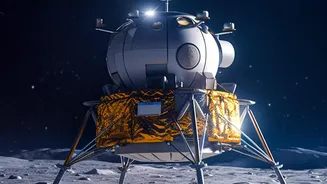
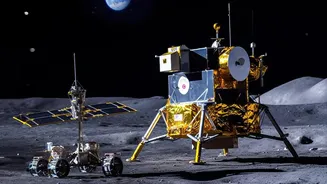
This global pursuit of lunar resources has special resonance for India. Following the historic success of the Chandrayaan-3 mission, which made India the first nation to land near the lunar south pole, the country is perfectly positioned to be a key player in the next phase of exploration. The data gathered by ISRO missions have already contributed significantly to our understanding of lunar water. As NASA pushes forward with its Artemis program, which aims to land astronauts near the south pole and establish a long-term presence, a new space race is unfolding. This is not just a race for prestige but for strategic resources. The nations and private companies that learn to effectively locate and utilize lunar water will lead the development of a true lunar economy, shaping the future of humanity's expansion into the solar system.