

Cosmic Delivery Rooms
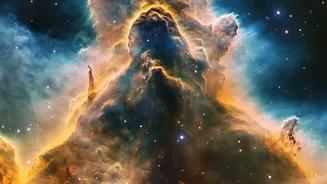
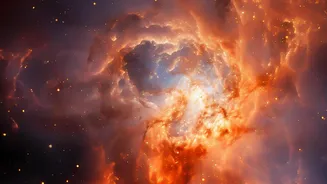
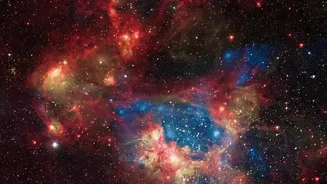
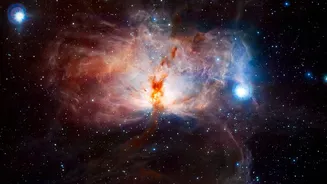
Across the universe, vast, cold clouds of gas and dust drift through space. These are molecular clouds, and within their depths, the story of creation unfolds. Known to astronomers as 'stellar nurseries,' these regions are where gravity begins to pull
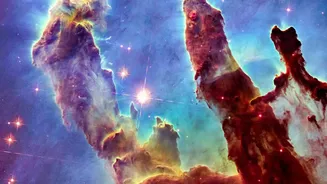
clumps of matter together. As these clumps grow denser, they heat up, eventually igniting into new stars. Iconic images from the JWST, like the 'Cosmic Cliffs' in the Carina Nebula or the famous Pillars of Creation, show these nurseries in breathtaking detail. They are not just beautiful; they are active laboratories for understanding how stars and solar systems come into being. Before Webb, these regions were largely opaque, but now we have a front-row seat.
Seeing the Invisible
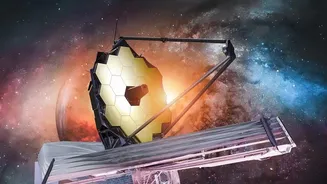
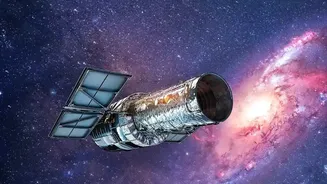
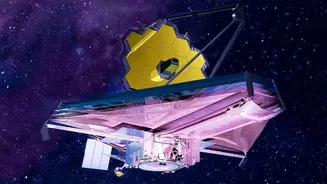
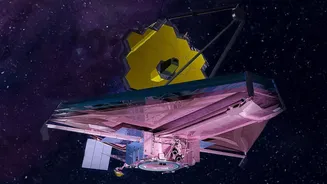
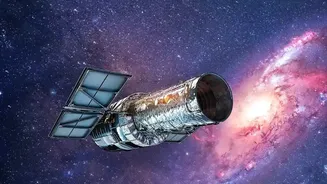
The key to Webb’s unprecedented view is its ability to see in infrared light. The dense dust that shrouds stellar nurseries blocks visible light, the kind our eyes and even the Hubble Space Telescope primarily see. This dust makes it impossible to observe the earliest stages of star and planet formation directly. However, infrared light can pass through these dusty cocoons, allowing JWST to peer inside. Using its advanced spectrographs, Webb can capture the faint heat signatures of protostars—baby stars still gathering mass—and the swirling disks of material around them. This technological leap is like trading a flashlight for a pair of X-ray goggles, finally revealing the processes hidden within the cosmic clouds.
A Race Against Time
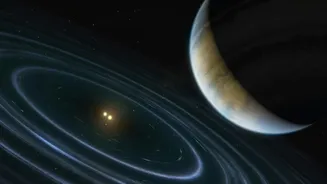
Recent groundbreaking studies using JWST data have revealed that planet formation is a frantic race against the clock. Planets are built from the material in a ‘protoplanetary disk’—a spinning platter of gas and dust that surrounds a young star. However, this material doesn’t last forever. A recent study of 72 young star systems showed how this gas is constantly being blown away. In the earliest stages, powerful jets driven by the star’s magnetic field clear out material. Later, as the star’s radiation becomes more intense, it heats and evaporates the remaining gas in a process called photoevaporation. For a gas giant like Jupiter to form, it must gather its massive atmosphere before this vital raw material is completely stripped away.
Rewriting the Story of Creation
These new observations are already refining and challenging long-held theories of planetary formation. Scientists can now directly observe the different mechanisms that disperse a protoplanetary disk and see how they evolve over time. By studying the light from these disks, astronomers can identify the chemical building blocks of planets, including water ice and complex organic molecules, confirming that the raw ingredients for life are present from the very beginning. Webb has even detected structures and gaps within disks that could be signposts of newly formed planets carving out their orbits. Each new image and data set provides another crucial piece of the puzzle, helping scientists build a more complete and accurate model of how worlds are made.
Our Own Cosmic History
Studying these distant stellar nurseries is about more than just understanding faraway objects; it’s about understanding our own origins. The Sun, the Earth, and every planet in our solar system were born in a similar cosmic cloud billions of years ago. The processes Webb is observing millions of light-years away are the same ones that governed our own formation. By seeing how different types of stars and environments affect planet formation, we can better contextualize our own solar system's history. These observations help answer fundamental questions: Is a system like ours common? Are the conditions for Earth-like planets widespread? Webb is essentially a time machine, allowing us to watch our own cosmic history play out among the stars.