


The Artemis Generation: Back to the Moon
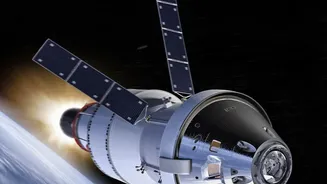
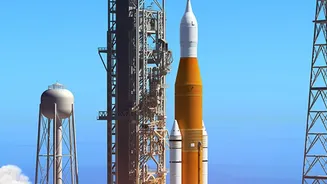
The biggest story in spaceflight is humanity’s return to the Moon. The Artemis program isn’t just about planting a flag; it’s about building a sustainable human presence on the lunar surface to prepare for the next great journey: Mars. After the successful
crewed flyby of Artemis II in April 2026, which took four astronauts farther from Earth than anyone before, all eyes are on what comes next. The roadmap has been updated, and the next few years are packed with critical steps. Artemis III, planned for late 2027, will see astronauts test the new lunar lander systems in Earth orbit, a crucial dress rehearsal for the main event. Then, in 2028, Artemis IV is scheduled to be the mission that finally puts boots back on the lunar soil for the first time since 1972. NASA plans to follow that with another landing, Artemis V, in the same year, kicking off a campaign of yearly missions to the Moon. For viewers in India, NASA provides comprehensive live coverage of all major milestones on NASA+ and its official YouTube channel.
Europa Clipper: The Hunt for Alien Oceans
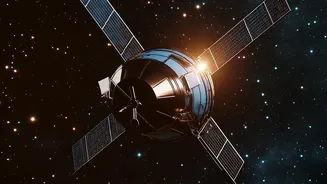
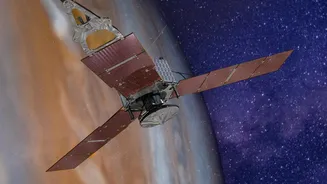
Is there life beyond Earth? NASA's Europa Clipper mission is one of our best shots at finding out. Launched in October 2024, this massive spacecraft is on a 1.8-billion-mile journey to Jupiter's icy moon, Europa. Scientists are almost certain that a vast, saltwater ocean—containing more than twice the water of all of Earth's oceans combined—is hidden beneath Europa's frozen shell. The Clipper won't land, but it will perform dozens of close flybys to scan the moon with a powerful suite of instruments, tasting its thin atmosphere, measuring its gravity, and peering through the ice with radar to confirm the ocean's existence and analyse its potential chemistry. A key date for this mission is coming up in December 2026, when the spacecraft will swing by Earth for a final gravity assist to slingshot it toward Jupiter, where it's scheduled to arrive in April 2030. This mission could fundamentally change our understanding of where life can exist in the universe.
VIPER: The Water-Hunting Moon Rover
For long-term settlement on the Moon to be possible, we need to find and use local resources. The most important of these is water ice. That’s the job of the VIPER (Volatiles Investigating Polar Exploration Rover) mission. This golf-cart-sized robot is designed to roll into the Moon's permanently shadowed craters at the south pole—some of the coldest places in the solar system—and drill for water ice. VIPER has had a dramatic journey; the fully built rover was cancelled in 2024 due to budget issues, but revived in 2025 after strong support from the science community. Now, it's back on track, with a planned landing in late 2027 via a Blue Origin lander. VIPER's 100-day mission will create the first-ever resource maps of the Moon, guiding where future Artemis astronauts will land and set up a base. This robotic scout is essential for turning science fiction into reality.
Mars Sample Return: A Mission in the Making
For years, NASA's Perseverance rover has been diligently collecting and storing promising rock and soil samples on Mars. The ultimate goal has always been to bring these pristine samples back to Earth for study in advanced laboratories. However, the original Mars Sample Return (MSR) mission proved too complex and expensive. After a major rethink, NASA is now developing a faster, more innovative plan, with a final decision on the new mission architecture expected in the second half of 2026. While this means the samples won't be back until the 2030s, the mission remains a top priority. Analyzing these rocks on Earth could answer the ultimate question: did life ever exist on Mars? It is a challenging, multi-stage mission that is still taking shape, but it is one for all space fans to watch closely as NASA redefines the plan for one of its most ambitious projects ever.