








The Silent Threat of Space
For as long as humanity has looked to the heavens, space travel has represented the ultimate adventure. But living in microgravity, the condition of near-weightlessness in orbit, takes a significant toll on the human body. One of the most severe effects
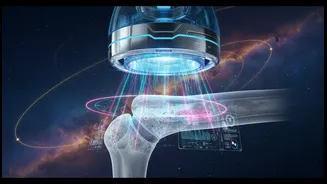
is on our bones. On Earth, the simple act of standing and walking puts stress on our skeleton, signalling it to maintain its strength and density. In space, this constant mechanical loading disappears. As a result, astronauts can lose bone mass at a shocking rate—up to 1-2% per month, a pace of decay roughly 12 times greater than that of an older adult with osteoporosis on Earth. This condition, known as spaceflight osteopenia, makes bones brittle and increases the risk of fractures during missions and long after returning to Earth. For long-duration voyages to the Moon and Mars, which could take years, this level of bone loss is not just a health risk; it is a mission-critical obstacle that must be overcome.
Enter Anil Menon: Doctor in a Spacesuit
This is where Dr. Anil Menon, a NASA astronaut of Indian and Ukrainian heritage, enters the picture. Selected in NASA's 2021 astronaut class, Menon is uniquely qualified to tackle the medical challenges of spaceflight. Before becoming an astronaut, he was an accomplished emergency medicine physician with extensive experience in extreme environments, from treating earthquake victims in Haiti and Nepal to serving as a flight surgeon in the U.S. Air Force. His journey into space medicine saw him become NASA's crew flight surgeon for several International Space Station (ISS) expeditions and later, the first-ever flight surgeon at SpaceX, where he helped launch the first humans on a commercial spacecraft. Menon’s background as a physician provides him with a deep understanding of human physiology, making him a key player in the ongoing research to keep astronauts healthy on their arduous journeys. Having launched to the ISS in July 2026, he is now on the front lines of this research in orbit.
Data from the Cosmos
The fight against bone loss begins with data. Onboard the International Space Station, astronauts are living subjects in a long-term study. Their health is continuously monitored through a variety of methods that constitute the 'orbital data' essential for this research. Astronauts use wearable sensors, like smartwatches and specialised Bio-Monitors, to track vital signs, activity levels, and sleep patterns. They also conduct regular self-administered medical tests, including ultrasound scans to monitor bones and organs, and collect blood, urine, and saliva samples. These samples are stored in space freezers and sent back to Earth for detailed analysis. This information provides a comprehensive picture of how an individual's body is adapting—or failing to adapt—to microgravity. For bone health specifically, researchers look at biomarkers in blood and urine that indicate the rate of bone breakdown and formation, providing crucial clues to the effectiveness of countermeasures.
From Data to Countermeasures
Collecting data is only the first step; the true goal is to use that information to develop effective countermeasures. For years, the primary strategy has been rigorous exercise. Astronauts on the ISS spend about two hours a day using specially designed equipment like the Advanced Resistive Exercise Device (ARED), which simulates weightlifting to put mechanical stress on bones and muscles. This is combined with a carefully managed diet rich in calories, vitamin D, and calcium. The orbital health data gathered by astronauts like Menon helps scientists on Earth refine these exercise protocols and dietary plans. Furthermore, the data is crucial for testing new pharmacological interventions. Studies on the ISS, often using mice, are exploring drugs that can inhibit the proteins responsible for bone breakdown or stimulate the cells that build new bone. The insights gained from these orbital experiments are paving the way for targeted therapies that could one day make bone loss a manageable side effect of space travel.
Paving the Way for Mars and Earth
The work being done by Dr. Menon and his fellow astronauts is about more than just successful missions to the ISS. It's about enabling humanity's next giant leap: sending humans to Mars. A round trip to the Red Planet could take up to three years, making it impossible without a reliable solution for bone and muscle atrophy. The research on bone density is a cornerstone of the Artemis program, which aims to establish a long-term presence on the Moon as a stepping stone to Mars. As a physician-astronaut actively involved in experiments during his mission, Menon is directly contributing to a knowledge base that will protect future deep-space explorers. The benefits of this research also extend back to Earth. The accelerated model of bone loss in space gives scientists a unique window into conditions like osteoporosis, which affects millions of people. Discoveries made to keep astronauts healthy in orbit could lead to revolutionary new treatments for age-related bone disease on our own planet.