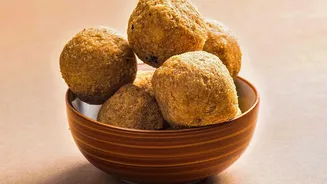



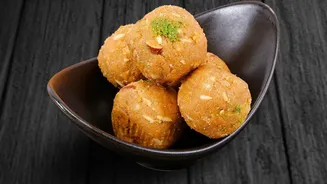
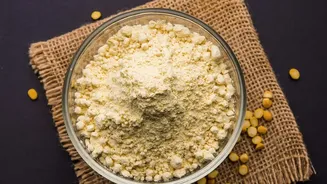
Besan ladoo is a beloved Indian sweet, but getting that perfect soft texture can be tricky. Many home cooks end up with hard or raw-tasting ladoos. Here are the common mistakes to avoid for a flawless, melt-in-your-mouth result.
Under-roasting the Besan
The most critical step
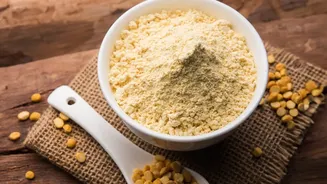
in making besan ladoo is properly roasting the gram flour (besan). Rushing this process is the single most common mistake and results in a raw, floury aftertaste that no amount of sugar or cardamom can mask. The key is patience. Roast the besan on a consistent low flame, stirring continuously in a heavy-bottomed pan. This isn't about watching the clock, but using your senses. The flour will gradually change from pale yellow to a golden sandy-brown colour and, most importantly, release a warm, nutty aroma. This slow roasting, which can take anywhere from 15 to 25 minutes, is what cooks the flour through and develops its deep, characteristic flavour.
Incorrect Ghee to Flour Ratio
Ghee is what binds the ladoo and gives it a rich, melt-in-your-mouth quality. However, the ratio of ghee to besan is a delicate balance. Too little ghee will leave you with a dry, crumbly mixture that refuses to hold its shape. On the other hand, too much ghee will result in a greasy, overly soft ladoo that might flatten out after being shaped. While recipes provide a guideline—often around a 2:1 ratio of besan to ghee by volume—the exact amount can depend on the texture of your flour. A good practice is to add the ghee gradually. If your mixture is too dry, you can always work in a little more warm, melted ghee until it comes together.
Adding Sugar at the Wrong Temperature
Timing is everything when it comes to adding the sweetener. A frequent error is mixing the powdered sugar into the besan-ghee mixture while it is still very hot. This will cause the sugar to melt instantly, creating a sticky, dense, and often oily paste rather than a light, pliable dough. This can ruin the texture and make the ladoos hard once they cool. To avoid this, you must let the roasted besan mixture cool down until it is just warm to the touch. At this temperature, the sugar will blend in smoothly without dissolving, ensuring the ladoo has the right consistency for shaping and the perfect final texture.
Using the Wrong Type of Besan
Not all besan is created equal. For the best texture, many traditional recipes call for a slightly coarse variety of gram flour, often sold as 'ladoo besan'. This coarser grind gives the finished ladoo a pleasant, granular texture that prevents it from feeling pasty or sticking to the roof of your mouth. While standard fine besan can still be used, it may result in a denser, smoother ladoo. Some cooks who only have fine besan on hand add a tablespoon of semolina (sooji) or sprinkle a little water into the mixture after roasting to create a similar granular effect.
Not Stirring Constantly
Roasting besan requires your full attention. Leaving the flour unstirred, even for a short time, can cause it to burn at the bottom of the pan while the top remains undercooked. This uneven cooking leads to a bitter taste and dark specks in your ladoos. To ensure an even roast, you must stir continuously, scraping the bottom and sides of the pan to keep the mixture moving. This guarantees that every particle of flour is heated uniformly, achieving that perfect golden-brown colour and nutty fragrance throughout. It’s a labour of love, but this constant motion is nonstoppable for success.
Shaping at the Wrong Time
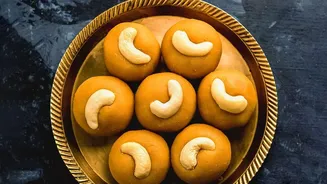
Once your sugar is mixed in, the temperature of the dough still matters for shaping. If the mixture is too warm, the ladoos may be too soft to hold their round shape. Conversely, if you let the mixture cool completely, the ghee will solidify, making the dough crumbly and difficult to bind. The sweet spot is to shape the ladoos while the mixture is still comfortably warm and pliable. If the mixture becomes too dry, any warmth from your hands as you roll them can help or you can add small amounts of warm ghee.