



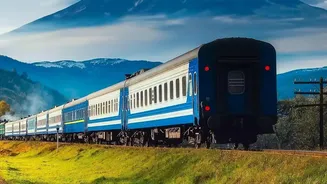
Old Meets New: What is a Hydrogen Train?
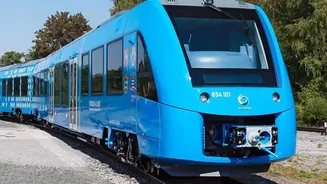
Imagine an electric train that doesn't need overhead wires. That's the essence of a hydrogen locomotive. Instead of drawing power from a grid or burning diesel, these trains create their own electricity on board. They use a device called a fuel cell,
which chemically combines hydrogen, stored in tanks, with oxygen from the air. The reaction generates electricity to power the motors, with the only byproduct being pure water vapour and some heat. This means they are quiet, efficient, and, most importantly, produce zero harmful emissions at the point of use.
The 'Green' in Green Hydrogen
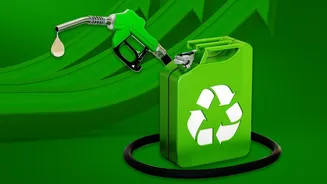
Not all hydrogen is created equal. The environmental credentials of a hydrogen train depend entirely on how the hydrogen fuel is produced. So-called 'grey' hydrogen is made from fossil fuels and releases carbon dioxide. 'Green' hydrogen, however, is produced using a process called electrolysis, which splits water into hydrogen and oxygen using electricity from renewable sources like solar or wind power. This is the key to the entire 'clean' promise. By committing to green hydrogen, Indian Railways ensures that the entire energy cycle, from fuel creation to consumption, is environmentally friendly.
India's 'Hydrogen for Heritage' Mission
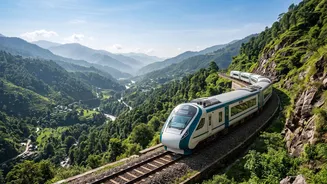
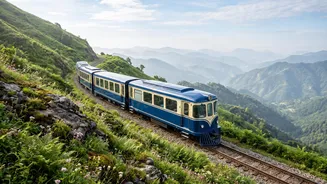
Indian Railways has launched an ambitious 'Hydrogen for Heritage' initiative, which perfectly encapsulates this blend of preservation and progress. The plan focuses on retrofitting hydrogen fuel cell systems into the existing diesel-powered trains that run on iconic narrow-gauge routes. The Kalka-Shimla railway, a UNESCO World Heritage Site, is a flagship project for this mission. These scenic lines often pass through ecologically sensitive areas, where the noise and pollution from diesel engines are particularly damaging. Hydrogen offers a way to maintain the authentic experience without the environmental cost, and without installing visually disruptive overhead electric cables that would spoil the heritage landscape.
Putting the Technology on Track
The journey from concept to reality is well underway. While early announcements targeted a 2023 rollout, the complexity of the technology and infrastructure has required careful planning and testing. Indian Railways has been conducting pilot projects, like the one on the Jind-Sonipat section, to gain operational experience before wider deployment on the more challenging heritage routes. This project, flagged off in July 2026, serves as a crucial testbed for the technology, providing valuable data on performance, safety, and refuelling logistics. The experience from this mainline trial is now being leveraged to finalize plans for routes like Kalka-Shimla.
The View Ahead: Challenges and Opportunities
Adopting this pioneering technology is not without its hurdles. The initial cost of retrofitting trains and establishing green hydrogen production and refuelling stations is significant. Ensuring the safe storage and handling of hydrogen, a highly combustible element, is another critical priority. However, the long-term benefits are compelling. As the technology matures and scales up under India's National Green Hydrogen Mission, costs are expected to fall. For India, this isn't just about cleaner trains; it's about technological self-reliance, meeting net-zero emission goals, and showcasing a sustainable model for preserving cultural heritage that other nations can follow.