





The Big Claim: A Five-Minute Fix?
Let’s be honest: the word “fix” is doing a lot of heavy lifting in that headline. Can a five-minute daily ritual completely correct years of slouching over a desk or phone? Probably not. Chronic postural issues are complex and often require a multi-faceted
approach involving stretching, strengthening, and ergonomic adjustments. However, to dismiss the idea entirely would be a mistake. While it’s not a magic bullet, the practice of walking barefoot on a natural surface like grass—even for just a few minutes—is rooted in sound biomechanical and neurological principles. Think of it less as an instant fix and more as a powerful reset button for the muscles and nerves in your feet, which form the very foundation of your posture.
The Science of 'Grounding' Your Feet
When you walk barefoot, you’re engaging in a practice sometimes called 'earthing' or 'grounding.' But beyond the wellness trend, there’s a crucial scientific concept at play: proprioception. Your feet are packed with hundreds of thousands of nerve endings. These nerves are designed to send constant feedback to your brain about the surface you’re on, helping you adjust your balance and alignment automatically. Cushioned shoes, however supportive, dull this conversation between your feet and your brain. By walking barefoot on an uneven, natural surface like grass, you reawaken these nerves. Your foot and ankle muscles have to work harder to stabilise you, strengthening the intricate muscular architecture that has likely gone dormant inside your shoes. This heightened awareness and muscle engagement is the first step toward reclaiming natural, healthier posture.
How Your Feet Control Your Spine
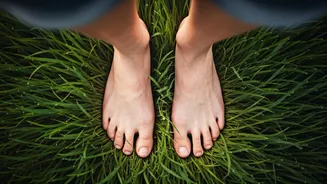
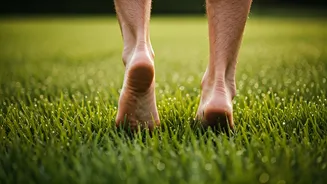
Your body is a kinetic chain. What happens at the bottom affects everything all the way to the top. When your feet are weak or your gait is unnatural from restrictive footwear, it can cause a chain reaction. Your ankles might roll inward, causing your knees to misalign, which in turn can tilt your pelvis and lead to the classic 'tech neck' or slumped shoulders as your upper body compensates. Walking barefoot encourages a more natural gait. You’re more likely to land on the midfoot or forefoot rather than a hard heel-strike, which sends less shock up your legs and into your spine. Your toes learn to splay and grip the ground, providing a wider, more stable base of support. When your foundation is stable, your entire postural 'house' has a much better chance of staying upright and aligned.
Your Guide to a Mindful Walk
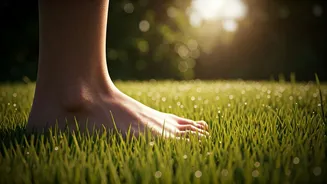
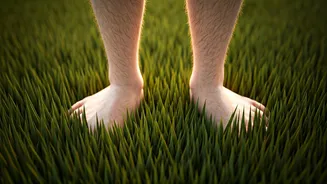
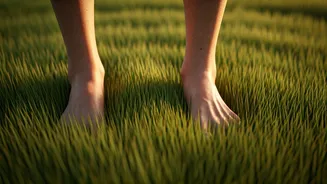
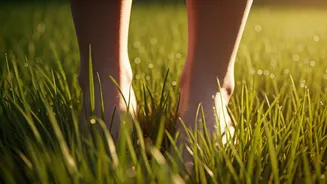
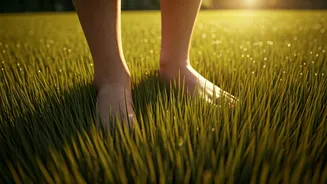
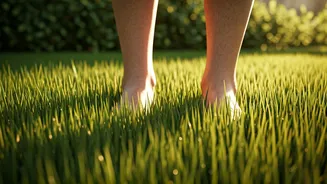
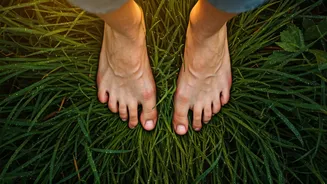
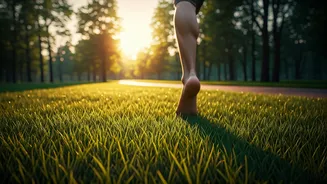
Ready to try it? It's simple, but a little mindfulness goes a long way. Find a clean, safe patch of grass in a local park or your own backyard. Before you start, take a moment to stand still. Feel the texture of the grass under your feet—is it soft, cool, damp? As you begin to walk, do so slowly. Pay attention to how your foot lands and rolls through the step. Notice how your balance shifts and your leg muscles engage. You don't need to walk for miles; the headline’s five minutes is a perfect starting point. The goal isn't distance, but connection. Focus on the sensory experience. This practice is not just a physical exercise but a mental one, helping to reduce stress and bring you into the present moment.
Realistic Benefits and What to Expect
Over time, this simple habit can yield significant rewards beyond just posture. You can expect to develop stronger, more flexible feet and ankles, which can reduce the risk of injuries like plantar fasciitis or ankle sprains. Your balance and body awareness will likely improve. Many people also report a sense of calm and reduced stress from the practice of grounding. As for your posture, the change will be gradual. Consistent barefoot walking strengthens your body's foundation, making it easier and more natural to stand tall and sit straight. It empowers your body to start correcting itself from the ground up. So, while it won’t 'fix' you overnight, it’s a foundational step toward long-term postural health.