




What You Are Looking For
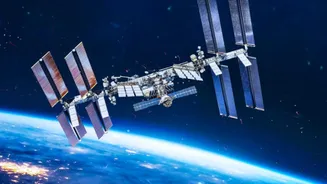
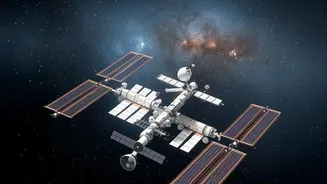
Forget what you think a satellite should look like. The International Space Station (ISS) appears as a very bright, steady, and fast-moving point of light. It looks like a star or planet that has decided to take a swift journey across the sky. The key
differentiator from an airplane is the light: the ISS does not blink or have flashing red and green lights. It moves much faster than a typical plane but slower and more deliberately than a shooting star, which zips across the sky in an instant. The station doesn't produce its own light; what you are seeing is sunlight reflecting off its massive solar panels and modules, which is why it can rival the brightness of Venus or Jupiter.
Timing Is Everything
You can’t just walk outside any night and expect to see the ISS. Sightings are only possible during a specific window: shortly after sunset or just before sunrise. This is because of a simple trick of light and shadow. For you to see the station, you need to be in the dark on the ground, while the ISS, orbiting about 400 kilometres overhead, is still high enough to be bathed in the sun's rays. If it's broad daylight where you are, the sky is too bright to see it. If the station is also in Earth's shadow, it won't be reflecting any sunlight and will be invisible. This perfect alignment happens frequently, meaning you could have several viewing opportunities a week, depending on your location and the station's orbital path.
Your Digital Spotting Tools
The easiest way to know when and where to look is to use a dedicated tracking tool. NASA’s free “Spot The Station” service is the gold standard. You can visit the website or download the app for iOS and Android. Simply enter your location, and it will provide a list of upcoming sighting opportunities, complete with the exact time, duration, and the path it will take across your sky. The app can also send you notifications a few minutes before a pass is about to begin. Other popular and reliable options include the Heavens-Above website and apps like ISS Detector and Satellite Tracker, which provide similar predictions and alerts. These tools take all the guesswork out of the equation.
Understanding the Predictions
When you get an alert, you'll see a few key pieces of information. 'Appears' and 'Disappears' will tell you the compass directions for the start and end of the pass (e.g., 'Appears WSW', 'Disappears NE'). 'Maximum Height' is crucial; it's measured in degrees from the horizon (0 degrees) to directly overhead (90 degrees). A pass with a higher maximum height will be more prominent and easier to see. The duration tells you how long the show will last, typically anywhere from one to six minutes. For the best view, find a spot with a clear view of the sky, especially in the direction the station is predicted to appear.
More Than Just a Point of Light
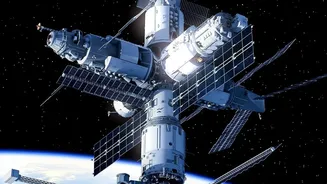
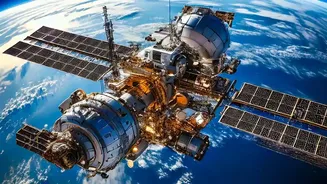
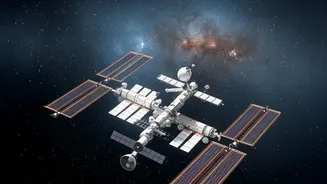
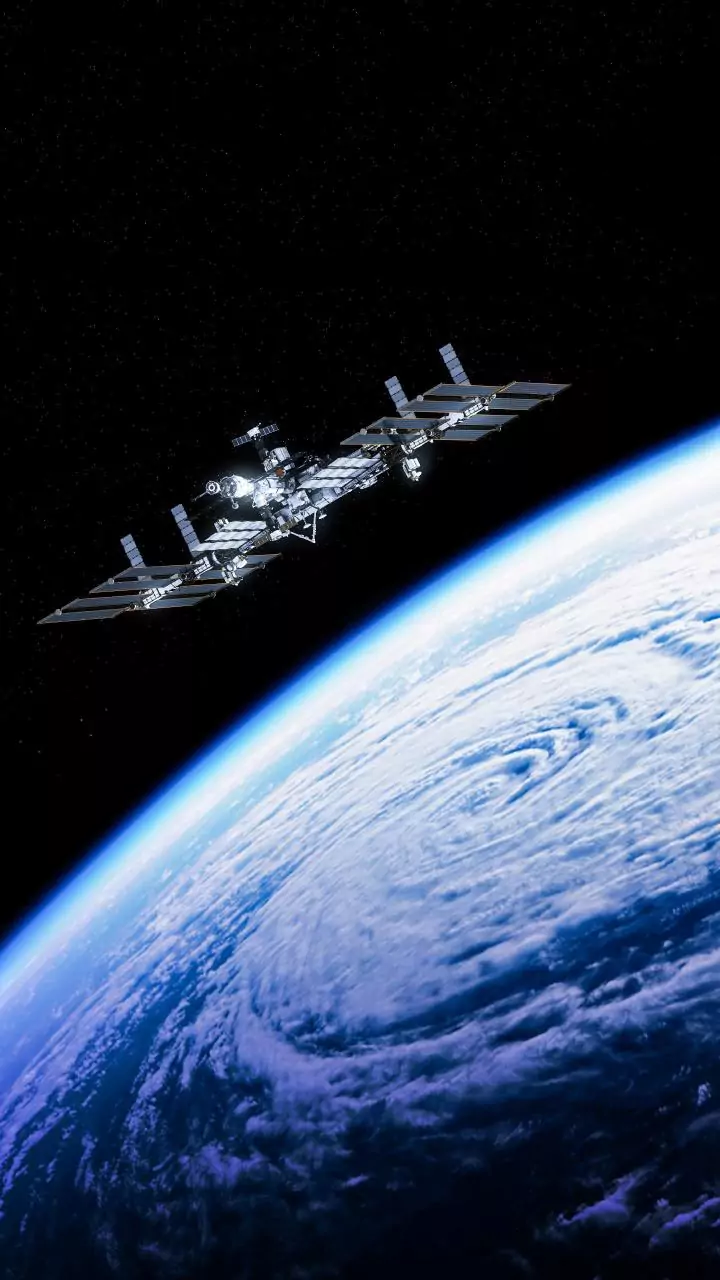
As you watch that steady light glide silently across the heavens, take a moment to consider what you're witnessing. The ISS is a football-field-sized laboratory in space, a multi-national collaboration that has been continuously inhabited by astronauts for over two decades. It circles the planet every 90 minutes or so, travelling at a staggering 28,000 kilometres per hour. The people living and working aboard are conducting research in microgravity that is impossible to perform on Earth, advancing our understanding of medicine, materials science, and our own planet. That bright dot is a testament to human ingenuity and our unceasing drive to explore.