





What is a Dark Sky Community?
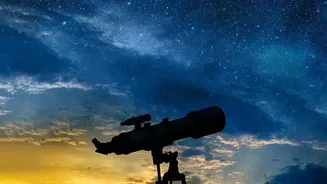
Before exploring Udmal’s unique position, it’s important to understand what a ‘Dark Sky Community’ is. The designation is awarded by DarkSky International, a global authority on combating light pollution. Unlike a Dark Sky Park or Reserve, which are typically
remote and unpopulated, a Community is a town or village that has shown an exceptional commitment to preserving the night sky. This involves adopting and enforcing quality outdoor lighting policies, educating the public, and gaining citizen support. The goal is not to eliminate light but to use it wisely—shielding fixtures to point downwards, using warm-coloured bulbs, and ensuring light is only used when and where it is needed. This certification recognises a collective effort by residents, businesses, and local authorities to protect natural darkness.
Udmal’s Natural Advantage
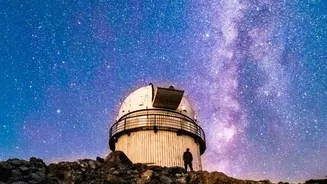
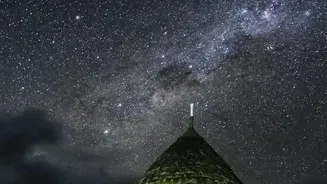
So, why Udmal? The village’s primary qualification is its geography. Tucked away in Surgana taluka, a tribal region of Nashik, Udmal is situated on a plateau within the Western Ghats. It is naturally shielded by forests and hills from the skyglow of major urban centers like Nashik and cities in neighbouring Gujarat. This isolation results in exceptionally clear and dark skies. On the Bortle Scale, which measures sky brightness, Udmal ranks between 2 and 3—a pristine level where the Milky Way is vividly visible to the naked eye. In stark contrast, major cities like Mumbai and Pune register a heavily polluted 8 or 9 on the same scale, where only a handful of stars can be seen. This existing natural darkness provides the perfect foundation for a dark sky initiative.
Community-Led Conservation Efforts
A pristine location is not enough; official designation requires proactive community involvement. The Udmal Gram Sabha has demonstrated this by passing a resolution under the Panchayats (Extension to Scheduled Areas) Act (PESA) to formally protect their night skies. This groundbreaking resolution commits the village to curbing light pollution and adopting scientifically planned, responsible outdoor lighting. With administrative sanction for ₹42.14 lakh from the District Annual Tribal Sub-Plan, the project is now underway. In collaboration with the NGO Astronera, the initiative includes assessing night-sky quality, retrofitting existing lights with compliant fixtures, and running awareness campaigns to educate residents.
The Promise of Astro-Tourism
Beyond environmental conservation, becoming a Dark Sky Community offers significant economic benefits. The initiative is a key part of Maharashtra's broader plan to develop 11 sites for astro-tourism under its 'Vikasit Maharashtra 2047' vision. For Udmal, this certification would transform it into a premier destination for a new kind of traveller: one who seeks silence and natural wonder over crowded attractions. The village is poised to attract astrophotographers, amateur astronomers, and families from nearby cities like Mumbai and Pune, who are eager to show their children a truly star-filled sky. This creates a model for sustainable, low-impact tourism that provides livelihood opportunities for the local tribal community while preserving the area's unique cultural and natural heritage.
The Path to Certification
The journey to becoming India's first internationally recognised Dark Sky Community is a meticulous process. After the initial groundwork of community resolutions and lighting plans, a formal application must be submitted to DarkSky International for review. This includes demonstrating that all publicly owned lighting will be 100% compliant within five years and showcasing ongoing public outreach efforts. While there is no minimum sky quality requirement for a 'Community' designation, Udmal's naturally dark skies give it a strong advantage. The district administration and local partners are working to meet all criteria, from technical training for local youth to installing the necessary infrastructure, such as observatories and telescope viewing stations. If successful, Udmal will not only put itself on the global map but also set a powerful precedent for other communities in India to follow.