







1. Prioritise Safe Hydration
Staying hydrated is crucial year-round, but during the monsoon, the source of your water matters more than ever. Contamination is a major risk, leading to illnesses like cholera, typhoid, and gastroenteritis. Always opt for boiled or filtered water at home.
When you're outside, carry your own water bottle or purchase only sealed, reputable brands. Avoid drinking water, juices, or any beverages from street vendors, as the water source and ice used are often questionable. Infusing your water with a bit of ginger or mint can also aid digestion.
2. Be Smart About Leafy Greens
We all know vegetables are essential, but the monsoon is a tricky time for leafy greens like spinach, cabbage, and lettuce. The high humidity and moisture make them susceptible to germs, mud, and pests that are hard to wash away completely. If you must have them, ensure they are thoroughly cleaned by soaking them in a solution of warm water and salt or vinegar for a few minutes before rinsing and cooking. It's generally safer to opt for well-cooked gourds like lauki (bottle gourd), tori (ridge gourd), and karela (bitter gourd), which are easier to clean and digest.
3. Resist the Street Food Temptation
The craving for hot, crispy pakoras or a plate of spicy chaat intensifies when it's raining, but this is a temptation you should try to resist. Street food is often prepared in unhygienic conditions, with ingredients exposed to the humid air for long periods. The water used in chutneys and the pre-cut vegetables can be sources of infection. If you're really craving these snacks, it's much safer to prepare them at home where you can control the quality of the oil, water, and other ingredients.
4. Embrace Probiotic-Rich Foods
A healthy gut is your first line of defence against infections. Probiotics are beneficial bacteria that support your digestive system. Including probiotic-rich foods in your diet can significantly boost your gut health. Dahi (yoghurt) and buttermilk (chaas) are excellent, easily available options. They not only cool the body but also help fight off harmful bacteria. Ensure the dahi is fresh and homemade if possible. Fermented foods like idli and dosa are also good choices that are light on the stomach.
5. Boost Your Immunity Naturally
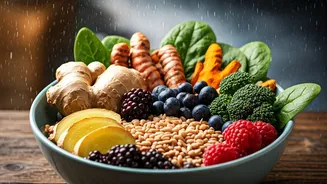
A strong immune system is key to fending off monsoon-related illnesses. Focus on incorporating immunity-boosting ingredients into your daily meals. Turmeric (haldi) has powerful antiseptic and anti-inflammatory properties; add a pinch to your milk or curries. Ginger and garlic are also excellent for fighting infections and aiding digestion. A warm cup of herbal tea made with tulsi, ginger, and black pepper can do wonders for your throat and overall immunity. Vitamin C is another vital nutrient, so include fruits like oranges, amla, and lemons in your diet.
6. Go for Light, Freshly Cooked Meals
The monsoon tends to slow down our digestion. Heavy, oily, and excessively spicy foods can put a strain on your stomach, leading to bloating, acidity, and indigestion. Opt for light, warm, and freshly cooked meals. Soups, steamed vegetables, and simple dals with rice or roti are ideal. Avoid eating leftover food, as the high humidity encourages faster bacterial growth. Similarly, be cautious with raw foods like salads unless you've prepared them yourself with thoroughly washed ingredients.
7. Wash Hands and Produce Diligently
This may seem obvious, but its importance cannot be overstated during the monsoon. Germs and bacteria are everywhere. Wash your hands with soap and water frequently, especially before eating and after coming home from outside. When it comes to fruits and vegetables, don't just rinse them under running water. Wash them thoroughly, perhaps even using a vegetable brush for produce with firm skin. This simple habit can drastically reduce your risk of ingesting harmful pathogens that cause stomach distress.