



What Is This New AI Project?
At the heart of this initiative is a new type of artificial intelligence known as a "foundation model," which NASA has developed in a landmark collaboration with IBM. The project, which includes models under the family name 'Prithvi' (a nod to the Sanskrit
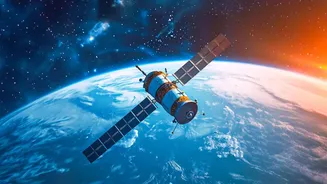
word for Earth), is designed to analyse vast quantities of complex environmental data captured by satellites. Unlike traditional AI, which is typically trained for one specific task, a foundation model is trained on a massive, broad dataset, allowing it to be adapted for many different applications with relative ease. By making these models open-source and publicly available on platforms like Hugging Face, NASA and IBM are aiming to put powerful analytical tools into the hands of scientists, researchers, and organizations worldwide.
Taming the Data Deluge
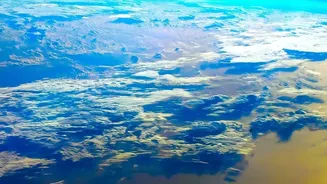
For decades, NASA's Earth-observing satellites have been gathering an incredible amount of information, creating a dataset so large—estimated to reach 250,000 terabytes by 2024—that it has become a major challenge for scientists to analyse effectively. This data contains crucial clues about our planet's health, from the rate of deforestation in the Amazon to the melting of polar ice caps. The sheer volume, however, can be a bottleneck. The new AI foundation model is designed to solve this problem. It can sift through petabytes of satellite imagery from missions like Landsat and Sentinel, identify patterns, and surface insights that might take human researchers years to uncover. This essentially transforms a mountain of raw data into a library of actionable knowledge.
How It Can Reshape Research
The potential applications for this technology are vast and could fundamentally change how we respond to climate change. Researchers have already demonstrated its ability to perform critical tasks like mapping floodwaters after a storm, identifying burn scars from wildfires, and classifying different types of land use with high accuracy. For a country like India, this could be a game-changer. Imagine being able to more accurately predict crop yields to ensure food security, monitor water levels in vital river basins like the Himalayas, or get faster, more precise warnings about the path and intensity of cyclones. The model can also be used to track deforestation, monitor air quality, and even predict locust breeding grounds, providing officials with the information they need to act decisively.
From Global Climate to Your Neighbourhood
One of the most powerful features of the Prithvi family of models is its ability to 'downscale' global climate projections. Current climate models operate at a very low spatial resolution, offering predictions over large areas that can be hundreds of kilometres wide. This new AI can take those broad forecasts and sharpen the focus, improving the resolution down to regional or even local levels. In theory, this could one day help communities understand how climate change will impact their specific area, from changes in rainfall patterns affecting local agriculture to the increased risk of urban heatwaves or flooding on a particular street. This shift from a planetary view to a local one makes climate change more tangible and empowers better preparation.
A New Era of Open-Source Science
Perhaps the most significant aspect of NASA's initiative is its commitment to open science. By releasing these powerful AI models to the public, NASA is fostering a global, collaborative effort to tackle the climate crisis. This approach allows a researcher in any part of the world, whether at a large university or a small non-profit, to access and build upon this cutting-edge technology without needing the massive computational resources required to create it from scratch. This democratisation of data and analytics accelerates the pace of discovery, allowing for more diverse and innovative solutions to emerge. It ensures that the benefits of this technology are not confined to a few well-funded labs but are shared globally, helping everyone better understand and protect our home planet.