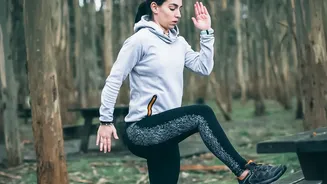





When winter arrives, motivation for fitness can drop with the temperature. The simple step-up is a powerful tool to stay active indoors, offering a full-body challenge with minimal equipment. Here’s how to do it right.
The Power of a Single Step
The step-up is a highly functional
and versatile lower-body exercise. Because it's a unilateral movement, meaning you train one leg at a time, it's fantastic for identifying and correcting strength imbalances between your left and right sides. This focus on single-leg strength improves balance, stability, and coordination. Step-ups primarily target the major muscles of your lower body, including the quadriceps, glutes, and hamstrings, while also engaging your core for stability. It's a compound movement that mimics everyday activities like climbing stairs, making it a practical addition to any fitness routine. Plus, it places less compressive load on the spine compared to exercises like back squats, making it a lower-back-friendly option for building leg strength.
Finding Your Foundation: The Stable Step
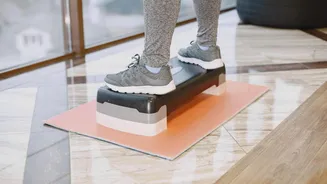
Before you begin, your most important piece of equipment is a stable, elevated surface. This could be a plyometric box, a sturdy workout bench, or even the bottom step of a staircase in your home. The key is stability; avoid using any object that might slide, tip, or feel soft underfoot. The surface needs to be wide and deep enough to accommodate your entire foot, from heel to toe. Placing only the ball of your foot on the edge creates instability and can strain your ankle or knee. Your safety and the effectiveness of the exercise depend on having a solid, unmoving platform to press from.
Measure Twice, Step Once: Choosing Step Height
The height of your step is the main variable that determines the exercise's difficulty and muscle focus. A common guideline is to choose a height where your knee forms a 90-degree angle when your foot is placed on top. For beginners, a lower step of around 6 to 8 inches is ideal for mastering the form and targeting the quadriceps. A medium step, around 12 to 16 inches, increases the range of motion and engages the glutes and hamstrings more significantly. Using a step that is too high can compromise form, leading to excessive forward leaning or pushing off with the back leg, which negates the benefits and increases injury risk. Always start lower than you think you need and increase the height only once you can perform the movement with perfect control.
Mastering the Movement: Perfect Step-Up Form
Proper technique is crucial for maximising results and preventing injury. Stand close to your step and place one entire foot firmly on the surface. Keep your chest up and your torso upright, with a slight forward lean from the hips so your weight is centered over the front leg. Drive through the heel of your stepping foot to lift your body straight up, avoiding the common mistake of pushing off with your back leg. The leg on the step should be doing all the work. Stand up fully at the top, bringing your other foot to meet the first on the step or letting it hover for an added balance challenge. The descent is just as important; lower yourself slowly and with control, rather than letting gravity do the work. Perform all repetitions on one side before switching to the other.
A Measured Progression Plan
Once you have mastered the bodyweight step-up with excellent form, you can begin to progress the exercise to continue challenging your muscles. The most straightforward way to increase the difficulty is by adding weight. You can hold a dumbbell in each hand, or a single kettlebell at your chest. Another method is to slightly increase the height of your step, provided you can maintain proper form. You can also increase the 'time under tension' by slowing down the movement, especially the lowering phase. Taking three to four seconds to lower your body back to the start position is an excellent way to build strength and control without adding weight. The key is to progress gradually, ensuring each repetition is as clean as the last.