




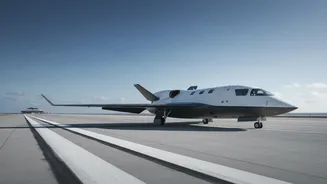
Meet 'Pushpak': India's Space Shuttle
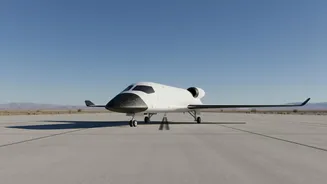
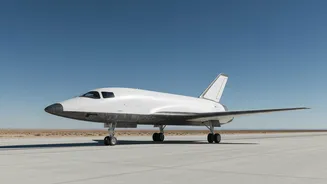
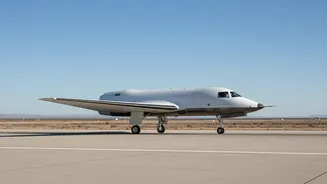
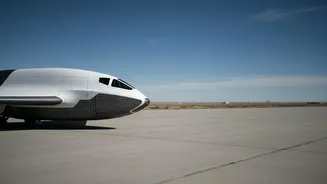
ISRO recently achieved a hat-trick of successes with its Reusable Launch Vehicle (RLV) program, conducting a series of flawless autonomous landing tests. The star of the show is a winged vehicle named 'Pushpak'. In its latest test in June 2024, Pushpak was
carried to an altitude of 4.5 km by an Indian Air Force Chinook helicopter and released. From there, it navigated its own way to a runway, corrected for crosswinds, and performed a perfect, high-speed landing at over 320 kmph — faster than a commercial aircraft. These experiments, called the Landing Experiment (LEX) series, are a crucial step in proving the technology needed for a vehicle to return from space and land like an airplane, ready to be used again.
The High Cost of Throwaway Rockets
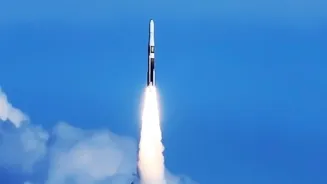
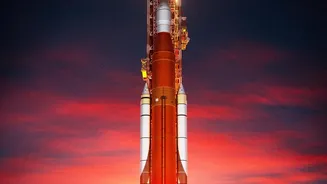
Traditionally, launching a satellite is a one-and-done affair. A launch vehicle, which costs hundreds of crores, is used once to propel a satellite into orbit and then its expensive stages are discarded, burning up in the atmosphere or falling into the sea. This makes space access prohibitively expensive. The structure and engines of a rocket account for the vast majority of its cost, with the fuel being a relatively small fraction. ISRO's goal with the RLV programme is to drastically reduce the cost of delivering payloads to Low Earth Orbit. The stated aim is to slash the price from around $20,000 per kilogram to about $2,000 per kilogram, a reduction of up to ten times.
How Reusability Changes the Game
By developing a vehicle that can be recovered and reused, ISRO can protect and fly again the most valuable parts of the rocket: the engines, avionics, and flight systems. This is the core principle that has allowed companies like SpaceX to dominate the commercial launch market. Pushpak is the technology demonstrator for a future Two-Stage-to-Orbit (TSTO) vehicle. The vision is for a first stage that flies back to Earth and lands horizontally on a runway after launch, while the second, smaller stage carries the satellite into orbit. This reusability not only cuts costs but also allows for a quicker turnaround between missions, enabling more frequent launches. It also makes space missions more sustainable by reducing the manufacturing footprint and the amount of debris left in space or the ocean.
A Strategic Play in the Global Space Market
The RLV programme is more than a scientific achievement; it's a strategic business move. The global satellite launch market is booming, with constellations like Starlink and OneWeb requiring thousands of satellites to be placed in orbit. By developing a cost-effective, reusable launch system, India aims to capture a larger slice of this multi-billion dollar market. Successfully deploying the RLV will position ISRO as a leader in reusable technology and provide a sovereign, on-demand launch capability for national security and communication needs. This will allow India to compete directly with international players who have already leveraged reusability to bring down launch prices dramatically.
The Road Ahead: From Landing to Orbit
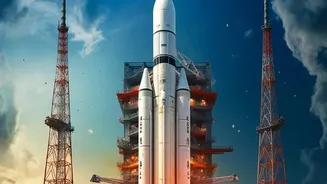
The successful landing experiments are just the beginning. Having mastered autonomous landing, ISRO's next major milestone is the Orbital Re-entry Experiment (OREX). This will involve launching a scaled-up version of Pushpak into orbit around Earth using a modified rocket. After orbiting, the vehicle will have to survive the intense heat of re-entry and perform an autonomous landing all the way from space. Subsequent steps involve integrating air-breathing scramjet engines for even greater efficiency. The ultimate goal is to create a fully reusable Two-Stage-to-Orbit vehicle, which will be the workhorse for India's future space ambitions, from commercial satellite launches to supporting the Bharatiya Antariksh Station and deep-space missions.