



The Grand Lunar Vision
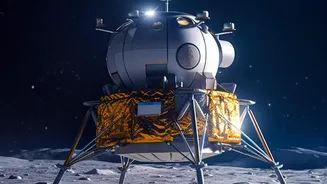
Ambitious plans are underway by space agencies and private companies to establish a permanent, sustainable human presence on the Moon. Programs like Artemis are not just about planting flags; they are about building sprawling lunar settlements that could
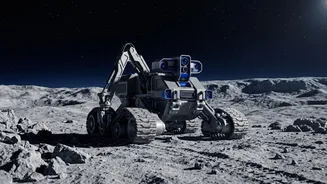
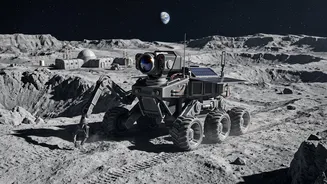
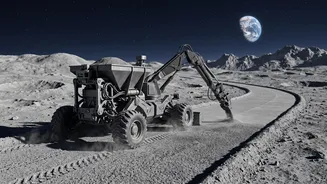
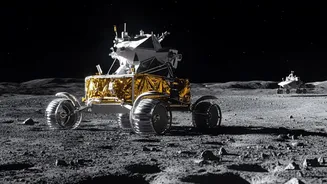
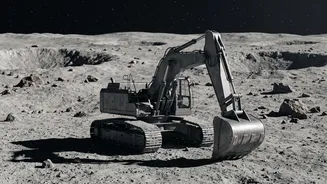
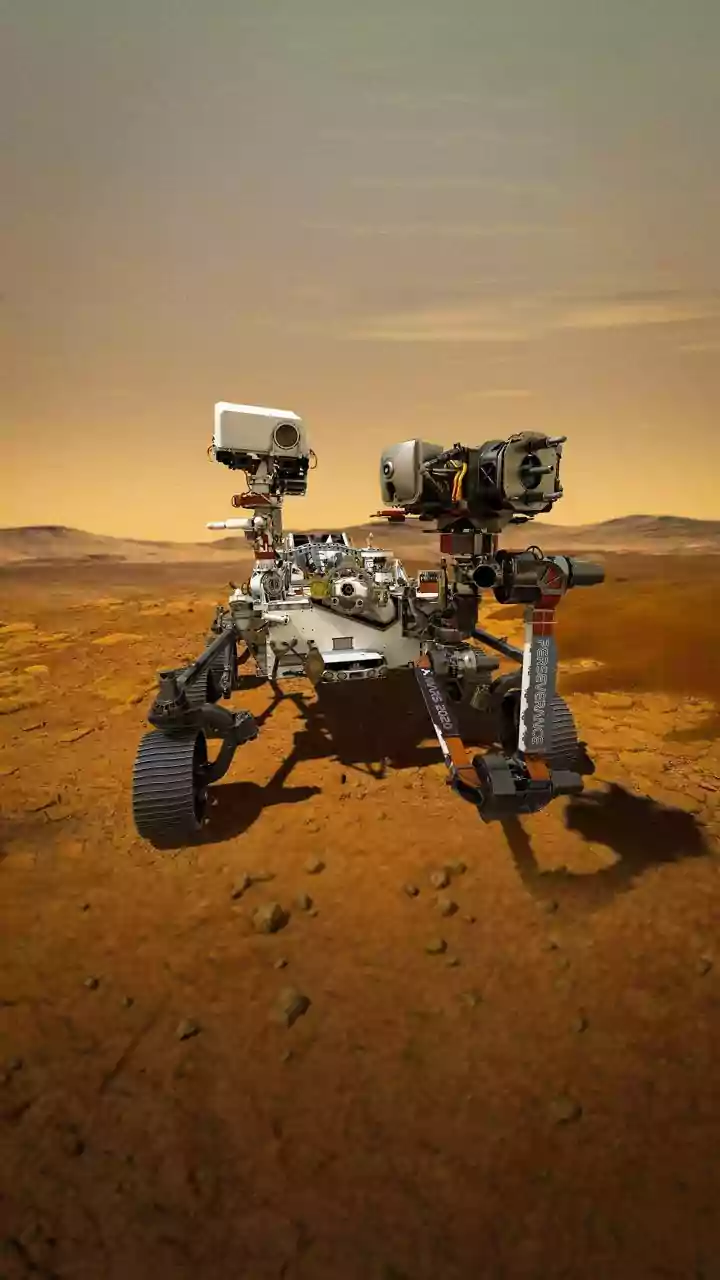
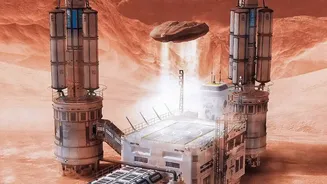
cover hundreds of square miles. These bases will require significant infrastructure before astronauts arrive: landing pads, roads, habitats, and radiation shielding. Given the extreme temperatures, abrasive dust, and radiation, sending robots to do the hazardous initial construction work is the only practical solution. These machines are expected to perform everything from site surveys and excavation to 3D-printing entire structures using local lunar soil, or regolith.
The 2.5-Second Problem
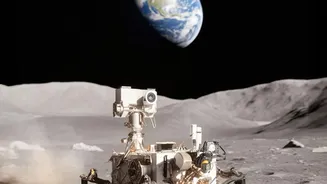
The fundamental obstacle is the speed of light. A signal sent from a controller on Earth takes about 1.25 seconds to reach a robot on the Moon. The video feed and data from the robot take another 1.25 seconds to return. This round-trip delay of 2.5 seconds or more makes real-time control impossible. While it sounds short, imagine a video call where every response is delayed by three seconds. Now imagine you're using that connection to operate a multi-ton excavator on the edge of a crater. This 'move-and-wait' approach is clumsy, slow, and incredibly risky. Early lunar rovers like the Soviet Lunokhod were operated this way, with controllers painstakingly anticipating movements based on still images that arrived every 20 seconds.
Why Direct Control Fails
With a 2.5-second lag, simple tasks become treacherous. An operator might command a robot to stop, but the command doesn't arrive until after the robot has already driven into a ditch. Trying to perform a delicate task, like grasping a rock sample or connecting two modules, becomes a frustrating exercise in overcorrection. The latency significantly increases the mental workload and stress on human operators, leading to errors and reduced performance. Furthermore, the Moon has no GPS, making navigation difficult. Any unexpected event—a patch of soft regolith, a sudden rockslide—cannot be reacted to in time, potentially leading to the loss of a billion-dollar piece of equipment.
The Rise of Autonomous Builders
The most promising solution is to cut the cord and make the robots smarter. Instead of relying on direct, continuous control from Earth, space agencies and companies like GITAI and Lunar Outpost are developing highly autonomous robots. These machines won't need a human joystick for every move. Instead, they will be given high-level goals—'build a landing pad here' or 'survey this crater'—and will use their own onboard intelligence to figure out the steps required. This shifts the human role from a micro-manager to a supervisor, who monitors progress and only intervenes when necessary.
AI as the Virtual Foreman
Artificial intelligence is the key to this new level of independence. AI systems allow a robot to perceive its environment, make decisions, and even coordinate with other robots as a team. For instance, software from Lunar Outpost enables a 'swarm' of rovers to divide tasks and work together without waiting for commands from Earth. For NASA's VIPER rover, an AI planner helps the mission team map out efficient routes and identify potential hazards on its own. These AI-driven systems can process sensor data, create 3D maps, and adapt to unforeseen challenges on-site, effectively acting as a virtual construction foreman on the Moon.
A Supporting Role for Humans
Even with advanced autonomy, humans will remain in the loop. One strategy is to reduce the time delay by moving the operator closer. Astronauts on the lunar Gateway, a planned space station orbiting the Moon, could control surface robots with a lag of less than half a second. This makes complex tasks manageable. Another approach involves using predictive simulations and haptic feedback. An operator on Earth could control a virtual version of the rover in real-time. The simulation then sends confirmed commands to the actual robot, bypassing the frustrating effects of the lag for the human user. Technology that provides a sense of touch, or haptics, can also help an operator 'feel' what the robot is doing, even with a delay.