



From Bulky Towers to Wall Art
For years, the dedicated cat parent had one main option to satisfy their pet’s climbing instincts: the carpeted cat tree. Often bulky, style-cramping, and a magnet for dust and fur, these towers were a necessary but often unsightly sacrifice. But as urban
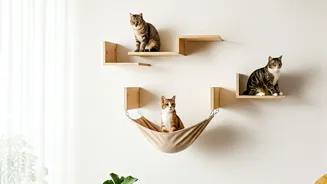
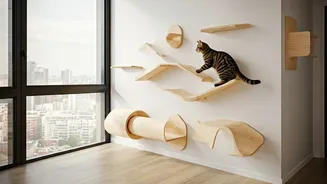
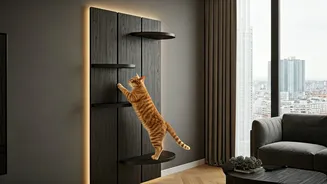
homes get smarter and more design-conscious, pet furniture is evolving. Enter the vertical wooden wall steps. These are minimalist, modular pieces of wood—often pine, birch, or mango wood—that mount directly onto the wall. Arranged in sequence, they form a staircase, a ladder, or an entire ‘cat superhighway’ that allows felines to traverse a room without ever touching the floor. It’s functional, customisable, and, most importantly for house-proud owners, it looks less like a pet accessory and more like intentional, sculptural decor.
The Science of Going Up
This trend is about more than just aesthetics; it’s rooted in feline psychology. Cats are, by nature, vertical creatures. In the wild, height offers a strategic advantage. From a high perch, a cat can survey its territory, spot potential prey (or the laser dot you’re pointing), and feel safe from perceived threats on the ground (like a boisterous toddler or the vacuum cleaner). Animal behaviourists call this ‘vertical space enrichment.’ For indoor cats, especially those in smaller apartments, a lack of vertical territory can lead to boredom, stress, and anxiety. This can manifest as destructive behaviour, like scratching furniture, or conflicts in multi-cat households where felines are competing for limited high-status spots. Wall steps effectively expand a cat's world, turning a 900-square-foot flat into a multi-levelled adventure zone.
Solving the Urban Pet Dilemma
The obsession with these steps is particularly strong among residents of metropolitan high-rises in cities like Mumbai, Bengaluru, and Delhi. As apartment living becomes the norm, space is at a premium. A traditional cat tree can dominate a living room, but a wall-mounted system utilizes an often-ignored dimension: the vertical plane. It frees up precious floor space while providing essential enrichment for indoor-only pets. For many owners, it’s a guilt-free solution. They can provide a stimulating environment for their beloved animal without compromising their own living area or interior design vision. It’s a win-win that addresses the core challenges of keeping an active animal happy and healthy within the four walls of an urban home.
A Statement of Modern Pet Parenting
Installing a network of cat steps is also a powerful statement. It reflects the broader cultural shift towards the ‘humanisation’ of pets. Today’s pet owner is often a ‘pet parent,’ viewing their animal as a cherished family member whose emotional and physical well-being is a top priority. Spending money and effort to ‘cattify’ a home is an act of love. It signals a deep understanding of and commitment to a pet’s needs. In an age where we curate our lives and homes for social media, a beautifully integrated cat wall is also highly Instagrammable. It tells a story of a modern, compassionate, and stylish household where every member, two-legged or four, is considered.
Thinking of Taking the Leap?
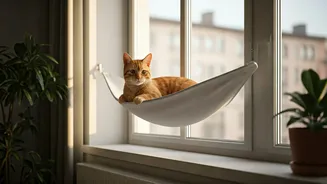
Before you start drilling, there are a few things to consider. First, assess your cat. Are they young and agile, or a senior who might struggle with high jumps? The spacing and layout of the steps should be tailored to their ability. Ensure your walls are solid enough to support the fixtures and a leaping cat—plasterboard or weak walls may not be suitable. Also, think about the path. The highway should lead somewhere desirable, like a comfy wall-mounted bed, a hammock, or a perch with a view out the window. A dead-end path is far less enticing. While many modular sets are available online, a bit of planning will ensure your investment is a hit with its intended user.