


The Anatomy of a Perfect Drop
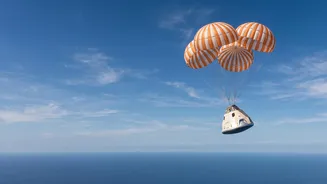
One of the most significant recent milestones was the Integrated Air-Drop Test (IADT). In a meticulously planned exercise, an Indian Air Force Chinook helicopter lifted a 5.7-tonne simulated Gaganyaan crew module to an altitude of about three kilometers.
The module, matching the weight of the capsule intended for the first uncrewed mission, was then released over the Bay of Bengal. The main objective was to test the complex parachute system designed to slow the capsule's descent for a gentle splashdown. A sequence of ten different parachutes deployed flawlessly, decelerating the module for a safe landing and subsequent recovery by the Indian Navy. This successful test validated the entire parachute-based deceleration system, a non-negotiable component for bringing astronauts home safely.
The Ultimate Ejection Seat
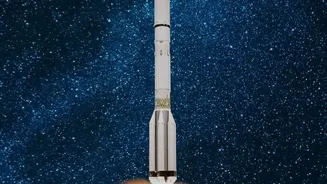
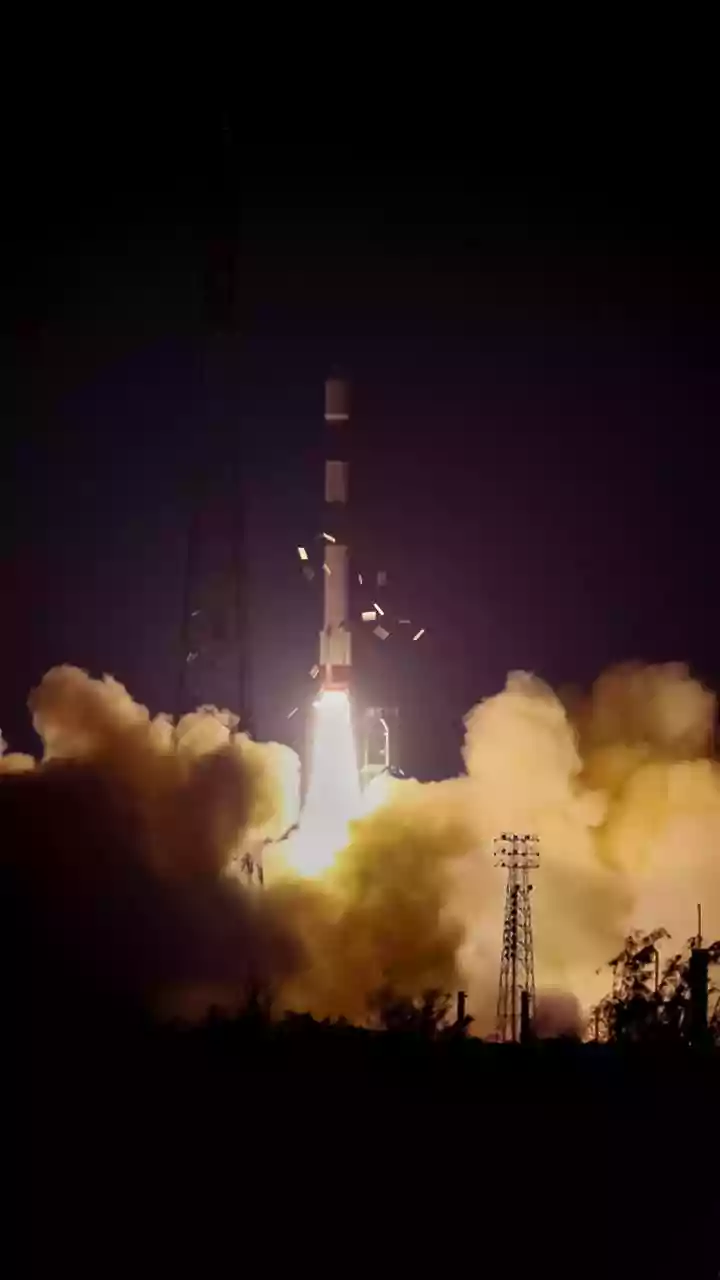
While a safe return is paramount, ensuring survival during a launch emergency is equally critical. This is the job of the Crew Escape System (CES), essentially a powerful ejection seat for the entire astronaut capsule. The CES is designed to activate in milliseconds if a catastrophic failure is detected on the launchpad or during ascent. Using a set of quick-firing solid motors, it can pull the crew module away from a malfunctioning rocket, accelerating it to safety before parachutes take over. ISRO has been perfecting this system through a series of demanding trials, including a Pad Abort Test, which simulated an emergency on the launchpad, and an in-flight abort test (TV-D1) that proved the system works even when the rocket is speeding through the atmosphere. Each test refines this crucial lifeline, building confidence that the crew can be saved no matter what happens.
A Symphony of Systems
The Gaganyaan program is a puzzle with thousands of pieces, and every single one must be perfect. Beyond the high-profile drop tests and abort simulations, ISRO engineers are relentlessly testing countless other components. Recent qualifications include the Crew Module Up-righting System, which uses jets of gas to ensure the capsule flips upright after splashing down in the ocean, a critical step for a swift recovery. Other tests have validated the structural integrity of the module and the mechanisms that disconnect it from its service module before re-entry. In total, the program has involved more than 8,000 individual tests. This exhaustive, safety-first approach underscores a core principle of human spaceflight: while reaching orbit is the goal, bringing the crew back alive is the only metric of success.
The Road to a Crewed Mission
These successful tests are paving the way for the next major phase of the program: uncrewed orbital flights. According to ISRO's timeline, the first uncrewed mission, designated G1, is targeted for launch in late 2026. This flight will test the entire mission profile from launch to splashdown, with a humanoid robot named Vyommitra on board to simulate human physiological responses and test the life support systems. The data from G1 will be crucial for making any necessary refinements. Following this, at least two more uncrewed missions are planned to demonstrate the reliability and consistency of every system. Only after these robotic dress rehearsals are completed successfully will ISRO clear the way for the historic first crewed Gaganyaan flight, H1, which is currently targeted for 2027.