



Sikkim’s majestic peaks and serene valleys are a dream destination. But to explore its most stunning, high-altitude regions, you'll need a permit. Navigating this process is simple if you have the right documents ready from the start.
Understanding Sikkim's Permit System
Due to its strategic
location, sharing borders with Bhutan, China, and Nepal, certain parts of Sikkim are designated as 'Protected Areas'. Access to these sensitive zones is regulated for both environmental and security reasons. While Indian tourists can travel freely in towns like Gangtok, Pelling, and Namchi, a Protected Area Permit (PAP) is mandatory for visiting destinations like Tsomgo Lake, Nathula Pass, and most of North Sikkim. For foreign nationals, the rules are stricter; a Restricted Area Permit (RAP), formerly called an Inner Line Permit (ILP), is required just to enter the state, with additional PAPs needed for the protected zones.
The Essential ID Checklist for Indian Tourists
The most crucial part of your permit application is providing valid photo identification that proves your Indian nationality. According to official guidelines, only a specific set of documents is accepted. You must carry the original and several photocopies of either a valid Voter ID card, Indian Passport, or a Driving License. For children under 18, a birth certificate accompanied by a parent's valid ID is required. It is critical to note that an Aadhaar card is not accepted as a primary proof of nationality for obtaining a Protected Area Permit. Relying solely on an Aadhaar card will lead to your permit application being rejected at the check posts, so be sure to carry one of the other specified documents. Also, keep at least two recent passport-sized photographs handy for each permit application.
Popular Destinations That Require a Permit
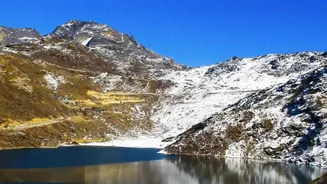
To make your planning easier, here is a list of popular tourist spots where a Protected Area Permit is non-negotiable for Indian travellers. In East Sikkim, this includes the stunning Tsomgo (Changu) Lake, Baba Mandir, and the Nathula Pass, which marks the border with China. In North Sikkim, permits are required for the entire circuit, which includes Lachen, Gurudongmar Lake, Lachung, and the picturesque Yumthang Valley, often called the 'Valley of Flowers'. The historic Old Silk Route, including areas like Zuluk, also falls under the permit system. Foreign tourists have a more restricted list; they can typically visit Tsomgo Lake and Yumthang Valley but are not permitted to go to Nathula Pass or Gurudongmar Lake.
How to Obtain Your Permit
For Indian tourists, the most common and efficient way to get a permit is through a travel agency registered with the Sikkim Tourism Department. When you book a tour or a vehicle for a protected area, the operator will handle the entire permit process on your behalf. You simply need to provide them with the required documents—photocopies of your ID and passport-sized photos—usually a day in advance. Permits are issued by the Tourism and Civil Aviation Department or police check posts. While some online systems exist, they are limited, and most permits, especially for North Sikkim, still require physical processing in Gangtok. It is almost always bundled with a vehicle package, as independent travel in these areas is highly restricted.
Tips for a Hassle-Free Experience
A little preparation goes a long way in ensuring a smooth trip. Always carry your original ID document with you, as it will be verified at multiple army and police check posts along the route. Keep extra photocopies of your ID and a few spare passport-sized photos, just in case. Be aware that permits for Nathula Pass are not issued on Mondays. Furthermore, high-altitude roads can close unexpectedly due to heavy snowfall or landslides, especially in North Sikkim, so it’s wise to have some flexibility in your itinerary. By engaging a reliable, government-registered tour operator, you can rest assured that all the paperwork will be handled correctly, leaving you free to enjoy the breathtaking scenery.