




A Weather Eye on the Red Planet
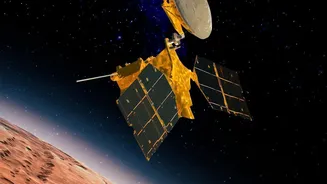
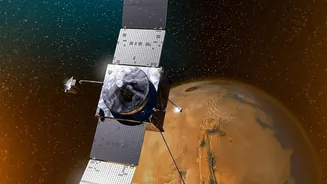
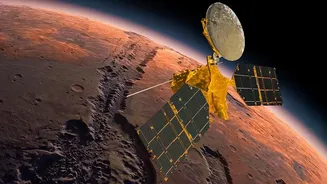
The first line of defense isn't on the ground, but hundreds of kilometers above it. NASA’s Mars Reconnaissance Orbiter (MRO), a long-serving satellite circling the Red Planet since 2006, acts as an interplanetary weather forecaster. One of its key instruments
is the Mars Color Imager, or MARCI. Every day, MARCI scans the entire planet, stitching together images to create a global weather map. This isn't just for curiosity; it's a critical risk-management tool. By tracking the atmosphere in multiple visible and ultraviolet wavelengths, scientists can spot the tell-tale signs of developing dust storms, watching them grow from local disturbances into regional, or even planet-encircling, events.
The Silent Threat of Dust
A Martian dust storm is not the sandblasting gale depicted in science fiction. The atmosphere is too thin for high-force winds. The real danger is darkness and deposition. As a storm grows, it lofts vast quantities of fine dust high into the atmosphere, creating a thick haze that can block 99% of direct sunlight. For a solar-powered rover, this is catastrophic. Without sunlight, its panels cannot generate electricity to operate, move, or even run the internal heaters that protect its vital electronics from the extreme Martian cold. Furthermore, as the dust settles, it coats the solar panels, reducing their efficiency long after the sky has cleared. This combination of energy starvation and freezing temperatures is a deadly one-two punch.
From Orbital Data to Ground Decisions
The synergy between orbiter and rover is a masterclass in remote asset management. When the MARCI team spots a brewing storm, they alert the rover operators on Earth. The orbital data allows them to forecast the storm's likely path and intensity. This gives the ground team precious time to act. Instead of being caught by surprise, they can proactively send commands to the rover. Typical instructions include ceasing all non-essential activities, like driving or using science instruments, to conserve power. The rover might be commanded to enter a low-power hibernation state, waking only periodically to check its status and listen for commands. This strategy allows the machine to husband its battery reserves and ride out the period of low light.
A Cautionary Tale from the Past
The importance of this orbital surveillance was tragically underscored by the fate of the Opportunity rover. Designed for a 90-day mission, the famously resilient rover explored Mars for nearly 15 years. It survived numerous smaller dust storms. But in 2018, MRO detected a storm that quickly grew into a planet-encircling monster. Despite the advance warning and efforts to put Opportunity into a minimal-power mode, the storm's duration and intensity were unprecedented. The sky remained dark for months, starving the rover of energy. On June 10, 2018, it sent its final communication and fell silent forever. Its loss served as a powerful lesson, reinforcing the lethal threat posed by Martian weather and the absolute necessity of monitoring it.