



An Injection into the Quiet Zone
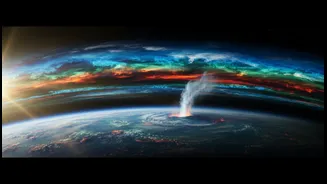
Our planet's atmosphere is layered. The lowest level, the troposphere, is where we live and where most weather occurs. Above it, starting around 10-15 kilometres up, lies the stratosphere. This layer is extremely dry and stable, with very little mixing
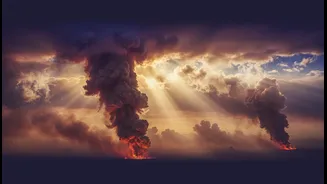
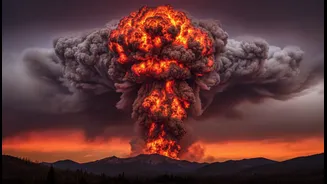
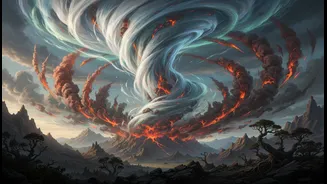
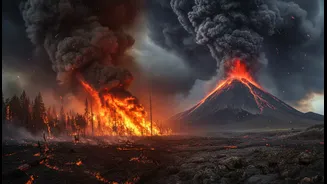
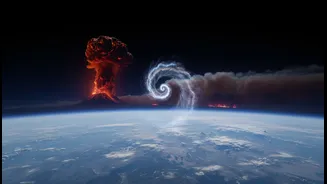
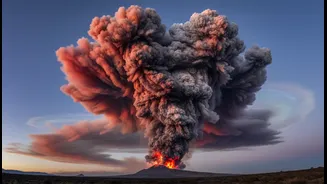
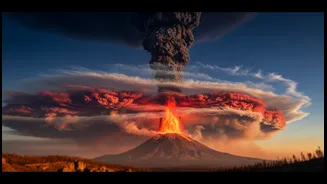
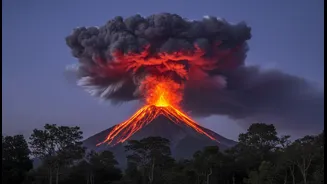
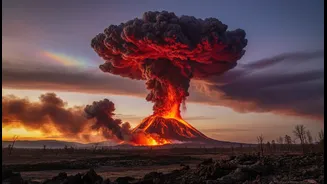
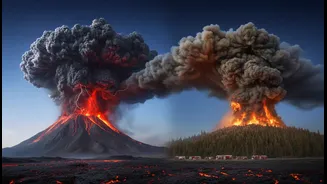
from the turbulent troposphere below. Normally, this boundary acts as a lid, keeping weather systems contained. But the sheer force of a major volcanic eruption or an intense wildfire can create a smoke-and-ash-filled thunderstorm, known as a pyrocumulonimbus (pyroCb), that acts like a powerful atmospheric elevator. These events are strong enough to punch through the troposphere and inject massive quantities of gases, moisture, and tiny particles directly into the serene stratosphere, where they can linger for months or even years.
Nature's Uncontrolled Experiments
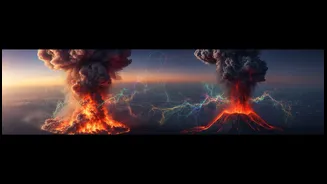
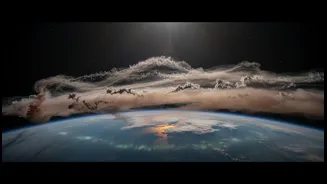
The tiny particles, or aerosols, blasted into the stratosphere are different depending on their source. Volcanoes primarily eject vast amounts of sulfur dioxide, which reacts with water to form reflective sulfate aerosols. These particles are effective at scattering sunlight back into space, which can lead to a temporary cooling effect at the Earth's surface. Wildfire smoke, on the other hand, is rich in black carbon and organic carbon. These dark, heat-absorbing particles do the opposite: they warm the stratosphere by absorbing solar radiation. These natural events provide scientists with crucial, large-scale case studies on how different types of aerosols behave and influence the climate system.
Adding Water Where It Doesn't Belong
The stratosphere is typically as dry as a desert, which limits the types of chemical reactions that can occur there. However, both volcanic eruptions and pyrocumulonimbus clouds can transport enormous amounts of water vapor—sometimes hundreds of millions of tons—into this dry layer. The 2022 Hunga Tonga-Hunga Ha'apai underwater eruption was a prime example, injecting an unprecedented volume of water directly into the stratosphere. This added moisture has significant consequences. For one, it can speed up the formation of volcanic sulfate aerosols, changing their size and distribution. More water vapor can also directly contribute to warming, as it acts as a greenhouse gas at that altitude, trapping heat.
The Impact on the Ozone Layer
The introduction of these foreign particles and moisture can also disrupt the delicate chemistry of the stratospheric ozone layer, which protects life on Earth from harmful ultraviolet radiation. For example, the surface of wildfire smoke aerosols can host chemical reactions that convert stable chlorine compounds—remnants from old, banned CFCs—into more active, ozone-destroying forms. Studies following the massive 2019-2020 Australian bushfires found that smoke particles likely contributed to a 3-5% depletion of ozone over mid-latitudes in the Southern Hemisphere. Volcanic aerosols can have a similar effect, providing a surface for chemical reactions that lead to ozone loss. The extra water vapor from an event like the Hunga Tonga eruption can also enhance these ozone-depleting chemical cycles.
Warming, Cooling, and Lingering Effects
The combined interactions are complex and can have competing effects. The reflective sulfate aerosols from volcanoes tend to cool the surface and warm the stratosphere. The absorptive smoke aerosols from wildfires, however, can cause significant warming in the stratosphere, with one study noting a warming of up to 3.5°K in the southern mid-latitudes after the Australian fires. This stratospheric heating can alter circulation patterns, potentially affecting weather systems back down in the troposphere. Because these aerosols can persist for so long at high altitudes, their effects on temperature and atmospheric composition can last for months or even years after the initial event, making them a crucial factor in our understanding of climate variability.