

India's Bid for an Orbital Brain
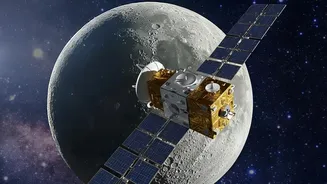
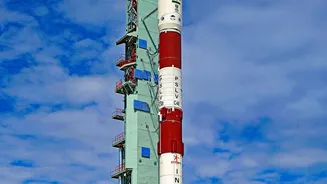
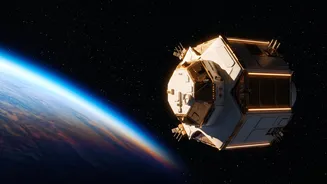
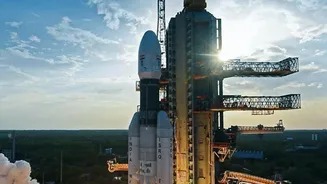
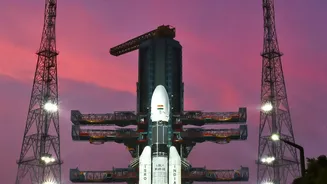
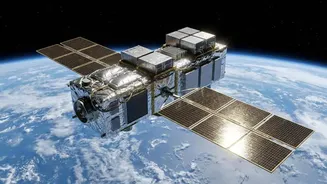
On October 1, 2026, a satellite named MOI-1A, developed by the Hyderabad-based startup TakeMe2Space, is slated to launch aboard a SpaceX Transporter-18 mission. Described as India's first orbital-computing satellite, its goal is not just to capture images
of Earth but to analyze them on the spot. Weighing under 50 kilograms, this compact 'AI lab in space' is equipped with powerful Nvidia Orin NX processors designed for edge computing. The mission has already attracted 23 clients, from mapping firms to agricultural and mining companies, all eager to test the potential of processing data directly in orbit.
The Problem with 'Dumb' Satellites
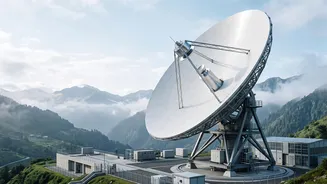
Traditionally, satellites operate on a simple but inefficient model: collect massive amounts of raw data and beam it all back to ground stations on Earth for processing. This creates a significant bottleneck. Modern Earth-observation satellites can generate terabytes of data daily, but they can only transmit it when they pass over a ground station. This not only causes delays in getting crucial information—like the precise location of a wildfire or the extent of flood damage—but also consumes enormous amounts of expensive and limited communications bandwidth. Essentially, we have powerful cameras in space tethered to a very slow internet connection.
Edge Computing: The Smart Solution
MOI-1A is pioneering a concept known as edge computing. Instead of sending the entire library of data back home, the analysis happens at the 'edge' of the network—right on the satellite itself. Customers can upload their own specialised AI models to the satellite. As MOI-1A orbits over a designated area, like a farm or a port, its onboard AI can run an analysis in real-time. It might be tasked with spotting crop disease, identifying newly constructed buildings, or counting ships. The satellite then transmits only the finished result—a small, actionable piece of insight—back to Earth. This drastically reduces data transmission needs and provides near-instantaneous results.
A Game-Changer for Multiple Sectors
If successful, this technology could revolutionize several industries. For disaster management, it means getting alerts and damage maps in minutes, not hours. In agriculture, farmers could get timely updates on crop health and irrigation needs. Insurance companies could more quickly assess damage after a natural disaster, and supply chain managers could monitor infrastructure and logistics with greater efficiency. Beyond commercial uses, on-board AI is critical for national security, enabling rapid surveillance and monitoring without the delay of downlinking massive files. This mission is an important test not just of the technology, but of a new business model where companies sell computing time in orbit, not just raw images.
The Challenges of AI in the Cosmos
Running a sophisticated computer in space is far from simple. The hardware must be 'radiation-hardened' to withstand the harsh environment, which can cause data errors or complete system failure. Power is also a major constraint; MOI-1A will operate on roughly 150 watts, a tiny fraction of the energy used by terrestrial data centres. Furthermore, the AI models themselves must be incredibly robust and reliable, as there is no easy way to physically service or reboot a satellite if its software fails. These engineering hurdles have historically slowed the adoption of advanced computing in space, making missions like MOI-1A a crucial test of modern capabilities.