





The Age of the Single Screen
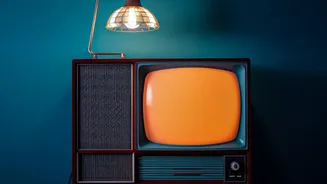
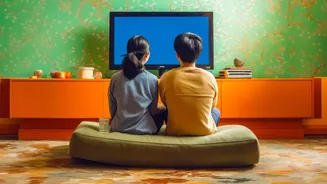
For decades, television in India was a singular, communal affair. Television first arrived in 1959, but for years it remained a limited, government-run service under Doordarshan. Daily transmissions only began in 1965. Families invested in a bulky television set
that became the living room's centrepiece. Viewing was an event. Entire neighbourhoods would often congregate at the one house with a TV. Programming was appointment-based, with iconic shows like the mythological epics 'Ramayan' and 'Mahabharat' bringing the nation to a standstill. These weren't just shows; they were cultural events that created shared memories across generations, with programming that was designed to be consumed by everyone from children to grandparents.
The Cable Boom and Soapy Dramas
The 1990s heralded a revolution with the arrival of satellite and cable television. The launch of private channels like Zee TV in 1992, followed by others, shattered Doordarshan's monopoly. Suddenly, the remote control held immense power. Indian homes went from one channel to dozens, offering a dizzying array of content spanning movies, music, and news. This era also gave birth to the daily soap opera, famously dominated by 'K-serials'. These family dramas became the new primetime ritual, deeply embedding themselves into household conversations. While the screen was still often shared, choices became more pronounced, sometimes leading to the first remote-control tussles as different family members developed distinct preferences. These shows also subtly began influencing social norms and family dynamics.
The Dawn of Personalised Entertainment
The true fragmentation of family viewing began with the rise of Over-the-Top (OTT) platforms. Kicked off by services like Hotstar in 2015 and followed by the entry of global giants like Netflix in 2016, the entertainment landscape was permanently altered. The catalyst was the widespread availability of affordable smartphones and cheap mobile data. Suddenly, entertainment was no longer confined to the living room TV. It was in your pocket, on your laptop, and available on demand. This marked the shift from 'appointment viewing' to 'binge-watching'. Younger generations, in particular, moved away from the fixed schedules of linear TV, preferring to consume content on their own terms, often with headphones on, creating a solo viewing experience even within a shared physical space.
The Hybrid Home and the Return of Co-Viewing
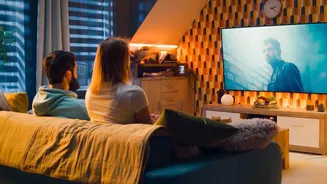
Today, the Indian home is a hybrid ecosystem where linear TV and streaming coexist. While individual viewing on personal devices is common, a new trend is bringing families back to the main screen. The rapid adoption of Connected TVs (CTVs) has made it easier to watch OTT content on the big screen, fostering a resurgence in co-viewing. Reports indicate a significant portion of CTV owners watch content with family, prompting platforms to create more inclusive content suitable for multiple generations. The choice is no longer just between a TV soap and a movie; it’s between a Korean drama, an American sitcom, or a regional-language web series. This has created a new dynamic where content discovery is often a collaborative process, with different family members introducing others to new shows and genres.