




More Than a Festival: A Pop-Up City
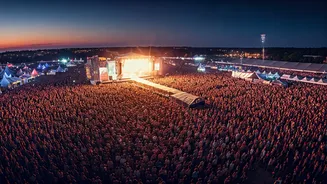
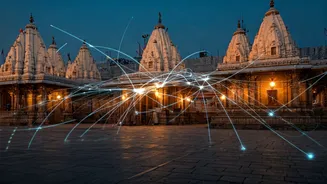
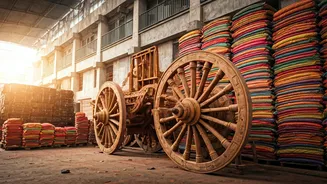
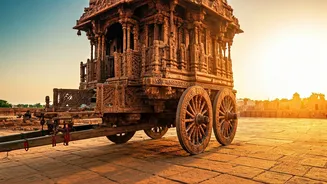
For ten days, the area around the Jagannath Temple in Dhurwa doesn't just host a fair; it becomes a temporary city. The annual Rath Yatra, with a history stretching back over three centuries, is expected to attract nearly a million devotees this year.
This is not just a religious procession but a complex organism that demands meticulous planning from the ground up. Coordinating this massive gathering is a joint effort between the district administration, police forces, civic bodies, and the temple management committee. Their work begins weeks in advance, focusing on turning a sprawling public space into a safe, functional, and accessible zone for the hundreds of thousands who will pass through. It’s a real-world stress test for urban governance, where every decision has an immediate and large-scale impact.
The Science of Managing a Million
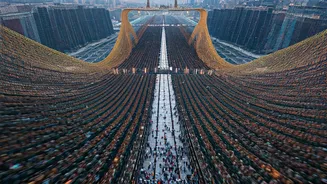
The foremost challenge is managing the sheer density of people. Public safety and crowd control are paramount. The plan involves a multi-layered security apparatus, including adequate deployment of police personnel, women constables, and around 500 volunteers organised by the temple. Key to the strategy is the physical infrastructure: extensive barricading to channel the flow of people, designated traffic diversion routes to manage vehicle flow, and the strategic installation of CCTV cameras for round-the-clock monitoring. In recent years, technology has played a larger role, with officials using modern tools to complement traditional policing. Senior police officials conduct daily site visits in the lead-up to the event to physically verify the entire procession route, identify vulnerable spots, and ensure there is enough space for devotees to move safely. It's a carefully choreographed operation designed to prevent incidents and respond swiftly to any emergencies that may arise.
An Economic Engine in Miniature
The Rath Mela is also a significant, if temporary, economic hub. Thousands of small vendors, artisans, and entertainment providers from Jharkhand and neighbouring states converge on Ranchi, depending on the fair for a crucial part of their annual income. This creates another layer of planning: managing a marketplace. In recent years, the administration has formalised this process. The rights to manage the fair are now awarded through a tender, which this year was valued at over two crore rupees. This brings a structured approach to stall allocation, ensuring vendors do not block emergency access routes or impede the movement of devotees. From food stalls and kitchenware vendors to giant Ferris wheels and traditional artisans, the mela is a vibrant ecosystem that supports countless livelihoods, making its smooth management a matter of economic importance as well as public order.
Infrastructure Under Immense Pressure
The sudden influx of a million people puts immense strain on the city's permanent infrastructure. In response, the administration essentially builds a temporary, high-capacity utility network. Departments are tasked with ensuring uninterrupted and, crucially, safe power supply, which involves pre-festival safety audits. Civic authorities work to repair streetlights, arrange for a steady supply of clean drinking water, and deploy a large number of mobile toilets to cope with sanitation demands. Furthermore, the health department is put on high alert, setting up medical camps equipped with essential medicines, stretchers, and emergency support facilities to handle any medical issues, from minor ailments to more serious emergencies. These measures are not just about convenience; they are critical for public health and safety in such a densely populated environment.