



The Old Theory: Ice in the Shadows
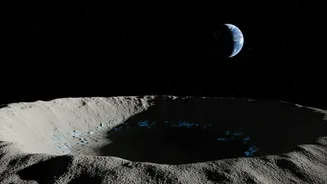
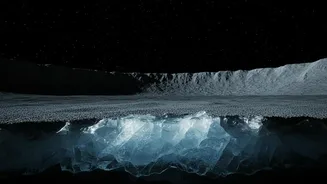
The long-standing theory about water on the Moon has been straightforward and compelling. Scientists believed that water, likely delivered by comets and asteroids over billions of years, could only survive in the coldest places imaginable: the permanently
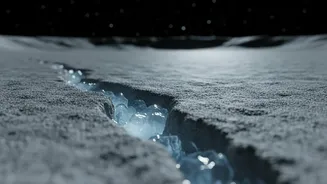
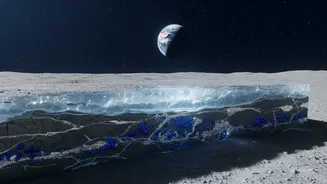
shadowed regions (PSRs) at the lunar poles. These are craters and depressions so deep that sunlight has not touched their floors for eons, creating 'cold traps' where temperatures are low enough to keep water frozen solid. Missions like NASA’s Lunar Reconnaissance Orbiter (LRO) detected high concentrations of hydrogen in these areas, the tell-tale sign of water ice. The prevailing assumption was that this water existed as distinct layers of ice, perhaps mixed with the lunar soil, or 'regolith'. Future missions, including NASA's Artemis program, were therefore planned around the difficult task of landing in these treacherous, dark craters to mine this concentrated ice, which could be converted into drinking water, breathable oxygen, and rocket fuel.
ISRO's Game-Changing Lander Data
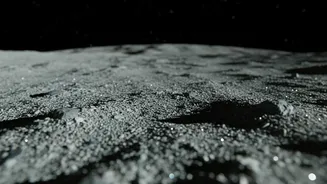
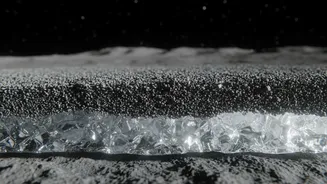
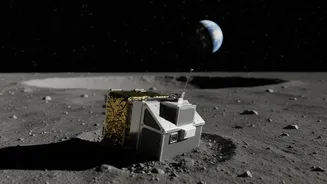
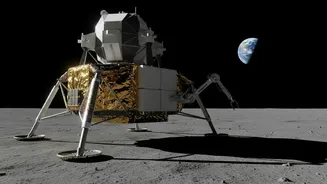
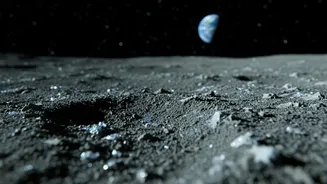
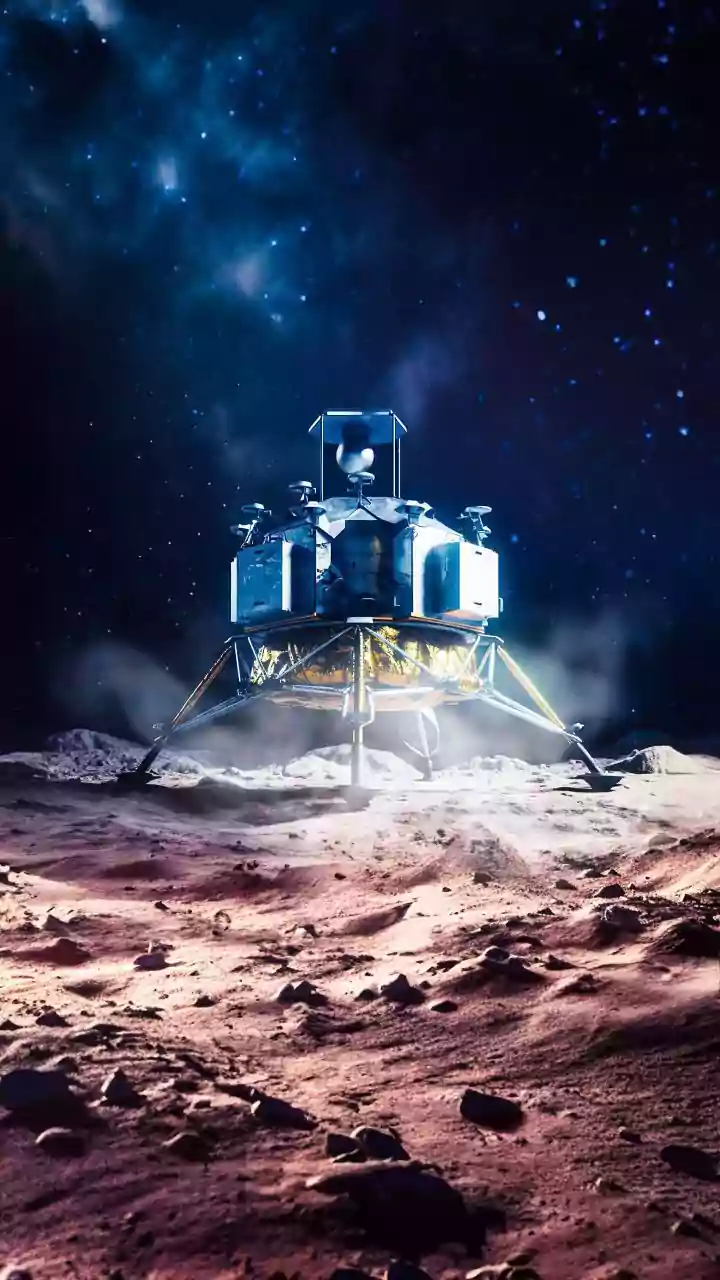
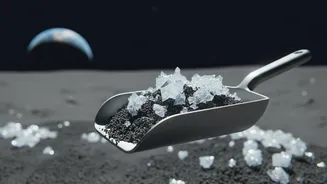
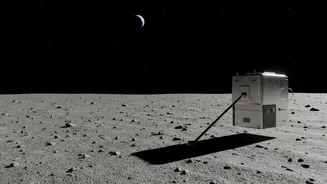
Enter the latest findings from an ISRO lander. Analysis of the lunar regolith at the south polar region has provided a much more nuanced view. Recent experiments, including thermal probe readings and analysis of soil composition, suggest that water on the Moon isn't just confined to deep, icy reservoirs. The new data indicates that the top layer of lunar regolith, even in areas that receive some sunlight, has unique properties that allow it to trap and store water molecules in a more distributed fashion. Instead of thick sheets of ice, the readings point towards a significant amount of water molecules chemically bonded to minerals or physically adsorbed onto the surfaces of regolith grains. The top few centimetres of regolith were found to be incredibly porous and act as a thermal blanket, which could be crucial for preserving these more scattered water molecules just below the surface. This suggests a widespread, but lower-concentration, form of accessible water.
Why This Reshapes Everything
This discovery doesn't mean the polar ice sheets don't exist, but it fundamentally reshapes our strategy for lunar resource utilization. The old model focused on a high-risk, high-reward approach: land in a dangerous PSR and mine a concentrated ice deposit. The new understanding, driven by ISRO's findings, opens up a different possibility. It suggests that water might be accessible over a much wider area of the lunar poles, not just within the darkest craters. Rather than needing heavy-duty drills to get to thick ice, future missions could potentially 'bake' or process large volumes of surface regolith to release trapped water molecules. This is a paradigm shift. It changes the engineering challenges from mining deep ice in extreme cold and darkness to harvesting water from vast stretches of lunar soil. The economic and logistical calculations for establishing a sustainable human presence on the Moon could be completely transformed as a result.
The Future of Lunar Exploration
The implications of these findings are enormous, both for science and for India’s role in space. Scientifically, it helps explain the complex lunar water cycle, including how water is delivered, how it migrates across the surface, and how it is stored. For future lunar habitation, it’s a potential game-changer. If water is more broadly distributed, landing sites for future bases become far more flexible. Astronauts wouldn't be tethered solely to the most hazardous craters. This makes missions safer and expands the potential footprint of human exploration. For ISRO, these readings are a major triumph. They demonstrate India's capability to produce cutting-edge planetary science that directs the conversation and strategy for global space efforts. By providing critical ground-truth data, the Indian mission is not just participating in the return to the Moon; it is actively shaping how humanity will live and work there for decades to come.