





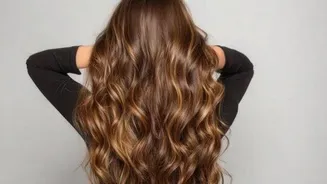
The Monsoon Hair Hangover
Throughout the monsoon, high humidity is the main character in your hair's story. The air is saturated with water molecules, which your hair, particularly if it's porous or dry, eagerly absorbs. This causes the hair shaft to swell. Think of it like a wooden
door swelling in the damp. This constant swelling forces the cuticle—the protective outer layer of each hair strand—to lift and remain open. While this can lead to the familiar monsoon frizz, it also leaves the hair's internal structure exposed and weakened over time. Your hair ends the season feeling puffy and unmanageable, with a compromised defense system.
Understanding the Cuticle
To understand the damage, picture your hair cuticle as overlapping shingles on a roof. This layer of dead cells is designed to lie flat, protecting the inner cortex (where the strength, moisture, and protein live) from harm. When the cuticle is sealed and smooth, it reflects light, giving hair its shine, and locks in moisture. But when it's raised or damaged—due to humidity, chemical treatments, or harsh brushing—the 'shingles' are lifted. This creates a rough, dull surface that easily loses moisture and tangles with other strands.
Enter the Post-Monsoon Dry Spell
The shift from monsoon to autumn brings a sudden drop in humidity. The air becomes drier, and it starts looking for moisture wherever it can find it—including your hair. Those hair cuticles that were swollen and open during the monsoon are now caught off guard. Instead of absorbing moisture, they start losing it at an alarming rate to the dry air. This rapid dehydration leaves the hair shaft brittle, weak, and prone to snapping. The foundation for serious breakage is set before you even pick up a styling tool.
How Heat Styling Creates a Crisis
Now, introduce a flat iron or a blow dryer to this equation. Heat styling tools, which can reach temperatures over 200°C, work by breaking down the hair's temporary bonds to reshape it. On healthy hair, this is already stressful. But on fragile, post-monsoon hair with already-lifted cuticles, it's a crisis. The intense heat blasts open these compromised cuticles even further, causing the little moisture left inside the cortex to turn into steam and escape, creating internal pressure. This process doesn't just dry out the hair; it can cause microscopic cracks and voids in the protein structure, leading to irreversible damage, breakage, and split ends.
Giving Your Hair a Seasonal Break
Reducing the frequency of heat styling during this transitional period is one of the kindest things you can do for your hair. By giving it a break, you allow the cuticles a chance to recover, settle, and seal. This helps your hair naturally retain moisture, regain its elasticity, and build resilience against the dry air. Think of the post-monsoon months as a recovery phase. Just as your skin might need a different moisturiser for a new season, your hair needs a gentler routine. This simple step can dramatically reduce breakage and help you maintain the length and strength you worked to grow.
Smart, Heat-Free Alternatives
Taking a break from heat doesn't mean giving up on style. This is the perfect time to explore heat-free methods that add texture without the damage. For soft waves, try braiding damp hair and letting it air-dry overnight. For volume, velcro rollers can provide lift at the root without any heat. Techniques like 'plopping' with a microfiber towel can help define natural curls and waves while reducing frizz. If you absolutely must use heat, always apply a quality heat protectant spray first, which creates a barrier to reduce moisture loss, and use your tool on the lowest effective temperature setting.