
The Ultimate Off-World Resource
Water is the lifeblood of space exploration. Beyond the obvious need for drinking water, H₂O is a multipurpose powerhouse. Splitting its molecules provides breathable oxygen for astronauts and hydrogen, a critical component of rocket fuel. Manufacturing
air and propellant on the Moon, a practice known as in-situ resource utilization (ISRU), would dramatically reduce the cost and complexity of missions by lessening the need to launch everything from Earth. This is why confirming and mapping water ice deposits is a top priority for NASA. It’s the difference between a short visit and setting up a long-term base camp, a crucial stepping stone for future missions to Mars and beyond.
Hunting in Permanent Darkness
The most promising locations for lunar water are the South Pole's permanently shadowed regions (PSRs). These are deep craters whose floors have not seen direct sunlight for billions of years. Because of the Moon's slight axial tilt, the sun's rays skim the polar surface at a low angle, leaving these crater bottoms in a perpetual, frigid darkness where temperatures can drop below minus 250 degrees Fahrenheit. These extreme cold traps are perfect for preserving water ice, which would otherwise vaporize in the vacuum of space. The challenge, however, is immense. Probes must be able to peer into total darkness, navigate treacherous terrain, and survive extreme temperatures to confirm what lies hidden in the shadows.
The Orbital Ice Detectives
The search for lunar ice starts from above. For over a decade, NASA's Lunar Reconnaissance Orbiter (LRO) has been the primary scout, creating detailed maps of the Moon's surface. LRO is equipped with a suite of instruments designed to find tell-tale signs of water ice from orbit. Instruments like the Lunar Orbiter Laser Altimeter (LOLA) measure surface reflectance—icy patches are more reflective—while Diviner maps temperatures to identify the ultra-cold traps where ice could be stable. But the key tool for finding water's main ingredient is the Lunar Exploration Neutron Detector (LEND). Cosmic rays constantly bombard the Moon, creating a spray of neutrons from the soil. LEND counts these escaping neutrons; a dip in the count suggests the presence of hydrogen, as hydrogen is very effective at absorbing neutron energy. These orbital maps create a treasure map, highlighting promising spots for a closer look.
Robots on the Ground
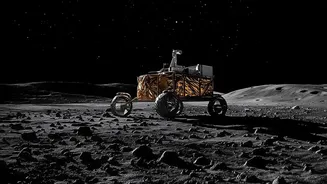
While orbiters can suggest where ice might be, confirmation requires “boots on the ground”—or in this case, wheels. This is the job of robotic rovers like NASA's Volatiles Investigating Polar Exploration Rover (VIPER). Though its development has seen twists, the mission's goal is to land near the South Pole, drive into permanently shadowed areas, and directly search for ice. VIPER is equipped with its own Neutron Spectrometer System (NSS) to sniff out hydrogen concentrations on a small scale. Once it finds a promising spot, it uses a 1-meter drill called TRIDENT (The Regolith and Ice Drill for Exploring New Terrain) to dig into the lunar soil. Samples brought to the surface are then analyzed by two other instruments, the Mass Spectrometer Observing Lunar Operations (MSolo) and the Near-Infrared Volatiles Spectrometer System (NIRVSS), to confirm the presence and composition of water and other volatiles. This provides the ground truth that scientists and mission planners need.
A Global and Evolving Strategy
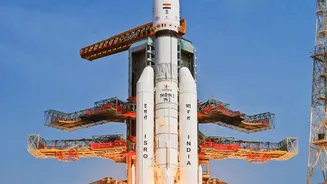
The hunt for lunar water is a global effort. NASA is also contributing its Neutron Spectrometer System instrument to the LUPEX mission, a joint rover project by the space agencies of Japan (JAXA) and India (ISRO) planned for later this decade. Furthermore, scientists are developing new techniques, such as using the seismic waves generated by a rover's drill to potentially detect ice deposits far deeper than one meter. Each mission, from orbital mappers like LRO and India's Chandrayaan missions to surface explorers like VIPER, builds upon the last. The process is systematic: find hints from orbit, send robotic prospectors to verify, and then create detailed resource maps. This meticulous work ensures that when Artemis astronauts arrive, they will know exactly where to go to find the water needed for survival and to fuel the future of human space exploration.