






In fitness, quality trumps quantity. A measured approach, focusing on control and precision, builds sustainable strength and prevents injury. Two key areas for this are mastering controlled elbow movement and adopting dynamic exercises like Dolphin Push-Ups.
The Case for Control in Push-Ups
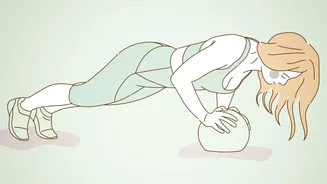
The standard push-up is a foundational exercise for a reason: it targets the chest, shoulders, triceps, and core simultaneously. However, its effectiveness and safety hinge on one crucial detail: elbow position. Many people perform push-ups with their elbows flared out to the sides, creating a 'T' shape with their body. This common mistake not only reduces activation of the chest muscles but also places the shoulder joint in a compromised and vulnerable position, increasing the risk of injury. A measured approach calls for controlled elbow movement, where the elbows are tucked in closer to the body.
Perfecting Your Push-Up Form
To execute a safer, more effective push-up, aim to create an 'arrow' shape with your body, not a 'T'. Your elbows should be at roughly a 45-degree angle from your torso as you lower yourself. This position keeps the shoulder joint stable and allows for maximum engagement of the pectoral muscles. To get a feel for this, imagine screwing your hands into the floor—turning the right hand clockwise and the left hand counter-clockwise without actually moving them. This helps engage the right muscles to tuck your elbows naturally. Focus on lowering your body slowly and with control, ensuring your chest gets close to the floor, and then pushing back up powerfully. Remember, a few perfect reps are far more beneficial than many sloppy ones.
Introducing the Dolphin Push-Up
For those looking to advance their bodyweight routine, the Dolphin Push-Up is a powerful, low-impact exercise that blends strength training with yoga. It combines elements of a forearm plank and the Dolphin pose, creating a dynamic movement that challenges the upper body and core in a unique way. This exercise is particularly effective at building shoulder strength and stability, making it an excellent preparatory movement for more advanced skills like forearm stands. Because it's performed on the forearms, it also reduces stress on the wrists, offering a great alternative for those who experience wrist discomfort during traditional pushups.
How to Perform a Dolphin Push-Up
To perform a Dolphin Pushup, begin in a forearm plank position. Your forearms should be on the floor, parallel to each other and shoulder width apart, with your body forming a straight line from head to heels. From here, engage your core and push through your shoulders to lift your hips up and back, forming an inverted 'V' shape. Your head should be between your upper arms, looking toward your feet. This is your starting position. Next, lower your head and chest towards your hands, bending at the elbows until your head nearly touches the floor. Finally, push through your shoulders and forearms to return to the inverted 'V' starting position. That completes one repetition.
Benefits and Muscles Worked
The Dolphin Pushup is a comprehensive upperbody builder. The primary movers are the shoulders (deltoids), but it also heavily engages the triceps, upper back, chest, and core. Your core, in particular, works overtime to keep your hips from sagging and maintain stability throughout the movement. Beyond strength, the exercise improves flexibility in the hamstrings and calves, as well as shoulder mobility. It's also fantastic for strengthening the oftenneglected serratus anterior, a muscle crucial for scapular control and shoulder health. This enhanced stability and strength can lead to better posture and help protect your shoulders from injury.