






Why Your Desk Job Requires Active Recovery
Spending eight hours a day in a chair puts your body under significant strain. This sedentary reality, often dubbed "the new smoking," leads to a predictable pattern of physical issues. Key muscle groups in your legs and glutes can weaken from underuse,
while your hip flexors, hamstrings, and pectoral muscles shorten and tighten. This imbalance contributes to the classic desk-worker posture: rounded shoulders, a forward head position, and an aching lower back. Over time, this doesn't just cause discomfort; it can lead to reduced mobility and a higher risk of chronic pain. Thinking of your body like an athlete's is crucial; just as a runner needs to recover after a race, an office worker needs to counteract the physical stress of sitting.
Foam Rolling: Your Personal Deep Tissue Massage
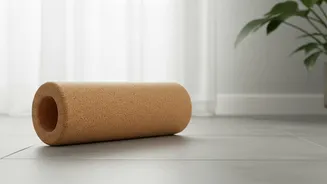
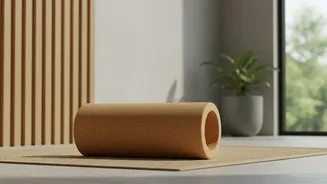
A foam roller is a simple, affordable tool for what’s known as self-myofascial release (SMR). Think of it as a way to give yourself a deep tissue massage. By applying sustained pressure to your muscles, you can help break up painful knots or adhesions where muscle fibers have clumped together. This process increases blood flow to the targeted areas, which can reduce inflammation, ease muscle tension, and improve flexibility. For those new to foam rolling, it's best to start with a medium-density roller and move slowly, avoiding direct pressure on joints or bones. The goal is to find tender spots and hold the pressure for about 30 seconds until you feel the tension start to release.
Key Foam Rolling Zones for Office Workers
To get the most benefit, focus on the areas that tighten up most during the workday. Start with your upper and mid-back (thoracic spine). Lie with the roller positioned under your shoulder blades, bend your knees with feet flat on the floor, and support your head with your hands. Gently roll up and down your mid to upper back. Next, target your hips and glutes, which can become tight and inactive from sitting. Sit on the roller with one ankle crossed over the opposite knee and gently roll over the glute of the crossed leg. Finally, address your calves. Sit on the floor, place the roller under one calf, cross the other leg over it to add pressure, and slowly roll from your ankle toward your knee.
Mobility Drills to Reclaim Your Movement
While foam rolling helps release tight muscles, mobility drills are about actively improving your joints' range of motion. Unlike static stretching where you hold a position, mobility exercises are dynamic movements that take your joints through their full, intended path. This is crucial for counteracting the stiffness that comes from being locked in a single position for hours. For office workers, focusing on hip and shoulder mobility is paramount. These drills help re-educate your body on how to move properly, activating muscles that have been dormant and loosening joints that have become stiff. Regular mobility work can lead to better posture, less joint pain, and more fluid, comfortable movement throughout your day.
Three Essential Mobility Drills to Start Now
You don't need a gym to improve your mobility. Try these simple drills. First, the Cat-Cow: on your hands and knees, inhale as you drop your belly and look up, then exhale as you round your spine and tuck your chin. This improves spinal flexibility. Second, Thread the Needle: from the same starting position, lift your right arm to the ceiling, then 'thread' it under your left arm, dropping your shoulder and head to the floor to open up your upper back and shoulders. Third, a 90/90 Hip Rotation: sit on the floor with both legs bent at 90 degrees, one in front and one to the side. Keeping your torso upright, rotate your legs to switch their positions to the other side. This is excellent for improving hip internal and external rotation.
Building a Consistent and Realistic Routine
The key to seeing real benefits is consistency, not intensity. Aim to incorporate these recovery habits into your daily life. A 5-minute foam rolling session after you finish work can be highly effective at releasing the tension accumulated throughout the day. Alternatively, a few mobility drills in the morning can set a better postural baseline for the hours ahead. Use breaks during the day to stand up and perform a few gentle stretches or walk around. Set a reminder to get up every 30-60 minutes, even if it’s just for a minute. Listen to your body—some days you might need more rolling, other days more movement. The goal is to make this a sustainable part of your self-care routine.