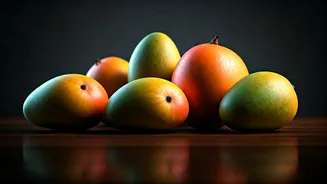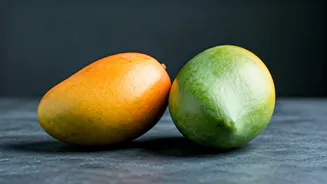




The King: Alphonso (Hapus)
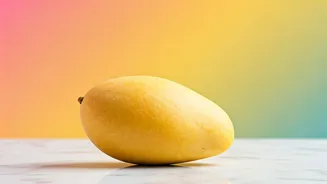
Often hailed as the 'King of Mangoes', the Alphonso is the gold standard for many. Originating from the Konkan coast of Maharashtra, this mango is celebrated for its rich, creamy, and non-fibrous pulp. Its flavour is a perfect balance of sweetness and a slight
tang, with a potent aroma that can fill a room. Look for a saffron-yellow skin with a reddish blush. The peak season is relatively short, running from mid-April to the end of June, making it a prized, and often expensive, delicacy. When choosing one, gently press the fruit; it should yield slightly but not feel mushy. A perfectly ripe Alphonso is a taste of pure sunshine.
The Queen: Kesar
If Alphonso is the king, then Kesar is undoubtedly the queen. Hailing from the foothills of Girnar in Gujarat, this variety gets its name from its saffron-hued (kesar) pulp. It’s smaller than the Alphonso, with a distinctive curved tip and a greener skin that develops a golden-yellow glow when ripe. The Kesar is known for its intense sweetness and a strong, candy-like aroma. It's less creamy than an Alphonso but makes up for it with a powerful, sugary punch. It's the preferred choice for making aamras (mango pulp) in Gujarat, and its season typically follows the Alphonso, from June to July.
The Languid One: Langra
Don't let the name, which translates to 'lame', fool you—this mango from Varanasi is a superstar. The Langra has a unique fibrous texture and a distinct sweet-tart flavour profile that many swear by. One of its defining characteristics is that it retains a greenish tint even when fully ripe, so don't wait for it to turn completely yellow. The pulp has a specific lemon-yellow colour and a strong, slightly turpentine-like aroma that connoisseurs love. It's a mid-season variety, available from mid-June to the end of July. Its complex taste makes it a refreshing change from purely sweet mangoes.
The Sweetheart: Dasheri
Originating from a village near Lucknow in the 18th century, the Dasheri is one of North India’s most popular mangoes. It is a long, slender mango that turns from green to a golden yellow. Dasheris are known for their very sweet pulp, pleasant aroma, and fibreless texture, making them easy to eat straight from the skin. They are a go-to for many families due to their consistent quality and delicious, straightforward sweetness. The season for Dasheri mangoes typically starts in mid-May and lasts until late August, making them a long-standing summer staple.
The Latecomer: Chausa
Just when you think mango season is over, the Chausa arrives. This late-season variety, primarily from Uttar Pradesh and Bihar, is available from July through August. Chausas are large, with a bright yellow skin when ripe and an almost magical sweetness. The pulp is incredibly sweet, with no hint of sourness, and a rich, aromatic flavour. It's a mango you suck, not cut—the pulp is soft and juicy, perfect for enjoying directly. Its arrival signals the last hurrah of the mango season, a final, sweet farewell to summer.
The Southern Giant: Banganapalli
Also known as Safeda, the Banganapalli from Andhra Pradesh is one of the earliest varieties to hit the market, often appearing as early as April. These mangoes are large, oval-shaped, and have a beautiful, pale yellow skin with a few spots. They are known for their fibre-free, firm flesh and a flavour profile that is mildly sweet with a pleasant acidic tang. Because of their firmer texture and subtle sweetness, they are excellent for making salads, salsas, and chutneys, but are equally delicious eaten fresh.
How to Taste Like a Pro
To truly appreciate a mango, engage all your senses. First, take in its aroma—a ripe mango should smell sweet and fruity near the stem. Next, observe its colour and feel its weight; it should feel heavy for its size. Gently press the skin; it should have a slight give. When you cut it, notice the colour and texture of the pulp. Is it fibrous or smooth? Finally, taste it. Let the pulp sit on your tongue. Identify the notes—is it purely sweet, or does it have a tart or floral undertone? Tasting mangoes side-by-side is the best way to understand the vast differences between them.