





The Science of a Heads-Up
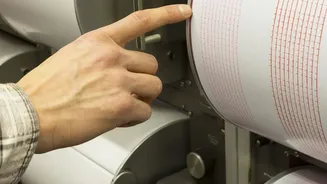
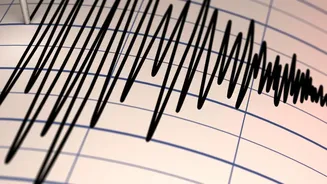
Earthquake early-warning systems don't predict quakes, but they can outrun them. An earthquake releases two main types of waves: the faster, less damaging P-wave (primary wave) and the slower, more destructive S-wave (secondary wave). Traditional and new
systems work on a simple principle: detect the P-wave as it arrives, and instantly transmit a warning at the speed of light. This electronic alert travels much faster than the seismic S-waves moving through the ground, creating a vital window of time—from a few seconds to over a minute, depending on your distance from the epicentre—for people to take protective action.
The Low-Cost Sensor Revolution
Historically, building a reliable seismic network required thousands of highly sensitive, and very expensive, seismometers. This put widespread coverage out of reach for many regions. The game-changer has been the development of low-cost micro-electro-mechanical systems (MEMS) accelerometers. These are the same tiny sensors found in your smartphone that detect motion, orientation, and vibration. While a single phone's sensor isn't as sensitive as a traditional seismometer, networking thousands or even millions of them together creates a powerful, dense, and cost-effective detection grid. This crowdsourced approach, sometimes called a community seismic network, can fill in critical gaps left by conventional systems, especially in densely populated urban areas.
Your Smartphone: A Pocket Seismometer
The most powerful part of this new model is that the device for detection is also the device for notification. In India, Google has rolled out its Android Earthquake Alerts System, which turns the nation's vast network of Android phones into a massive, distributed seismic sensor network. The system, developed in consultation with the National Disaster Management Authority (NDMA) and the National Centre for Seismology (NCS), uses the accelerometers in phones to detect initial earthquake-like shaking. When many phones in an area detect shaking simultaneously, Google's servers analyze the data to confirm an earthquake, estimate its magnitude and epicentre, and then push alerts to phones in the potentially affected region.
How the Alerts Work
To receive these alerts, Android users in India (using Android 5 or later) need to have location services and Wi-Fi or cellular data enabled. The system issues two types of alerts for quakes of magnitude 4.5 or greater. A 'Be Aware' alert is sent for moderate shaking, which appears as a standard notification. A more urgent, full-screen 'Take Action' alert is triggered for stronger shaking, which will override 'Do Not Disturb' settings and play a loud sound to get your attention. This gives people just enough time to perform the crucial 'Drop, Cover, and Hold On' manoeuvre that can prevent injury from falling debris.
From Seconds to Safety
While a few seconds might not sound like much, it can be life-saving. An early warning allows people to move away from windows and heavy furniture, get under a sturdy table, and protect their head and neck. Beyond personal safety, these automated alerts can be integrated with public infrastructure. In other parts of the world with similar systems, alerts are used to automatically slow down trains, stop elevators at the nearest floor, and shut off gas mains to prevent fires, dramatically reducing the secondary damage from a major quake. The proliferation of low-cost sensors and smartphone networks promises to bring these advanced capabilities to more places, including seismically active zones in India.