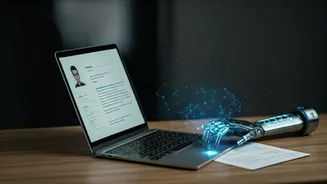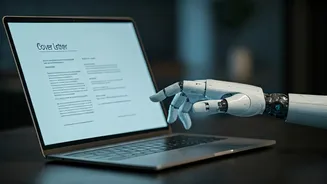






The Allure of the Automated Application
It’s easy to see why job seekers are turning to artificial intelligence. [15] Facing a competitive market and the tedious task of tailoring applications, the promise of a tool that can instantly generate a well-written cover letter is incredibly tempting.
[4, 5] AI can help overcome writer's block, save significant time, and produce documents that are grammatically perfect and professionally worded. For many, it seems like a way to level the playing field, allowing them to apply for more positions more efficiently. [4] The problem isn’t the technology itself; it's how it's being used. The one-click-and-copy approach often produces generic content that does more harm than good.
How Hiring Managers Spot the Bot
Recruiters and hiring managers are not anti-AI; they are anti-impersonality. [11] After seeing hundreds of applications, they develop a keen sense for letters that lack a human touch. [1, 20] Telltale signs include overly formal or robotic language, often packed with buzzwords like “synergistic,” “meticulous,” or “proven track record.” [17, 22] Another dead giveaway is a predictable structure, with repetitive transitional phrases like “Furthermore,” “Additionally,” and “Moreover.” [3, 12] AI-generated letters often lack specific details about the company, instead offering vague praise for its “innovative culture” or “mission.” [10] Perhaps the most significant red flag is a disconnect between a flawlessly eloquent cover letter and a simple, functional resume, suggesting one was written by a machine and the other by a human. [3, 20]
Why Lazy AI Backfires
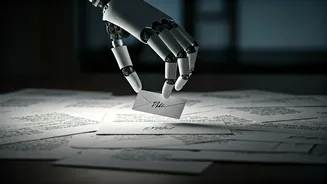
Relying solely on an AI template signals one thing to a hiring manager: a lack of genuine interest. A cover letter is your chance to connect your unique skills and passion to a specific role and company. [6, 18] When you submit a generic, machine-generated document, you lose the opportunity to showcase your personality and enthusiasm. [4] This can damage your reputation, making you seem unprofessional or, worse, dishonest if the letter exaggerates skills you can't back up in an interview. [2, 24] Ultimately, employers want to hire a person, not a perfectly-worded automaton. They are looking for context, motivation, and a reason to believe you are the right fit for their team. A lazy AI letter provides none of that. [18]
Use AI as a Co-Pilot, Not an Autopilot
The secret to using AI effectively is to treat it as a brainstorming partner and an editor, not a ghostwriter. [11, 16] Start by writing the first draft yourself. Outline your key achievements, career goals, and specific reasons for wanting this job. [11] Then, you can use AI to refine your work. Feed the AI your resume, the job description, and your draft, and ask it specific questions. [16] Good prompts include: “Based on this job description, what are the most compelling experiences from my resume to highlight?” or “Can you help me rephrase this paragraph to sound more confident and professional?” [11, 16] You can even ask it to review your letter from the perspective of a hiring manager. [16] This approach keeps your authentic voice and experiences at the core of the application.
The Unbeatable Human Touch
No matter how advanced AI becomes, it cannot replicate genuine human experience. The most effective cover letters tell a story. [21] Instead of just listing your skills, provide a brief, specific example of a time you used them to solve a problem or achieve a result. Use the STAR method (Situation, Task, Action, Result) to structure your examples. [21] Show, don't just tell. Instead of saying you are a “results-oriented professional,” describe a project where you increased sales by 20%. [6] Research the company and mention something specific—a recent project, a company value you admire, or a product you respect. [19] This demonstrates genuine interest and proves you've done your homework. A letter that is personal, specific, and authentic will always stand out more than a perfectly polished but soulless template. [17, 18]