
Venus: Earth's 'Evil Twin'
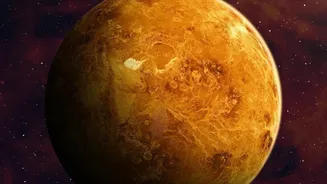
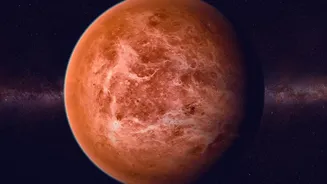
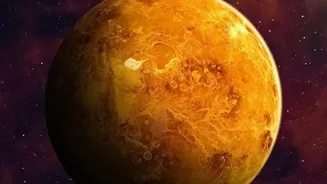
Venus is often called Earth's twin, and for good reason. The two planets are nearly identical in size, mass, and composition. Scientists believe they formed around the same time and likely had much more in common in their early history, with some models
suggesting Venus may have once had liquid water oceans. But today, it is a hellscape. Its surface temperature is hot enough to melt lead, and the atmospheric pressure is over 90 times that of Earth's. This dramatic divergence is believed to be the result of a runaway greenhouse effect, where heat-trapping gases, primarily carbon dioxide, turned the planet into the hottest in our solar system. Understanding exactly how and why Earth's twin took such a catastrophic turn is a primary driver for missions like Shukrayaan-1.
The Mysteries Swirling in the Clouds
While the Venusian surface is inhospitable, its cloud deck is a different story. About 50 kilometres above the surface, temperatures and pressures are surprisingly Earth-like. This zone is where the most compelling scientific mysteries lie. The clouds are primarily composed of sulfuric acid, but they also contain strange anomalies. For years, scientists have noted the presence of an 'unknown absorber'—a mysterious substance that absorbs ultraviolet radiation, creating dark streaks in the atmosphere. Furthermore, the potential presence of gases like phosphine and ammonia, which are out of chemical equilibrium, has sparked intense debate and research. On Earth, phosphine is associated with biological processes, and while its presence on Venus is far from confirmed as a sign of life, it points to unknown chemical pathways that demand investigation. Shukrayaan-1, with its suite of scientific instruments, aims to analyse these atmospheric components directly.
A Warning for Planet Earth
Studying Venus is not just an academic exercise in planetary science; it's a critical tool for understanding our own planet's climate. Venus serves as a natural laboratory for a greenhouse effect gone wild. By studying its extreme climate, scientists can refine the models used to predict climate change on Earth. Analysing how Venus lost its potential habitability provides a stark cautionary tale and crucial data points for how planetary climates can change dramatically. The insights gained from Shukrayaan's atmospheric studies will therefore have direct implications for how we understand and forecast the future of Earth's climate system, helping to validate and improve the projections we rely on.
The Search for Life in Unexpected Places
While the idea of life on Venus might seem far-fetched, the planet's upper atmosphere remains a tantalising possibility for astrobiology. The relatively temperate conditions in the cloud layer have led some scientists to hypothesise that if life ever began on Venus, it might have retreated to the skies as the surface became uninhabitable. This theory suggests that extremophile microbes, similar to those on Earth that thrive in harsh environments, could potentially survive inside the acidic cloud droplets. Recent lab experiments have even shown that essential organic molecules like peptides can remain stable in concentrated sulfuric acid, suggesting the chemical environment may not be as hostile to life's building blocks as once thought. Shukrayaan's investigation into the cloud chemistry is a crucial step in assessing the habitability of this unique environment and informing the broader search for life beyond Earth.
India's Next Interplanetary Leap
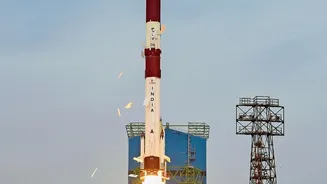
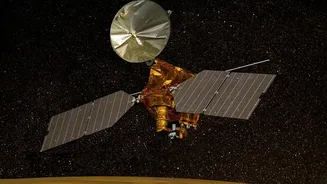
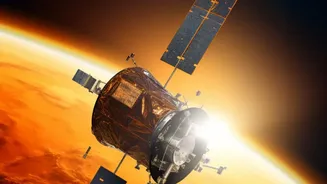
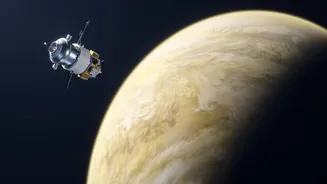
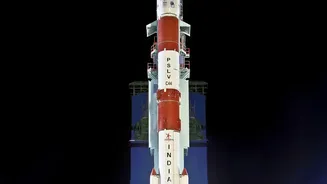
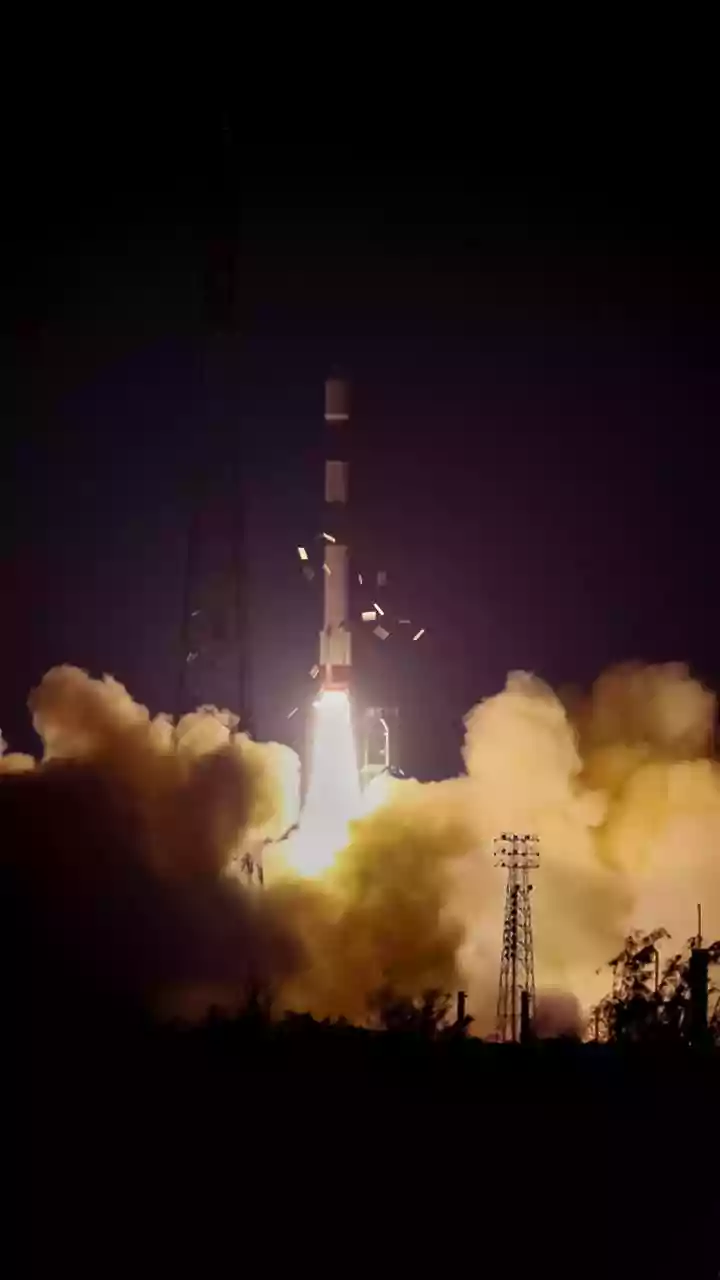
Set for a launch in 2028, Shukrayaan-1 represents India's growing ambitions and capabilities in deep-space exploration. Following the success of Mangalyaan (Mars Orbiter Mission) and Chandrayaan, this mission to Venus solidifies ISRO's position as a major player in planetary science. The mission is not a solo effort; it involves international collaboration, with payloads from Sweden, Russia, and Germany, among others. The orbiter will carry a suite of advanced instruments, including radars to map the surface and subsurface, and spectrometers to analyse the atmospheric composition. By tackling the formidable challenges of Venus, ISRO is not only pushing the boundaries of science and technology but also demonstrating a cost-effective approach to high-impact planetary exploration on the world stage.